〜あたり and 〜につき: how to say "per person" in Japanese〜あたりと〜につき: 「一人あたり」の言い方
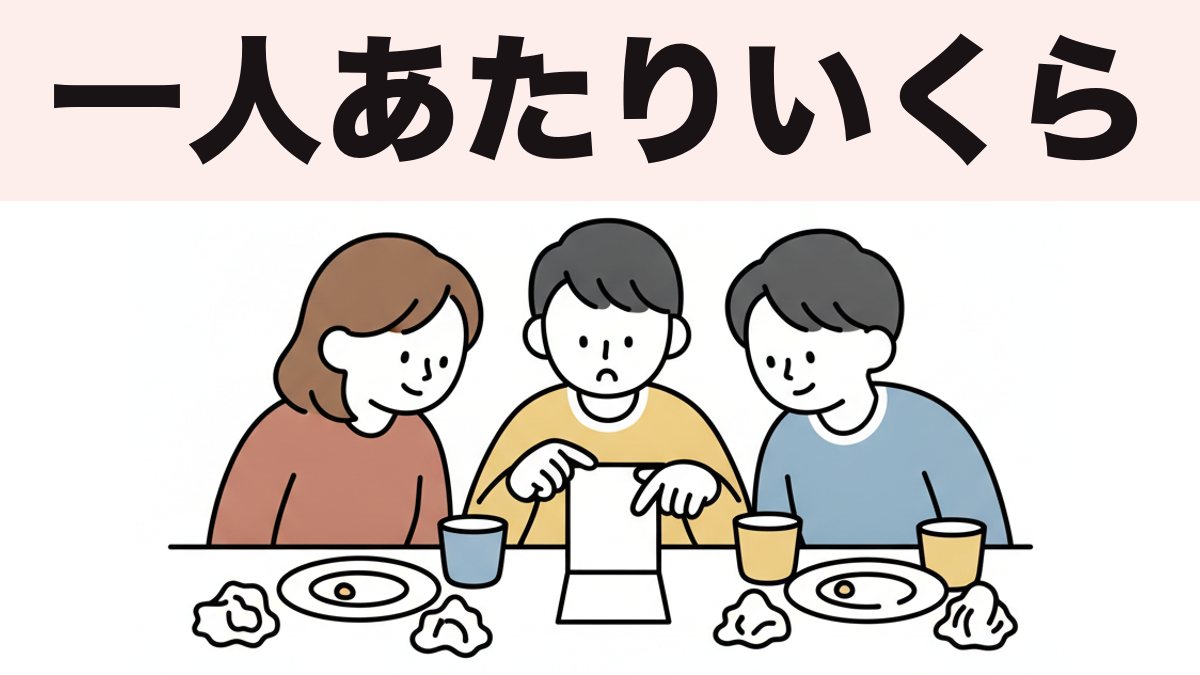
English uses "per" for arithmetic and for rules; Japanese uses あたり for the arithmetic and につき for the rules, and mixing them is what makes a price sound like a regulation.
英語は計算にもルールにも "per" を使います。日本語は、計算は「あたり」、ルールは「につき」です。まぜると、ねだんが規則のように聞こえます。
There is a third trap sitting next to them. ずつ also gets translated as "each," but it distributes rather than divides, and swapping it for あたり turns a budget into an order at a counter.
The basics
〜あたり: dividing a total
Xあたり means "per X," and it belongs to calculations. Take a total, divide it by something, state the result.
一人あたり三千円です。 — It's three thousand yen per person. (polite; splitting a bill) 一日あたり二時間勉強しています。 — I study two hours per day. (polite; an average) 一人一日あたり百ドルかかります。 — It costs a hundred dollars per person per day. (polite; travel budgeting, and you can stack them)
Attach it straight to the counter phrase: 一人あたり, 一日あたり, 一回あたり, 一キロあたり. In writing it is often 一人当たり.
〜につき: stating a rule
Xにつき means "per X" in notices, limits and prices set by an institution. It is the language of signs.
お一人様につき二つまでです。 — Two per customer, maximum. (polite; shop notice) 一枚につき百円かかります。 — It costs one hundred yen per sheet. (polite; a fee) 五名につき一名無料。 — One free per five people. (written; group discount)
お一人様 is the shop-counter version of 一人 and is the form you will actually see printed. につき reads as official, which is exactly why it suits rules and sits oddly in casual conversation about splitting a bill.
〜ずつ: handing things out
ずつ is not division at all. It means "each, one at a time" — the same amount going to each recipient, or repeated in steps.
一人ずつ入ってください。 — Please come in one at a time. (polite; a queue instruction) 二個ずつ取ってください。 — Please take two each. (polite) 少しずつ覚えています。 — I'm learning little by little. (polite; steps over time)
The difference lands hardest in a shop:
一人あたり二つです。 — It works out at two per person. (you divided a total and this is the result) お一人様につき二つまでです。 — Two per person, maximum. (a rule the shop is imposing) 二つずつ取ってください。 — Take two each. (an instruction to the people in front of you)
Beyond the basics
〜ごとに: at every interval
ごとに means "every," in the sense of a repeating interval rather than a share.
三日ごとに水をやってください。 — Please water it every three days. (polite) 駅ごとに人が増える。 — People increase at every station. (plain)
If you can replace it with "every," it is ごとに. If you can replace it with "per," it is あたり or につき.
The confusing other あたり
あたり is also a completely ordinary word meaning "around, the vicinity."
この辺りにコンビニはありますか。 — Is there a convenience store around here? (polite) 三時あたりに行きます。 — I'll go around three. (polite; approximate time)
Same sound, different word — the vicinity one is 辺り, and it appears in asking for directions. Context separates them easily: after a counter it is "per," after a place or a time it is "around."
There is a third あたり from 当たる ("to hit, to win"), as in 当たり ("a win," on a lottery ticket or an ice-lolly stick). The 当 kanji is shared with the "per" meaning — 一人当たり is literally "hitting one person."
Talking about splitting a bill
This is the everyday home of あたり, and the surrounding vocabulary is worth having.
割り勘にしましょう。 — Let's split it evenly. (polite; the standard proposal) 一人あたり二千五百円ですね。 — That's two thousand five hundred yen each, then. (polite) 端数は私が出します。 — I'll cover the odd change. (polite)
Asking the price itself is a separate set of phrases — see いくらですか.
平均 and 約 go with あたり
Because あたり is arithmetic, it collects the vocabulary of approximation.
一日あたり平均三時間です。 — It averages three hours per day. (polite) 一人あたり約千円になります。 — It comes to roughly a thousand yen per person. (polite)
約 goes before the number, 平均 before the whole amount, and both sit comfortably next to あたり. For how the counters themselves work, see Japanese counters.
Common mistakes
- Using あたり to give an instruction. ×一人あたり入ってください is not an instruction. To tell people to enter one at a time it is 一人ずつ入ってください.
- Using につき when splitting a bill with friends. It sounds like you are reading them a shop regulation. 一人あたり is the friendly version.
- Using ずつ for an average. 一日ずつ二時間 does not mean "two hours a day." An average is 一日あたり.
- Forgetting the counter. It is 一人あたり, not ×人あたり. あたり attaches to a counted amount.
- Reading この辺り as "per." After a place or a time, あたり means "around." Only after a counter does it divide.
- Using あたり on a printed notice. Signs use につき, and customers are お一人様. 一人あたり on a shop sign reads as a calculation rather than a limit.
The four at a glance
| Form | Job | Typical setting | Example |
|---|---|---|---|
| 〜あたり | Divides a total | Budgets, averages, splitting a bill | 一人あたり三千円 |
| 〜につき | States a rule or fee | Signs, notices, official prices | お一人様につき二つまで |
| 〜ずつ | Distributes equally | Instructions, gradual progress | 一人ずつ/少しずつ |
| 〜ごとに | Marks an interval | Schedules, repetition | 三日ごとに |
| 辺り | Around, nearby | Places and approximate times | この辺り/三時あたり |
Practice
Answers are hidden — say yours first, then open. Questions 1, 2 and 3 are a set: the same "two per person," three different jobs.
1. You have divided the bill. Tell your friends the result.
Show answer
一人あたり二つです。(金額なら一人あたり三千円です。) — You divided a total, so あたり. This is arithmetic, not a rule.
2. You are writing a shop notice limiting purchases to two.
Show answer
お一人様につき二つまでです。 — A rule set by the shop takes につき, and customers are お一人様 on a printed notice.
3. You are handing out snacks and want everyone to take two.
Show answer
二つずつ取ってください。 — ずつ distributes. It is an instruction to the people in front of you, not a calculation.
4. Say: "I study two hours per day."
Show answer
一日あたり二時間勉強しています。 — An average per unit of time, so あたり.
5. Say: "Please come in one at a time."
Show answer
一人ずつ入ってください。 — 一人あたり入ってください is not a sentence; あたり cannot introduce an instruction.
6. Say: "Please water it every three days."
Show answer
三日ごとに水をやってください。 — A repeating interval takes ごとに. If "every" fits in English, it is ごとに.
7. What does この辺り mean, and why is it not "per"?
Show answer
"Around here." — It is 辺り, a different word. After a place or time あたり means "around"; only after a counter does it divide.
8. Say: "It comes to roughly a thousand yen per person."
Show answer
一人あたり約千円になります。 — 約 goes before the number. あたり attracts the vocabulary of approximation because it is arithmetic.
9. Stack two units: "a hundred dollars per person per day."
Show answer
一人一日あたり百ドル。 — あたり can cover a stacked unit; you do not repeat it for each one.
10. Propose splitting the bill evenly.
Show answer
割り勘にしましょう。 — The standard phrase. The result is then reported with 一人あたり.
FAQ
Which kanji does あたり use? 当たり for the "per" meaning (一人当たり), 辺り for "around here." In casual writing both are often left in hiragana, and context does the work.
Is 一人あたり too formal for friends? No, it is completely normal for splitting a bill. The formal-sounding one is につき.
Can I say 一人につき for a bill? You can, and it will be understood, but it sounds like a rule rather than a calculation — as though the restaurant has imposed the amount on each of you.
What is 割り勘 exactly? Splitting the bill evenly between everyone. 割り勘にしましょう is the standard way to propose it, and it is unremarkable in Japan even with a group of new acquaintances.
How do I say "per capita" in a report? 一人当たり, usually with the kanji. 一人当たりGDP is the standard phrase, and the written register described in 書き言葉 and 話し言葉 applies.
Does ずつ ever mean "per"? No. It means each recipient gets that amount, or that something proceeds in equal steps. 少しずつ ("little by little") is the clearest case: nothing is being divided.
Vocabulary from this article
Tap the block to select all of it, then copy. In Anki: File → Import, note type Basic, separator Tab — the first column becomes the front, the second the back.
当たり	あたり — per (one unit)
辺り	あたり — around, vicinity
につき	につき — per (in rules and notices)
ずつ	ずつ — each, at a time
ごとに	ごとに — every (interval)
一人	ひとり — one person
お一人様	おひとりさま — one customer (polite)
一日	いちにち — one day
平均	へいきん — average
約	やく — approximately
割り勘	わりかん — splitting the bill evenly
端数	はすう — odd change, fraction
無料	むりょう — free of charge
枚	まい — counter for flat things
名	めい — counter for people (formal)
増える	ふえる — to increase
I'm Yuuki, a Japanese teacher based in Tokyo. I've taught on italki as a Top 1% teacher and watched over 1,500 anime. This comes up the first time a student splits a restaurant bill in Japan, and the fix is always the same: あたり is maths, につき is a rule, ずつ is handing things out.
Sources: the author's own lessons and standard reference grammars.
もう一つ、となりにわながあります。「ずつ」も "each" と訳されますが、これは分けるのではなく配ることばです。「あたり」と入れかえると、予算の話がお店の注文になります。
基本
〜あたり: 全体を割る
「Xあたり」は "per X" で、計算のことばです。全体を何かで割って、その結果を言います。
一人あたり三千円です。 — It's three thousand yen per person. (わりかんの計算) 一日あたり二時間勉強しています。 — I study two hours per day. (平均) 一人一日あたり百ドルかかります。 — It costs a hundred dollars per person per day. (旅行の予算。重ねられる)
数えることばにそのままつけます。「一人あたり」「一日あたり」「一回あたり」「一キロあたり」。書く時は「一人当たり」も多いです。
〜につき: ルールを言う
「Xにつき」は、お知らせ・制限・お店が決めたねだんの "per" です。はり紙のことばです。
お一人様につき二つまでです。 — Two per customer, maximum. (お店のお知らせ) 一枚につき百円かかります。 — It costs one hundred yen per sheet. (手数料) 五名につき一名無料。 — One free per five people. (団体わりびき)
「お一人様」はお店の言い方で、はり紙で実際に見る形です。「につき」は公式に聞こえます。だからルールに合い、友だちとのわりかんには合いません。
〜ずつ: 配る
「ずつ」は割り算ではありません。「それぞれに同じだけ」「少しずつ進む」です。
一人ずつ入ってください。 — Please come in one at a time. (ならんでいる人への指示) 二個ずつ取ってください。 — Please take two each. 少しずつ覚えています。 — I'm learning little by little. (だんだん進む)
お店でくらべると、はっきりします。
一人あたり二つです。 — It works out at two per person. (全体を割った結果) お一人様につき二つまでです。 — Two per person, maximum. (お店の決めたルール) 二つずつ取ってください。 — Take two each. (目の前の人への指示)
もう少し先へ
〜ごとに: 決まった間かく
「ごとに」は "every" です。分けるのではなく、くり返す間かくです。
三日ごとに水をやってください。 — Please water it every three days. 駅ごとに人が増える。 — People increase at every station.
英語で "every" になるなら「ごとに」、"per" になるなら「あたり」か「につき」です。
もう一つの「あたり」
「あたり」には「近く」という、まったく別の意味もあります。
この辺りにコンビニはありますか。 — Is there a convenience store around here? 三時あたりに行きます。 — I'll go around three. (だいたいの時間)
音は同じで、別のことばです。こちらは「辺り」と書きます。道のたずね方 に出てきます。見分けはかんたんです。数えることばの後なら "per"、場所や時間の後なら "around" です。
3つ目の「あたり」は「当たる」から来た「当たり」(当選、あたり棒)です。「一人当たり」の「当」と同じ漢字で、もとは「一人に当てる」という意味です。
わりかんの話
「あたり」がいちばん活やくする場面です。まわりのことばもいっしょに覚えてください。
割り勘にしましょう。 — Let's split it evenly. (定番のさそい方) 一人あたり二千五百円ですね。 — That's two thousand five hundred yen each, then. 端数は私が出します。 — I'll cover the odd change.
ねだんを聞く言い方は別にあります。いくらですか を見てください。
「平均」「約」といっしょに使う
「あたり」は計算のことばなので、だいたいの数のことばが集まります。
一日あたり平均三時間です。 — It averages three hours per day. 一人あたり約千円になります。 — It comes to roughly a thousand yen per person.
「約」は数字の前、「平均」は全体の前です。数えことばそのものは 助数詞 にあります。
よくあるまちがい
- 「あたり」で指示を出す。 「×一人あたり入ってください」は指示になりません。「一人ずつ入ってください」です。
- 友だちとのわりかんに「につき」を使う。 お店の規則を読んでいるように聞こえます。友だちには「一人あたり」です。
- 平均に「ずつ」を使う。 「一日ずつ二時間」は "two hours a day" になりません。平均は「一日あたり」です。
- 数えことばを落とす。 「一人あたり」です。「×人あたり」とは言いません。
- 「この辺り」を "per" と読む。 場所や時間の後の「あたり」は「近く・ごろ」です。
- はり紙に「一人あたり」と書く。 お知らせは「につき」、お客さんは「お一人様」です。
まとめの表
| 形 | 仕事 | よく使う場面 | 例 |
|---|---|---|---|
| 〜あたり | 全体を割る | 予算・平均・わりかん | 一人あたり三千円 |
| 〜につき | ルール・料金 | はり紙・お知らせ | お一人様につき二つまで |
| 〜ずつ | 同じだけ配る | 指示・少しずつ | 一人ずつ/少しずつ |
| 〜ごとに | 間かく | 予定・くり返し | 三日ごとに |
| 辺り | 近く・ごろ | 場所・だいたいの時間 | この辺り/三時あたり |
練習
答えはかくしてあります。先に言ってから開けてください。1・2・3は同じ「一人に二つ」の、3つの仕事です。
1. わりかんを計算しました。友だちに結果を言ってください。
答えを見る
一人あたり二つです。(金額なら一人あたり三千円です。) — 全体を割った結果なので「あたり」です。ルールではありません。
2. お店のはり紙で「1人2つまで」と書きます。
答えを見る
お一人様につき二つまでです。 — お店が決めたルールは「につき」、お客さんは「お一人様」です。
3. おかしを配ります。みんなに2つ取ってほしいです。
答えを見る
二つずつ取ってください。 — 「ずつ」は配ることばです。計算ではなく、目の前の人への指示です。
4. 「1日2時間勉強しています」を「あたり」で。
答えを見る
一日あたり二時間勉強しています。 — 時間で割った平均なので「あたり」です。
5. 「1人ずつ入ってください」を作ってください。
答えを見る
一人ずつ入ってください。 — 「一人あたり入ってください」は文になりません。「あたり」は指示をつれてこられません。
6. 「3日に1回水をやってください」を「ごとに」で。
答えを見る
三日ごとに水をやってください。 — くり返す間かくは「ごとに」です。英語で "every" なら「ごとに」。
7. 「この辺り」はどういう意味ですか。なぜ "per" ではないのですか。
答えを見る
「このへん」=around here。 — 「辺り」という別のことばです。場所や時間の後は「近く・ごろ」、数えことばの後だけ「per」です。
8. 「だいたい1人1000円」をていねいに。
答えを見る
一人あたり約千円になります。 — 「約」は数字の前に置きます。
9. 「1人1日100ドル」を1つの言い方で。
答えを見る
一人一日あたり百ドル。 — 単位を重ねても「あたり」は1回でいいです。
10. わりかんをさそってください。
答えを見る
割り勘にしましょう。 — 定番の言い方です。結果は「一人あたり」で伝えます。
よくある質問
漢字はどれですか。 "per" は「当たり」(一人当たり)、"around" は「辺り」です。ふだんの文ではひらがなも多く、前後で分かります。
「一人あたり」は友だちにはかたすぎますか。 いいえ。わりかんでは普通です。かたく聞こえるのは「につき」の方です。
わりかんに「一人につき」と言えますか。 通じますが、お店が決めた金額のように聞こえます。計算の結果なら「あたり」です。
「割り勘」とは? みんなで同じ金額を出すことです。「割り勘にしましょう」は普通のさそい方で、初対面のグループでも失礼になりません。
レポートの "per capita" は? 「一人当たり」です。漢字で書きます。「一人当たりGDP」が定番です。書きことばのルールは 書き言葉と話し言葉 にあります。
「ずつ」は "per" になりますか。 なりません。「それぞれに同じだけ」「同じはばで進む」です。「少しずつ」がいちばん分かりやすい例で、何も割っていません。
この記事に出た単語
このブロックをタップして全部えらんでから、コピーしてください。Ankiでは File → Import、ノートタイプは Basic、区切りは Tab。左が表、右が裏になります。
当たり	あたり — per (one unit)
辺り	あたり — around, vicinity
につき	につき — per (in rules and notices)
ずつ	ずつ — each, at a time
ごとに	ごとに — every (interval)
一人	ひとり — one person
お一人様	おひとりさま — one customer (polite)
一日	いちにち — one day
平均	へいきん — average
約	やく — approximately
割り勘	わりかん — splitting the bill evenly
端数	はすう — odd change, fraction
無料	むりょう — free of charge
枚	まい — counter for flat things
名	めい — counter for people (formal)
増える	ふえる — to increase
ユウキです。東京で日本語を教えています。 italki の Top 1% 講師で、アニメは1,500本以上見ました。これは、生徒が日本ではじめてわりかんをする時に必ず出る話です。直し方はいつも同じです。「あたり」は計算、「につき」はルール、「ずつ」は配ること。
More drills like the ones above, plus a timed JLPT-style mock test: Practice · N3上のような練習問題と、時間つきのJLPT形式のもぎ試験: 練習ページ · N3
Want to try this in a real conversation?
本当の会話で、ためしてみませんか?
30-minute trial lesson, $13. Times shown in your own timezone.
30分の体験レッスン、$13。時間はあなたのタイムゾーンで表示されます。
Book a trial lesson · $13