いくらですか: asking how much something costs, and understanding the answerいくらですか: ねだんの聞き方と、答えの聞き取り方
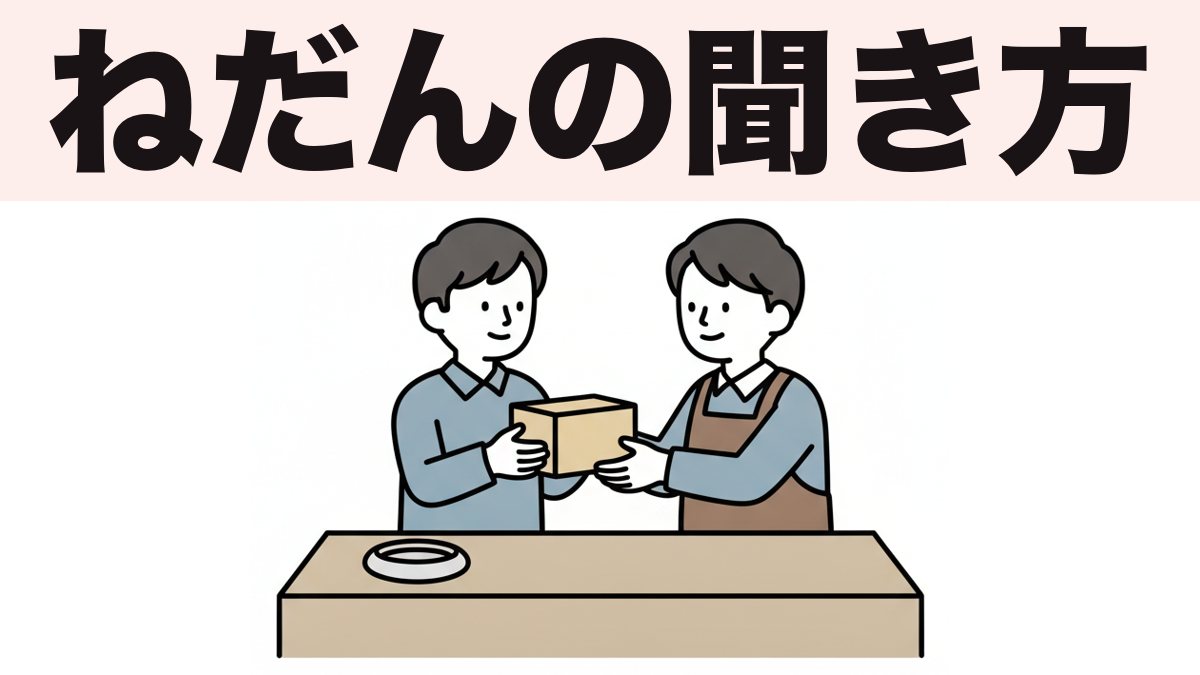
いくらですか means "how much is it?" — and the hard part is never the question, it is the four-digit number that comes back at full speed.
「いくらですか」は「How much is it?」です。むずかしいのは質問ではありません。速いスピードで返ってくる数字です。
Almost every beginner can produce this phrase in week one. Almost every beginner then freezes when the shop assistant says 二千八百円になります and the sentence contains three things they were not expecting: a number they have to decode, a になります they have not learned, and a speed nobody warned them about. So this page covers the question, the answers you will actually hear, and the small set of follow-ups that turn one phrase into a whole transaction.
The basics
How do you ask how much something costs?
いくら is the question word for price, and ですか makes it a polite question. That is the entire construction.
いくらですか。 — How much is it? (polite, works anywhere) これはいくらですか。 — How much is this? (polite, pointing at something near you)
これ, それ and あれ decide which thing you mean — the one near you, near them, or away from both. If that trio is still fuzzy, これ・それ・あれ・どれ is the page to read before this one, because pointing at the wrong item is a faster way to derail a shop conversation than any grammar mistake.
Can you drop the は?
Yes, and in a shop you usually should. これいくらですか is what people actually say, holding the thing up while they say it. The particle は is not wrong, it is just more than the situation needs — the object in your hand is doing the work of marking the topic.
これいくらですか。 — How much is this? (polite but relaxed, the everyday form) 全部でいくらですか。 — How much is it all together? (polite, when you are buying several things)
全部で is worth memorising as one unit: 全部 ("all") plus the で that means "totalling." It is the phrase for the moment you put a handful of things on the counter.
いくら or いくつ — which one?
いくら asks about money. いくつ asks about quantity, and it also asks about age for children. Mixing them up produces a question nobody can answer.
これいくらですか。 — How much does this cost? (price) いくつ買いますか。 — How many are you buying? (quantity)
Japanese has a whole system of counters for "how many," and which counter you need depends on the shape of the thing you are counting — Japanese counters covers that separately. Prices are mercifully simpler: one word, いくら, for everything from a rice ball to a house.
How do you understand the answer?
This is the real skill. Japanese prices are spoken in the same units as written, but they arrive quickly, and yen amounts get long fast. The structure is regular:
- 百 (ひゃく) — hundred
- 千 (せん) — thousand
- 万 (まん) — ten thousand
The one that catches English speakers is 万. English counts in thousands all the way up — "twenty-five thousand" — while Japanese switches to a new unit at ten thousand. So ¥25,000 is 二万五千円 (にまんごせんえん), literally "two ten-thousands, five thousands." You have to regroup the digits in your head, and that regrouping is what makes prices feel harder than they are.
千二百円です。 — It's 1,200 yen. (the usual polite answer) 三千五百円になります。 — That comes to 3,500 yen. (shop-staff register, see below)
If the numbers themselves are the bottleneck, Japanese numbers 1–100 builds the foundation this sits on. There is no shortcut around knowing them by ear.
Beyond the basics
What is that になります you keep hearing?
Shop and restaurant staff rarely say plain です for a total. They say になります, which sounds like "it becomes." Grammatically it is softened, deferential service language rather than a claim that the price changed.
お会計、二千八百円になります。 — Your total comes to 2,800 yen. (service Japanese, at the register) こちら、五百円になります。 — This one is 500 yen. (service Japanese)
You are not expected to speak this way back. Recognising it is enough — and it is part of the larger pattern of shop language covered in でございます, the register you hear constantly and almost never produce.
税込 or 税抜 — which price is on the tag?
Two words decide what you actually pay. 税込 (ぜいこみ) means tax included. 税抜 (ぜいぬき) means tax excluded, with consumption tax added at the register. Shops must display a tax-included price, but many print both, in different sizes, and the bigger number is not always the one you pay.
これは税込ですか。 — Is this tax included? (polite, at the tag or the register)
A third phrase worth recognising on signs is 本体価格 (ほんたいかかく), "base price" — that is the pre-tax figure. When a tag shows two numbers, the larger one is usually the one you hand over.
The follow-ups that finish the transaction
Asking the price is the opening move. These are the four sentences that usually follow it, and knowing them turns a stalled exchange into a completed purchase.
カードで払えますか。 — Can I pay by card? (polite; cash is still common in small shops) 袋をください。 — Could I have a bag? (polite; bags are charged for and no longer automatic) これをください。 — I'll take this one. (polite, the standard way to commit to a purchase) もう少し安いのはありますか。 — Is there a slightly cheaper one? (polite, asking for a cheaper option — not haggling)
That last one is a request for a different product, not a discount on this one. It is the polite move in a shop where bargaining is not.
Can you bargain in Japan?
Effectively, no. Prices are fixed in almost every shop, including the secondhand ones, and asking for a discount usually produces an uncomfortable silence rather than a lower price. The exceptions are narrow: flea markets, some antique stalls, and occasionally a large purchase in an electronics store, where まけてくれませんか ("could you knock something off?") is understood but still unusual.
まけてくれませんか。 — Could you give me a discount? (casual-polite; understood, but rarely appropriate)
The better strategy is the question above — ask whether a cheaper version exists. That is a normal request, and staff will often walk you to a different shelf.
Asking about price without asking the price
Sometimes the number is printed and you want to comment on it, not request it. Two adjectives do most of that work: 高い (expensive, also "tall") and 安い (cheap).
ちょっと高いですね。 — That's a little expensive, isn't it. (polite, mild — ちょっと softens it) 安いですね。 — That's cheap, isn't it. (polite, and a compliment about the shop, not the item)
高い carrying both "expensive" and "tall" trips people up — the ambiguity, and how to avoid it, is in 高い and its neighbours.
円 and the symbol you will see on tags
Spoken, the unit is 円 (えん). Written, it appears as ¥ before the number or 円 after it: ¥1,200 and 1,200円 are the same price. In shops aimed at visitors you may also see 税込価格 written in small type beside the big number, which is your confirmation that the larger figure is the final one.
Common mistakes
- Using いくつ for a price. いくつですか asks how many things there are, or how old a child is. For money it has to be いくら.
- Regrouping the digits in English. ¥30,000 is 三万円 (さんまんえん), not "thirty thousand yen" mapped word by word. Until 万 is automatic, four- and five-digit prices will feel much harder than they are.
- Expecting です and freezing at になります. The answer will very often come back as になります. It means the same thing as です here; nothing has gone wrong.
- Saying いくらですか while looking at a tag. If the price is printed in front of you, asking it can read as a request for a discount or as inattention. Ask これは税込ですか instead, which is a real question.
- Assuming cards work everywhere. Small shops, older restaurants and some shrines are cash-only. Ask before you commit rather than at the moment you have to pay.
The phrases, in the order you will need them
| Moment | Say | Notes |
|---|---|---|
| Picking something up | これいくらですか | Drop the は; the object does the pointing |
| Several items on the counter | 全部でいくらですか | 全部で = "all together" |
| Checking the tag | これは税込ですか | 税込 = tax included, 税抜 = tax excluded |
| Deciding to buy | これをください | The standard commitment phrase |
| Paying | カードで払えますか | Cash is still common in small shops |
| Bag | 袋をください | Bags are charged for now |
| Too expensive | もう少し安いのはありますか | A request for a cheaper item, not a discount |
| Hearing the total | 〜円になります | Service register; the same as です |
FAQ
Is いくらですか polite enough for any shop? Yes. It is the standard polite form and works in a convenience store, a department store, or a specialist shop. There is a more deferential おいくらですか with the honorific お, which you will hear from staff asking a customer about a budget, but you do not need to produce it.
How do I ask the price of a service, like a haircut or a tour? The same word works: カットはいくらですか. For a total that depends on options, 全部でいくらになりますか ("what will it come to in total?") is the natural phrasing, and the になります there is the same service register.
What if I do not catch the number? Ask once, clearly: もう一度お願いします ("one more time, please"). Staff will usually repeat it more slowly, and at a register they will almost always show you the figure on the display or the receipt. How to ask someone to repeat has the full set of phrases for this moment, which is the most common place a beginner's conversation breaks.
Do I need to say 円 when I say a price? Yes, when you are saying the amount: 千円 (せんえん). When you are reading a tag aloud to yourself, nobody cares. The unit is not optional in a sentence the way "dollars" sometimes is in English.
Is それはいくらですか wrong? Not at all — それ is correct for something near the other person, such as behind the counter or in their hand. これ is for what is near you. Using これ for an item the assistant is holding is the more common slip.
Why do prices sometimes end in 8? Because ¥1,980 and ¥2,980 are the Japanese equivalent of $19.99 pricing. Nothing grammatical about it, but it is worth expecting, because "nine hundred eighty" arriving at speed is the exact shape of number that beginners mishear.
Practice
Build each answer before you open it. Questions 3 and 4 are a pair, and so are 7 and 8 — one word changes what you are actually asking.
1. Ask "how much is this?" while holding the item.
Show answer
これいくらですか — the は is usually dropped in a shop, because the thing in your hand marks the topic already.
2. Ask how much it is for everything together.
Show answer
全部でいくらですか — 全部 is "all," and the で marks the total. Learn it as one unit.
3. Ask "how much does it cost?"
Show answer
いくらですか — いくら is for money only. This is the pair to question 4.
4. Ask "how many are you buying?"
Show answer
いくつ買いますか — いくつ is for quantity, never for price. This is the pair to question 3.
5. What is 二万五千円 in digits?
Show answer
¥25,000 — 二万 is two ten-thousands and 五千 is five thousands. Japanese regroups at 万, not at every thousand.
6. Something is wrong here: これはいくつですか, asked about the price of a bag.
Show answer
これはいくらですか — いくつ asks how many, so the question as asked is about quantity, not money.
7. Ask whether the price on the tag includes tax.
Show answer
これは税込ですか — 税込 is tax included. This is the pair to question 8.
8. Ask whether there is a slightly cheaper one.
Show answer
もう少し安いのはありますか — this asks for a different item, not a discount, which is why it works in a country where bargaining does not.
9. The assistant says 三千八百円になります. What did they say, and what is になります doing?
Show answer
"That comes to 3,800 yen" — になります is softened service language. It means the same as です here and does not imply the price changed.
10. Say "I'll take this one," then ask if you can pay by card.
Show answer
これをください。カードで払えますか。 — ください commits to the purchase, and 払えます is the potential form of 払う, "to be able to pay."
Vocabulary from this article
Tap the block to select all of it, then copy. In Anki: File → Import, note type Basic, separator Tab — the first column becomes the front, the second the back.
いくら	いくら — how much (price)
いくつ	いくつ — how many; how old (of a child)
円	えん — yen
百	ひゃく — hundred
千	せん — thousand
万	まん — ten thousand
全部	ぜんぶ — all, everything
税込	ぜいこみ — tax included
税抜	ぜいぬき — tax excluded
本体価格	ほんたいかかく — base price, before tax
お会計	おかいけい — the bill, the total
払う	はらう — to pay
袋	ふくろ — bag
買う	かう — to buy
高い	たかい — expensive; tall
安い	やすい — cheap
少し	すこし — a little
一度	いちど — one time, once
I'm Yuuki, a Japanese teacher based in Tokyo. I've taught on italki as a Top 1% teacher and watched over 1,500 anime. I also guide people around Akihabara, where this exact phrase gets used ten times an afternoon — and where I have watched a lot of confident learners produce a perfect いくらですか and then lose the whole exchange to a four-digit number.
Sources: the author's own lessons and standard reference grammars.
この文は、はじめて1週間で言えるようになります。でも、店の人が「二千八百円になります」と言ったとき、多くの人が止まります。数字が速い。「になります」は習っていない。だからここでは、質問の形と、返ってくる答えと、そのあとに使う文をまとめます。
基本
ねだんの聞き方
「いくら」はねだんを聞く言葉です。「ですか」をつけると、ていねいな質問になります。
いくらですか。 — How much is it? (polite, works anywhere) これはいくらですか。 — How much is this? (polite, pointing at something near you)
「これ」「それ」「あれ」で、どれのことかが決まります。
「は」は言わなくてもいい
店では「これいくらですか」と言う人が多いです。物を手に持っているので、「は」がなくても分かります。
これいくらですか。 — How much is this? (polite but relaxed, the everyday form) 全部でいくらですか。 — How much is it all together? (polite, when you are buying several things)
「全部で」はひとつの言葉としておぼえてください。物をいくつかカウンターに置いたときに使います。
「いくら」と「いくつ」
「いくら」はお金です。「いくつ」は数です。子どもの年もうきます。
これいくらですか。 — How much does this cost? (price) いくつ買いますか。 — How many are you buying? (quantity)
数を数えるときは、物の形でことばが変わります。でも、ねだんはいつも「いくら」ひとつです。
答えの聞き取り方
これがいちばん大切です。日本のねだんは、書く形と同じ形で言います。
- 百(ひゃく) — hundred
- 千(せん) — thousand
- 万(まん) — ten thousand
英語と一番ちがうのは「万」です。英語は千でずっと数えます(twenty-five thousand)。日本語は一万で新しい言葉になります。だから ¥25,000 は「二万五千円」です。頭の中で数字を切り直す必要があります。これが、ねだんをむずかしく感じる理由です。
千二百円です。 — It's 1,200 yen. (the usual polite answer) 三千五百円になります。 — That comes to 3,500 yen. (shop-staff register, see below)
もう少し先へ
「になります」は何ですか
店の人は「です」ではなく「になります」とよく言います。「変わる」という意味ではありません。やわらかい、ていねいな店の言葉です。
お会計、二千八百円になります。 — Your total comes to 2,800 yen. (service Japanese, at the register) こちら、五百円になります。 — This one is 500 yen. (service Japanese)
自分で言う必要はありません。聞いて分かれば十分です。
「税込」と「税抜」
「税込(ぜいこみ)」は tax included です。「税抜(ぜいぬき)」は tax excluded で、レジで税が足されます。ねだんが2つ書いてあるときは、大きいほうを払うことが多いです。
これは税込ですか。 — Is this tax included? (polite, at the tag or the register)
「本体価格(ほんたいかかく)」も見ます。これは税の前のねだんです。
そのあとに使う文
ねだんを聞いたあとに使う文です。この4つで、買い物が終わります。
カードで払えますか。 — Can I pay by card? (polite; cash is still common in small shops) 袋をください。 — Could I have a bag? (polite; bags are charged for and no longer automatic) これをください。 — I'll take this one. (polite, the standard way to commit to a purchase) もう少し安いのはありますか。 — Is there a slightly cheaper one? (polite, asking for a cheaper option — not haggling)
さいごの文は「安くしてください」ではありません。「べつの安い物はありますか」という意味です。
日本で値切れますか
ほとんどの店でできません。ねだんは決まっています。安くしてくださいと言うと、店の人がこまります。できるのは、フリーマーケットや古い道具の店くらいです。
まけてくれませんか。 — Could you give me a discount? (casual-polite; understood, but rarely appropriate)
上の「もう少し安いのはありますか」のほうがいいです。これはふつうの質問なので、べつの物を見せてくれます。
「高い」と「安い」
ちょっと高いですね。 — That's a little expensive, isn't it. (polite, mild — ちょっと softens it) 安いですね。 — That's cheap, isn't it. (polite, and a compliment about the shop, not the item)
「高い」は expensive と tall の両方の意味があります。
よくあるまちがい
- ねだんに「いくつ」を使う。 「いくつですか」は数の質問です。お金は「いくら」です。
- 英語のまま数字を切る。 ¥30,000 は「三万円」です。「thirty thousand」ではありません。
- 「になります」で止まる。 答えは「になります」で来ることが多いです。「です」と同じ意味です。
- ねだんが書いてあるのに聞く。 「これは税込ですか」のほうが本当の質問です。
- カードがどこでも使えると思う。 小さい店は現金だけのことがあります。先に聞いてください。
使う順番
| 場面 | 言う文 | メモ |
|---|---|---|
| 物を手に取ったとき | これいくらですか | 「は」はなくていい |
| いくつか買うとき | 全部でいくらですか | 「全部で」」all together |
| ねだんの札を見たとき | これは税込ですか | 税込税込tax included |
| 買うと決めたとき | これをください | 買うときの決まった文 |
| 払うとき | カードで払えますか | 現金だけの店もある |
| 袋がいるとき | 袋をください | 袋は今はお金がかかる |
| 高いと思ったとき | もう少し安いのはありますか | 安くしてください、ではない |
| 答えを聞くとき | 〜円になります | 店の言葉。「です」と同じ |
FAQ
「いくらですか」はどんな店でも使えますか。 はい。コンビニでも、デパートでも使えます。「おいくらですか」はもっとていねいですが、自分で言う必要はありません。
サービスのねだんはどう聞きますか。 同じです。「カットはいくらですか」。全部でいくらか聞くときは「全部でいくらになりますか」が自然です。
数字が聞き取れなかったら? 「もう一度お願いします」と言ってください。レジでは画面やレシートで見せてくれます。
「円」は言わなくてもいいですか。 文の中では言います。「千円」です。
「それはいくらですか」はまちがいですか。 まちがいではありません。「それ」は相手の近くの物です。店の人が持っている物に「これ」を使う人が多いですが、そこは「それ」です。
なぜねだんは8で終わることが多いのですか。 ¥1,980 や ¥2,980 は、日本の「$19.99」です。文法の話ではありませんが、この形の数字は速く聞こえて、聞き取りにくいです。
練習
答えを見る前に、自分で作ってください。3と4、7と8は組です。
1. 物を持って「これはいくらですか」と聞いてください。
答えを見る
これいくらですか — 店では「は」を言わないことが多いです。手に持っている物が話題を示しています。
2. 「全部でいくらですか」と聞いてください。
答えを見る
全部でいくらですか — 「全部」」all、「で」」合計。ひとつの言葉としておぼえます。
3. ねだんを聞いてください。
答えを見る
いくらですか — 「いくら」はお金だけです。4と組になっています。
4. 「いくつ買いますか」と聞いてください。
答えを見る
いくつ買いますか — 「いくつ」は数です。お金には使いません。3と組になっています。
5. 「二万五千円」は数字でいくらですか。
答えを見る
¥25,000 — 「二万」は 20,000、「五千」は 5,000 です。日本語は一万で切ります。
6. かばんのねだんを聞くときに「これはいくつですか」と言いました。どこがちがいますか。
答えを見る
これはいくらですか — 「いくつ」は数の質問なので、お金の質問になっていません。
7. 札のねだんに税が入っているか聞いてください。
答えを見る
これは税込ですか — 「税込」は tax included です。8と組になっています。
8. もう少し安い物があるか聞いてください。
答えを見る
もう少し安いのはありますか — これはべつの物をたのむ文です。だから、値切らない国でも使えます。
9. 店の人が「三千八百円になります」と言いました。意味と、「になります」の役わりは?
答えを見る
「3,800円です」という意味 — 「になります」はやわらかい店の言葉です。ねだんが変わったという意味ではありません。
10. 「これをください」と言って、カードで払えるか聞いてください。
答えを見る
これをください。カードで払えますか。 — 「ください」で買うと決めます。「払えます」は「払う」の可能形です。
この記事に出た単語
ブロックをタップして全部を選んでから、コピーしてください。Anki では ファイル → 読み込み、ノートタイプは 基本、区切りは タブ です。左が表、右が裏になります。
いくら	いくら — how much (price)
いくつ	いくつ — how many; how old (of a child)
円	えん — yen
百	ひゃく — hundred
千	せん — thousand
万	まん — ten thousand
全部	ぜんぶ — all, everything
税込	ぜいこみ — tax included
税抜	ぜいぬき — tax excluded
本体価格	ほんたいかかく — base price, before tax
お会計	おかいけい — the bill, the total
払う	はらう — to pay
袋	ふくろ — bag
買う	かう — to buy
高い	たかい — expensive; tall
安い	やすい — cheap
少し	すこし — a little
一度	いちど — one time, once
私はユウキです。東京で日本語を教えています。 italki の Top 1% の先生で、アニメは1,500本以上見ました。秋葉原のツアーもしています。この文は一日に十回くらい使います。そして、「いくらですか」はきれいに言えるのに、返ってきた数字で止まってしまう人を、何度も見ています。
More drills like the ones above, plus a timed JLPT-style mock test: Practice · N5上のような練習問題と、時間つきのJLPT形式のもぎ試験: 練習ページ · N5
Want to try this in a real conversation?
本当の会話で、ためしてみませんか?
30-minute trial lesson, $13. Times shown in your own timezone.
30分の体験レッスン、$13。時間はあなたのタイムゾーンで表示されます。
Book a trial lesson · $13