わからない vs 知らない: two ways to say "I don''t know", one of them coldわからない と 知らない: 「知りません」は冷たく聞こえる
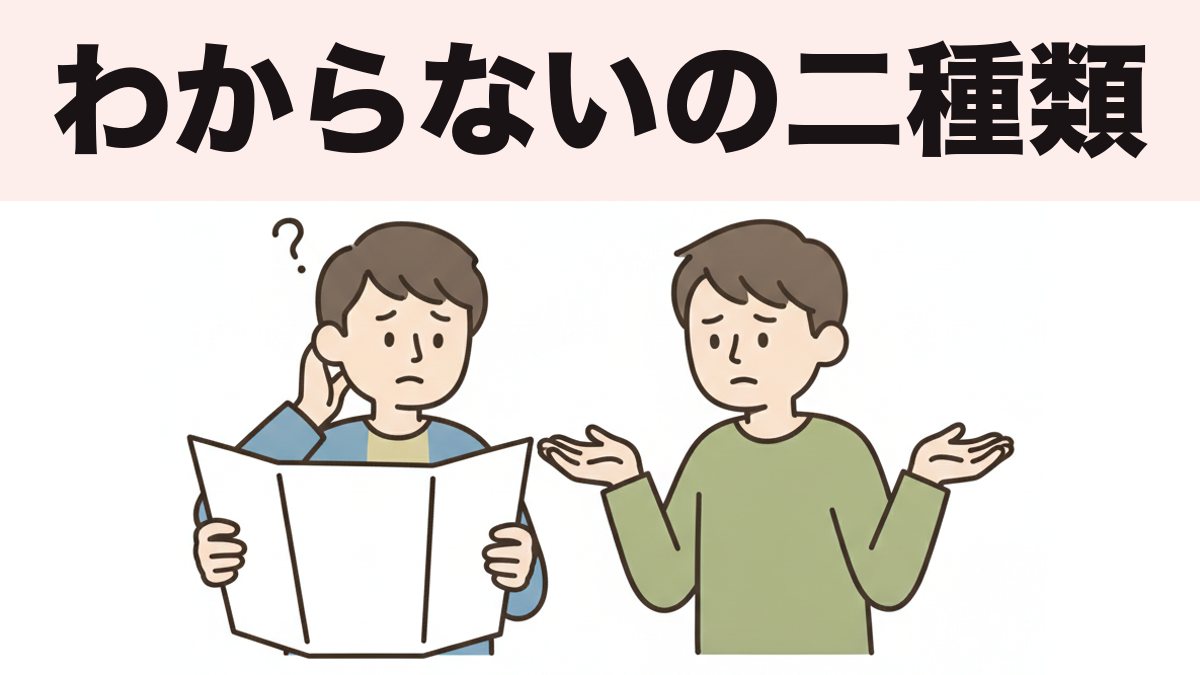
分からない means the answer is not something you can work out; 知らない means the information was never in your head — and because 知らない can imply "and it is not my business," 分かりません is the safer "I don't know" with strangers and at work.
「分からない」は「考えても出てこない」。「知らない」は「その情報が頭にない」です。「知らない」は「私には関係ない」に聞こえることがあります。だから、知らない人や仕事の場面では「分かりません」の方が安全です。
Both translate as "I don't know," and choosing wrong rarely confuses anyone — it just makes you sound colder than you meant. The grammar around them is also lopsided in a way that catches every learner: the positive of 知る is 知っています, but the negative is 知りません, never 知っていません.
The basics
What is the actual difference?
分かる is about comprehension: something becomes clear to you. 知る is about acquisition: a piece of information enters your head.
道が分かりません。 — I can't work out the way. (polite, you are looking at a map and failing) その店は知りません。 — I don't know that shop. (polite, you have never heard of it)
So 分からない is a failure to understand or determine, and 知らない is an absence of information. A person can 知っている the word and still 分からない what the sentence means.
漢字は知っていますが、意味が分かりません。 — I know the kanji, but I don't understand the meaning. (polite, the distinction in one sentence)
Which one is safer to say?
分かりません, almost always. 知りません is grammatically fine and tonally risky: because it states that the information is simply not yours, it can read as "I have nothing to do with this."
すみません、分かりません。 — Sorry, I don't know. (polite, safe with anyone) 知りません。 — I don't know / not my business. (polite form, but can land cold)
Shop staff and receptionists almost never say 知りません to a customer for this reason. They say 分かりかねます ("I am unable to determine") or 確認いたします ("I'll check"). If you are ever unsure which to use, 分かりません cannot offend anyone.
Why is it 知っています but 知りません?
Because 知る marks the moment information arrives. Once it has arrived, you are in the resulting state, which is why the positive needs 〜ている. The negative is the plain form, because you never entered the state at all.
知っています。 — I know. (polite, the state of having learned it) 知りません。 — I don't know. (polite, you never learned it)
知っていません is the single most common error with this verb. It is not a subtle mistake — it sounds broken to a native ear. The 〜ている form is doing something specific here, and why 知っている means "I know" works through the same logic for other verbs.
What particle does 分かる take?
が, not を. 分かる is not "to understand [something]" so much as "[something] becomes clear" — so the thing you understand is the subject.
日本語が分かります。 — I understand Japanese. (polite) 意味がよく分かりません。 — I don't really understand the meaning. (polite)
日本語を分かります is wrong, and it is a mistake learners make for months because English has a transitive verb there. The が here is doing the job described in は vs が — marking what the sentence is about, not what you are acting on.
Beyond the basics
Which one in which situation?
| Situation | Say | Why |
|---|---|---|
| A stranger asks for directions you can't work out | 分かりません | Safe, warm, about your ability |
| Asked about a shop you have never heard of | 知りません / 分かりません | Either; 分かりません is softer |
| Your boss asks about a file you never saw | 分かりかねます / 確認します | 知りません sounds dismissive upward |
| A teacher asks you a question in class | 分かりません | You cannot work out the answer |
| Asked whether a celebrity is famous in your country | 知りません | Pure information |
| Understanding an instruction | 分かりました | Acceptance, not knowledge |
| You genuinely have no involvement | 知りません | The cold reading is the correct one |
Why is 分かりました past tense?
Because understanding arrived at a point in time. Japanese marks the arrival; English marks the resulting state. 分かりました is the standard "understood, got it," said the instant the point lands.
分かりました。 — Understood. (polite, accepting an instruction) 分かります。 — I understand / I can see that. (polite, ongoing sympathy or comprehension)
分かります in answer to an instruction sounds odd — like saying "I am capable of understanding" rather than "got it." Use 分かりました for tasks and 分かります for sympathy: お気持ちは分かります, "I understand how you feel."
What are the polite and humble versions?
知る has a full set, which you will hear constantly in shops and offices.
ご存じですか。 — Do you know? (honorific, about the other person) 存じません。 — I do not know. (humble, about yourself) 分かりかねます。 — I am unable to determine that. (formal, service register)
分かりかねます is the phrase to recognise: 〜かねる means "cannot bring oneself to," so it declines without ever saying no. Staff use it precisely because it avoids the coldness of 知りません. Choosing among these rungs is the everyday work described in keigo vs casual.
How casual can they get?
Both shorten, and the shortened forms carry attitude.
わかんない。 — Dunno. (casual, extremely common in speech) 知らない。 — Don't know. (casual) 知らん。 — Dunno / don't care. (casual, blunt; standard in Kansai speech) 知らんけど。 — …but what do I know. (Kansai, tacked on after an opinion to disclaim it)
知らんけど deserves its own note: it is a Kansai habit that spread nationally, used to end a confident statement with a shrug. It is a joke about responsibility, not real doubt, and it belongs to the dialect landscape in Japanese dialects.
What about the anime versions?
Fiction leans hard on the cold reading, which is exactly why it is worth flagging.
知るか! — How should I know! / I don't care! (rude, dismissive) 知らねぇよ。 — Dunno, don't care. (rough masculine) 分かってない。 — You don't get it. (casual, often accusatory) 分かってる。 — I know, I get it. (casual; can be impatient depending on tone)
知るか is not a stronger "I don't know" — it is a refusal to engage, closer to "not my problem." Learners who pick it up from anime and use it in a real conversation cause exactly the reaction you would expect.
Common mistakes
- 知っていません. Does not exist. The negative is 知りません or 知らない.
- 日本語を分かります. 分かる takes が: 日本語が分かります.
- 知りません to a customer or a superior. Grammatically polite, tonally dismissive. Use 分かりません, 分かりかねます, or 確認します.
- 分かります as "got it." For accepting an instruction, use the past: 分かりました.
- Using 知るか because it appeared in anime. It means "how should I know," with the force of a slammed door.
- Treating them as interchangeable in self-description. 日本語が分かりません means you cannot follow the language; 日本語を知りません would suggest you have never heard that such a language exists.
Practice
Answers are hidden — build yours first, then open. Questions 1 and 2 are a pair: the same three words, one positive and one negative.
1. Say "I know that shop" politely.
Show answer
その店は知っています — the positive takes 〜ている because knowing is the state that follows learning.
2. Now say "I don't know that shop" politely.
Show answer
その店は知りません — the negative is the plain form. 知っていません is the pair's trap and does not exist.
3. A stranger asks for directions to a building you cannot locate on your map.
Show answer
すみません、分かりません — this is about your ability to work it out, and it is the warm option. 知りません would sound like brushing them off.
4. Fix this sentence: 日本語を分かります。
Show answer
日本語が分かります — 分かる takes が, because the thing understood is the subject, not the object.
5. Your manager explains a new procedure. Accept it.
Show answer
分かりました — past tense, because the understanding arrived just now. 分かります here would sound like "I am able to understand."
6. Say "I understand how you feel."
Show answer
お気持ちは分かります — ongoing comprehension, so present tense. This is the one place 分かります beats 分かりました.
7. You work at a front desk and a customer asks something you cannot answer.
Show answer
分かりかねます / 確認いたします — service register. 知りません to a customer is the classic tonal accident.
8. Ask a client politely whether they know about a service.
Show answer
ご存じですか — the honorific form of 知る, used about the other person. About yourself it would be 存じません.
9. Say "dunno" to a close friend.
Show answer
わかんない — the reduced casual form. 知らない also works but leans towards "no information" rather than "can't work it out."
10. A character shouts 知るか! — what did they mean?
Show answer
"How should I know / not my problem" — it is a refusal to engage, not a stronger "I don't know." Recognise it; do not say it.
FAQ
Is 知りません actually rude? Not rude, but flat. It states an absence of information with no softening, which in a service or workplace context can read as indifference. Adding すみません in front softens it a great deal.
Can I always just use 分かりません? Nearly always, and that is a reasonable strategy while you build the feel for it. The only odd case is pure information about the world — "is this singer famous in your country?" — where 知りません is the accurate answer.
Why does 分かる mean both "understand" and "know"? Because it covers anything that becomes clear, including facts you work out. 名前が分かりました means "I found out the name" — the information became clear, rather than being taught to you.
What is 分かりかねます exactly? 分かる plus 〜かねる, "cannot bring oneself to." It is formal service Japanese for "I am not in a position to say," and it is far softer than a flat negative.
Is 知らんけど rude? No — it is playful. It is a Kansai tag that disclaims responsibility for what you just said, and it has spread nationally as a joke. It does not belong in formal speech.
How do I say "I forgot" rather than "I don't know"? 忘れました. Learners often use 分かりません when they mean they knew and lost it, and the distinction matters in a lesson — 忘れました tells your teacher to prompt you instead of re-teaching.
Vocabulary from this article
Tap the block to select all of it, then copy. In Anki: File → Import, note type Basic, separator Tab — the first column becomes the front, the second the back.
分かる	わかる — to understand, to become clear
分かりません	わかりません — I don't understand, I can't work it out
分かりました	わかりました — understood, got it
分かります	わかります — I understand (ongoing)
分かりかねます	わかりかねます — I am unable to determine (formal)
わかんない	わかんない — dunno (casual)
知る	しる — to come to know
知っています	しっています — I know
知りません	しりません — I don't know (no information)
知らない	しらない — don't know (casual)
知らん	しらん — dunno, don't care (blunt, Kansai)
知らんけど	しらんけど — …but what do I know (Kansai tag)
ご存じ	ごぞんじ — knowing (honorific, about others)
存じません	ぞんじません — I do not know (humble)
確認する	かくにんする — to check, to confirm
意味	いみ — meaning
気持ち	きもち — feeling
忘れる	わすれる — to forget
I'm Yuuki, a Japanese teacher based in Tokyo. I've taught on italki as a Top 1% teacher and watched over 1,500 anime. 知っていません is the mistake I hear in nearly every beginner's first month, and the fix is not a rule to memorise — it is noticing that Japanese treats knowing as a state you entered, so the negative is simply never having entered it.
Sources: the author's own lessons and standard reference grammars.
どちらも英語では I don't know です。まちがえても通じます。でも、思ったより冷たく聞こえます。文法も左右で形がちがいます。「知る」の肯定は「知っています」なのに、否定は「知りません」です。「知っていません」とは言いません。
基本
何がちがう?
「分かる」は理解です。頭の中ではっきりします。「知る」は入手です。情報が頭に入ります。
道が分かりません。 — I can't work out the way. (ていねい。地図を見てもわからない) その店は知りません。 — I don't know that shop. (ていねい。聞いたこともない)
だから「分からない」は「理解できない」、「知らない」は「情報がない」です。言葉を知っていても、文の意味が分からないことはあります。
漢字は知っていますが、意味が分かりません。 — I know the kanji, but I don't understand the meaning. (ていねい。ちがいが1文でわかる)
どちらが安全?
ほとんどの場合「分かりません」です。「知りません」は正しい日本語ですが、少し危ないです。「その情報は私のものではありません」という形なので、「私には関係ありません」に聞こえることがあります。
すみません、分かりません。 — Sorry, I don't know. (ていねい。だれにでも安全) 知りません。 — I don't know / not my business. (ていねいな形。でも冷たく聞こえる)
だから、店の人や受付の人はお客様に「知りません」とほとんど言いません。「分かりかねます」「確認いたします」と言います。まよったら「分かりません」にすれば、だれもいやな気持ちになりません。
どうして「知っています」なのに「知りません」?
「知る」は「情報が入る瞬間」を表すからです。入った後は、その状態にいます。だから肯定は「〜ている」が必要です。否定は、そもそも状態に入っていないので、そのままの形です。
知っています。 — I know. (ていねい。おぼえた後の状態) 知りません。 — I don't know. (ていねい。おぼえていない)
「知っていません」は、この動詞でいちばん多い間違いです。小さい間違いではありません。日本の人には、こわれて聞こえます。この「〜ている」の働きは 〜ている と同じ考え方です。
「分かる」の助詞は?
「を」ではなく「が」です。「分かる」は「〜を理解する」より「〜がはっきりする」に近いからです。分かる対象が主語になります。
日本語が分かります。 — I understand Japanese. (ていねい) 意味がよく分かりません。 — I don't really understand the meaning. (ていねい)
「日本語を分かります」はまちがいです。英語では他動詞なので、何か月も間違えます。この「が」の働きは は と が の話です。
もう少し先へ
場面の表
| 場面 | 言う言葉 | 理由 |
|---|---|---|
| 知らない人に道を聞かれて分からない | 分かりません | 安全であたたかい |
| 聞いたこともない店のこと | 知りません / 分かりません | どちらでも。分かりませんの方がやわらかい |
| 上司に、見ていない書類のこと | 分かりかねます / 確認します | 知りませんは冷たく聞こえる |
| 授業で先生に当てられた | 分かりません | 答えを出せない |
| 有名人が自分の国で有名か | 知りません | 情報の話 |
| 指示を理解した | 分かりました | 理解の受け取り |
| 本当に関係がない | 知りません | 冷たい意味がそのまま正しい |
どうして「分かりました」は過去形?
理解が「その時に来た」からです。日本語は到着を表し、英語は今の状態を表します。「分かりました」は、話が通じた瞬間の言葉です。
分かりました。 — Understood. (ていねい。指示を受ける) 分かります。 — I understand. (ていねい。気持ちが分かる・ずっと分かっている)
指示への「分かります」は変です。「理解する力はあります」のように聞こえます。仕事は「分かりました」、気持ちは「分かります」。「お気持ちは分かります」がその形です。
ていねいな形は?
「知る」には一式あります。店や会社でよく聞きます。
ご存じですか。 — Do you know? (尊敬語。相手のこと) 存じません。 — I do not know. (けんじょう語。自分のこと) 分かりかねます。 — I am unable to determine that. (かたい。店の言葉)
「分かりかねます」は覚えておくと役に立ちます。「〜かねる」は「できない」です。「いいえ」と言わずに断ります。「知りません」の冷たさをさけるために使います。この段の選び方は ていねいとカジュアルの切りかえ と同じです。
どこまでカジュアルになる?
どちらも短くなります。そして短い形には気持ちが乗ります。
わかんない。 — Dunno. (カジュアル。とてもよく使う) 知らない。 — Don't know. (カジュアル) 知らん。 — Dunno / don't care. (カジュアル・ぶっきらぼう。関西ではふつう) 知らんけど。 — …but what do I know. (関西。意見の後に付けて責任をはずす)
「知らんけど」は特別です。関西の言い方が全国に広がりました。自信のある話の最後に付けて、肩をすくめる感じにします。本当の迷いではなく、じょうだんです。方言の話は 方言 にあります。
アニメの形は?
アニメは冷たい方をよく使います。だから注意が必要です。
知るか! — How should I know! (失礼。つきはなす) 知らねぇよ。 — Dunno, don't care. (乱暴・男性的) 分かってない。 — You don't get it. (カジュアル。せめる感じ) 分かってる。 — I know, I get it. (カジュアル。言い方でいらいらして聞こえる)
「知るか」は「強い『知りません』」ではありません。「関係ない」と言って話を切る言葉です。アニメで覚えて実際に使うと、思った通りの反応が返ってきます。
よくある間違い
- 「知っていません」。 ありません。否定は「知りません」「知らない」です。
- 「日本語を分かります」。 「分かる」は「が」です。「日本語が分かります」。
- お客様や上司に「知りません」。 形はていねいですが、冷たく聞こえます。「分かりません」「分かりかねます」「確認します」にします。
- 指示への「分かります」。 受ける時は過去の「分かりました」です。
- アニメで見た「知るか」を使う。 「知るか」はドアをしめる言葉です。
- 2つを同じだと思う。 「日本語が分かりません」は言葉が追えないという意味です。「日本語を知りません」だと、そんな言語があることも知らない、に近くなります。
練習
答えはかくしてあります。先に自分で作ってから開いてください。1と2は同じ言葉の、肯定と否定です。
1. 「あの店を知っています」をていねいに言ってください。
答えを見る
その店は知っています — 肯定は「〜ている」です。知るのは「入った後の状態」だからです。
2. 今度は「あの店を知りません」をていねいに。
答えを見る
その店は知りません — 否定はそのままの形です。「知っていません」はありません。1と対です。
3. 知らない人に道を聞かれました。地図を見ても分かりません。
答えを見る
すみません、分かりません — 自分の力の話なので、あたたかい方です。「知りません」だとつきはなして聞こえます。
4. 直してください: 日本語を分かります。
答えを見る
日本語が分かります — 「分かる」は「が」です。分かる対象が主語になります。
5. 上司が新しいやり方を説明しました。受けてください。
答えを見る
分かりました — 理解が今来たので過去形です。「分かります」だと「理解する力はあります」に聞こえます。
6. 「お気持ちは理解できます」と言ってください。
答えを見る
お気持ちは分かります — ずっと続く理解なので現在形です。ここだけは「分かります」が正解です。
7. 受付で、お客様に答えられないことを聞かれました。
答えを見る
分かりかねます / 確認いたします — 店の言葉です。「知りません」は事故になります。
8. 取引先に、そのサービスをご存じかどうか、ていねいに聞きます。
答えを見る
ご存じですか — 相手のことなので尊敬語です。自分のことなら「存じません」。
9. 仲のいい友だちに「わかんない」と言ってください。
答えを見る
わかんない — 短くしたカジュアルな形です。「知らない」も言えますが、「情報がない」の方に寄ります。
10. キャラクターが「知るか!」と言いました。意味は?
答えを見る
「知るもんか・関係ない」 — 強い「分かりません」ではありません。話を切る言葉です。意味は覚えて、使わないでください。
よくある質問
「知りません」は本当に失礼ですか。 失礼ではありません。平らなだけです。やわらげる言葉がないので、店や会社では「関係ありません」に聞こえることがあります。前に「すみません」を付けると、かなりやわらかくなります。
いつも「分かりません」でいいですか。 ほとんど大丈夫です。慣れるまではそれでいいです。合わないのは、世界の情報の話だけです。「この歌手はあなたの国で有名ですか」には「知りません」が正確です。
どうして「分かる」が「知る」の意味にもなるの? 「はっきりする」なら何でも入るからです。「名前が分かりました」は「名前が判明しました」です。教わったのではなく、はっきりしたのです。
「分かりかねます」とは何ですか。 「分かる」+「〜かねる(できない)」です。「お答えできる立場ではありません」という、かたい店の日本語です。ふつうの否定よりずっとやわらかいです。
「知らんけど」は失礼ですか。 失礼ではありません。じょうだんです。関西の言い方で、言ったことの責任をはずします。かたい場面では使いません。
「忘れました」はどう言いますか。 そのまま「忘れました」です。知っていたのに出てこない時に「分かりません」と言う人が多いです。レッスンでは大事なちがいです。「忘れました」と言えば、先生はヒントを出します。
この記事に出た単語
ブロックをタップすると全部選べます。そのままコピーしてください。Anki では ファイル → 読み込み、ノートタイプ 基本、区切り タブ。1列目が表、2列目が裏になります。
分かる	わかる — to understand, to become clear
分かりません	わかりません — I don't understand, I can't work it out
分かりました	わかりました — understood, got it
分かります	わかります — I understand (ongoing)
分かりかねます	わかりかねます — I am unable to determine (formal)
わかんない	わかんない — dunno (casual)
知る	しる — to come to know
知っています	しっています — I know
知りません	しりません — I don't know (no information)
知らない	しらない — don't know (casual)
知らん	しらん — dunno, don't care (blunt, Kansai)
知らんけど	しらんけど — …but what do I know (Kansai tag)
ご存じ	ごぞんじ — knowing (honorific, about others)
存じません	ぞんじません — I do not know (humble)
確認する	かくにんする — to check, to confirm
意味	いみ — meaning
気持ち	きもち — feeling
忘れる	わすれる — to forget
More drills like the ones above, plus a timed JLPT-style mock test: Practice · N4上のような練習問題と、時間つきのJLPT形式のもぎ試験: 練習ページ · N4
Want to try this in a real conversation?
本当の会話で、ためしてみませんか?
30-minute trial lesson, $13. Times shown in your own timezone.
30分の体験レッスン、$13。時間はあなたのタイムゾーンで表示されます。
Book a trial lesson · $13