〜ておく: doing something now so future you does not have to〜ておく: 今やっておいて、あとの自分をらくにする
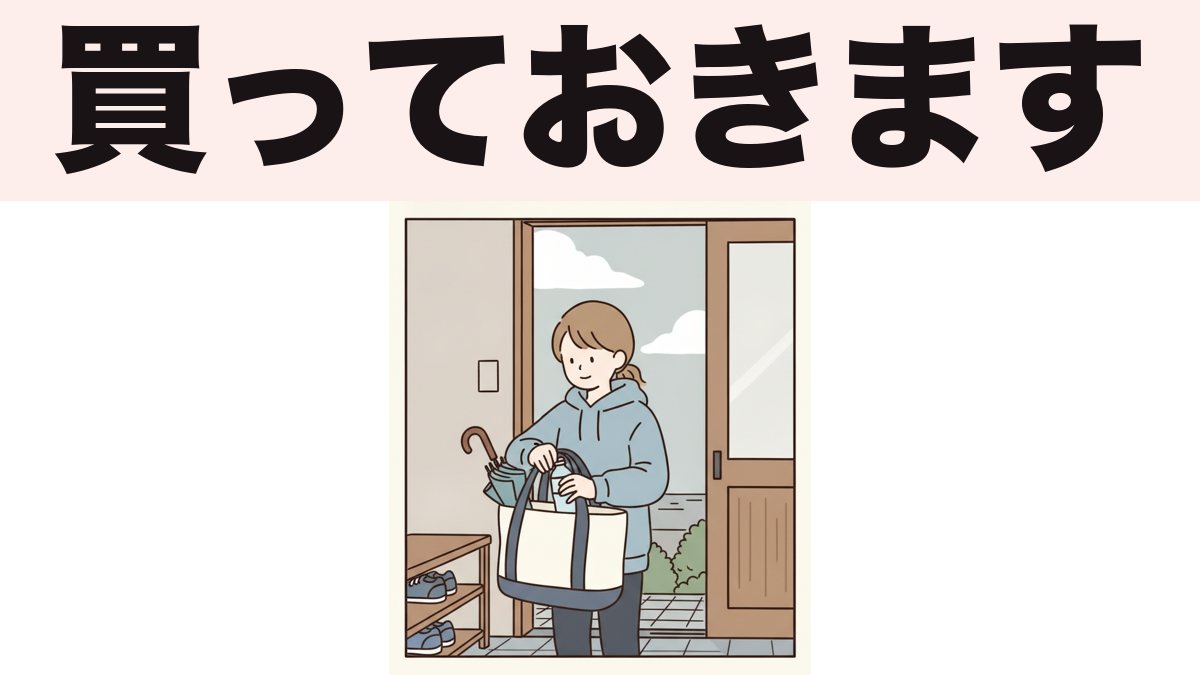
〜ておく attaches to the te-form and means "do this now, in preparation" or "leave it like this." In real speech it contracts to 〜とく — 買っておく becomes 買っとく — which is why you keep hearing a word that isn't in your textbook.
「〜ておく」は「て形」につきます。「先にやっておく」「そのままにしておく」という意味です。会話では「〜とく」になります。「買っておく」が「買っとく」。だから、習っていないことばに聞こえます。
This is one of those grammar points that sounds optional until you notice how often Japanese speakers use it. Almost any action taken with the future in mind gets おく attached, and leaving it off makes the sentence sound flatter and slightly less thoughtful.
The basics
How do you build it?
Take the te-form of a verb and add おく. That's all.
verb (te-form) + おく
明日の朝ごはんを買っておきます。 — I'll buy tomorrow's breakfast in advance. (polite) ホテルを予約しておきました。 — I went ahead and booked the hotel. (polite past)
おく is an ordinary verb (置く, "to put"), so it conjugates normally: おきます, おいた, おいて, おかない. The image is literal — you put the action down now so it's already there later.
If your te-form is solid, you already know this grammar. Everything hard about it lives in the te-form, not in おく.
The three things it means
| Sense | Meaning | Example |
|---|---|---|
| Preparation | Do it now for later | 予約しておく |
| Leave as is | Deliberately don't change it | 窓を開けておく |
| Deal with it | Get it out of the way | 言っておく |
暑いので、窓を開けておいてください。 — It's hot, so please leave the window open. (polite request — "leave it in that state") 一応、言っておきますね。 — I'll mention it just in case. (polite — getting it said now)
The "leave as is" sense catches people out, because it looks like the opposite of "do in advance." It isn't: both are about the state you want to exist later. Opening the window is preparation for the next hour.
The contraction you actually hear
In casual speech ておく becomes とく, and でおく becomes どく:
チケット買っとくね。 — I'll grab the tickets. (casual — 買っておく → 買っとく) 飲んどいて。 — Drink it (before it gets cold / while you can). (casual — 飲んでおいて → 飲んどいて)
This contraction is everywhere in anime and everyday conversation, and it is invisible to learners because it looks like an unfamiliar verb. Once you can undo it — とく → ておく — a large slice of casual dialogue opens up.
You will also hear 〜しとって in western Japanese, which is the same idea with a regional ending: やっといてください and やっとってください both mean "please do it in advance."
Beyond the basics
ておく vs てある: who did it, and what you're pointing at
Both describe a prepared state, but they focus on different things.
| Form | Focus | Example |
|---|---|---|
| 〜ておく | The act of preparing | 窓を開けておいた |
| 〜てある | The resulting state | 窓が開けてある |
もう準備してあります。 — It's already been prepared. (polite — the state, agent unmentioned) もう準備しておきました。 — I've already prepared it. (polite — I did it)
Notice the particle: てある usually takes が for the thing, because it has become a description of that thing. ておく keeps を, because you are still describing an action you performed. The teiru form is the third member of this family — it describes an ongoing action or a state, without the "on purpose, for later" flavour that both おく and ある carry.
覚えておく: the one you'll use most
覚えておく ("remember this / keep it in mind") is close to a fixed phrase, and it appears constantly in both directions:
これは覚えておいてください。 — Please keep this in mind. (polite request) 覚えとくよ。 — I'll remember. (casual reply)
覚える alone means "to memorise, to learn." Adding おく shifts it to "hold onto it for later use," which is what you actually want in most sentences.
The negative: two of them
Both exist and mean different things:
何も言わないでおきます。 — I'll leave it unsaid. (polite — deliberately not doing it) 予約しておかないと、入れませんよ。 — If you don't book ahead, you won't get in. (polite warning)
〜ないでおく is "deliberately refrain," which is a genuine and slightly literary choice. 〜ておかないと is the everyday one: a warning that skipping the preparation has consequences.
Politeness and softening
おく softens announcements about your own actions. Compare:
メールを送ります。 — I'll send the email. (flat statement) メールを送っておきます。 — I'll go ahead and send the email. (polite, considerate — implies "so it's handled for you")
The second sounds more like a colleague and less like a machine. This is the register effect that makes おく worth using even when the preparation sense is barely present.
おく vs しまう
Both attach to the te-form, both add an attitude, and they are near opposites. 〜てしまう marks completion, often with regret; 〜ておく marks preparation, with foresight. 食べてしまった is "I ate it all (oops)"; 食べておいた is "I ate in advance (sensible)."
Common mistakes
- Using it with states rather than actions. 知っておく is odd; 覚えておく is what you want.
- Reading とく as a new verb. 買っとく, やっとく, 見とく — these are all ておく. Undo the contraction before you look anything up.
- Using the contraction in polite speech. 予約しときました is casual. In a work email, write 予約しておきました.
- Confusing ておく with てある. ておく describes what you did; てある describes how something is. 窓を開けておいた vs 窓が開けてある.
- Dropping おく where Japanese wants it. It is not wrong to say 予約します, but 予約しておきます is what a native speaker says when the booking is for a future event.
Practice
Answers are hidden — build yours first, then open. Questions 5 and 6 are a pair: same situation, and only the focus moves.
1. Make the ておく form of 買う.
Show answer
買っておく — te-form 買って, then おく. All the difficulty is in the te-form.
2. Say "I went ahead and booked the hotel," politely.
Show answer
ホテルを予約しておきました — おく is an ordinary verb, so it takes ました for the polite past.
3. Ask someone to leave the window open.
Show answer
窓を開けておいてください — the "leave as is" sense. You are asking for a state to persist into the near future.
4. What is 買っとく short for?
Show answer
買っておく — casual speech contracts ておく to とく, and でおく to どく. It is not a separate verb.
5. Say "I've already prepared it," focusing on the fact that you did it.
Show answer
もう準備しておきました — ておく keeps the action, and the doer, in view.
6. Say "it's already prepared," focusing on the state.
Show answer
もう準備してあります — てある describes the resulting state and leaves the agent out. This is the pair to question 5.
7. Reply casually to これは覚えておいてください.
Show answer
覚えとくよ — 覚えておく contracted, with よ for reassurance.
8. Warn someone that they won't get in without booking.
Show answer
予約しておかないと、入れませんよ — 〜ておかないと is the everyday "if you don't do it in advance" warning.
9. Say "I'll leave it unsaid."
Show answer
何も言わないでおきます — ないでおく is deliberately refraining, which is different from simply not doing something.
10. Why does メールを送っておきます sound more considerate than メールを送ります?
Show answer
おく implies you are handling it so it is done for later — the foresight is built into the grammar, which makes the sentence sound like a colleague rather than an announcement.
FAQ
Is おく written in kanji? 置く exists, but the grammatical use is normally written in kana. 置いておく (physically put something and leave it there) mixes both and is a real sentence.
Can I use ておく with する-verbs? Yes, constantly: 確認しておく, 準備しておく, 連絡しておく. These are among the most common forms in office Japanese.
Does ておく have a past-tense-only meaning? No. 予約しておきます (future), 予約しておきました (done), 予約しておいて (request) all work.
How is とく different from どく? Purely phonetic. Verbs whose te-form ends in で (読んで, 飲んで, 遊んで) become どく: 読んどく, 飲んどく.
Is ておく polite? It is register-neutral — politeness comes from おきます vs おく. The contraction とく is the casual marker, not おく itself.
Can I stack it with other endings? Yes: 買っておきたい ("I want to buy it in advance"), 買っておかなければならない ("I have to buy it in advance"). おく behaves like any other verb once attached.
Vocabulary from this article
Tap the block to select all of it, then copy. In Anki: File → Import, note type Basic, separator Tab — the first column becomes the front, the second the back.
置く	おく — to put, to place
買う	かう — to buy
予約	よやく — reservation
準備	じゅんび — preparation
窓	まど — window
開ける	あける — to open
暑い	あつい — hot
言う	いう — to say
覚える	おぼえる — to remember, to learn
送る	おくる — to send
確認	かくにん — confirmation
連絡	れんらく — contact, getting in touch
朝ごはん	あさごはん — breakfast
飲む	のむ — to drink
入る	はいる — to enter
一応	いちおう — just in case, for now
読む	よむ — to read
遊ぶ	あそぶ — to play
I'm Yuuki, a Japanese teacher based in Tokyo. I've taught on italki as a Top 1% teacher and watched over 1,500 anime. I say 〜しとってください in class without noticing, and learners hear a verb they've never met. It is just ておく wearing a regional accent — and once you can undo the contraction, casual Japanese gets noticeably easier to follow.
Sources: the author's own lessons and standard reference grammars.
なくてもいいように見える文法ですが、日本人はとてもよく使います。あとのことを考えてする動作には、たいてい「おく」がつきます。つけないと、少しそっけなく聞こえます。
基本
作り方
動詞の「て形」に「おく」をつけます。それだけです。
動詞(て形)+ おく
明日の朝ごはんを買っておきます。 — I'll buy tomorrow's breakfast in advance. ホテルを予約しておきました。 — I went ahead and booked the hotel.
「おく」はふつうの動詞(置く)なので、ふつうに変わります。「おきます」「おいた」「おいて」「おかない」。イメージもそのままです。今、その動作を置いておくので、あとでもうそこにあります。
3つの意味
| 意味 | せつめい | れい |
|---|---|---|
| じゅんび | あとのために先にやる | 予約しておく |
| そのまま | わざと変えない | 窓を開けておく |
| すませる | 今のうちにやる | 言っておく |
暑いので、窓を開けておいてください。 — It's hot, so please leave the window open. 一応、言っておきますね。 — I'll mention it just in case.
「そのまま」の意味は、反対に見えます。でも同じです。どちらも「あとでこうなっていてほしい」です。
会話の形
会話では「ておく」が「とく」、「でおく」が「どく」になります。
チケット買っとくね。 — I'll grab the tickets. 飲んどいて。 — Drink it while you can.
アニメでも毎日の会話でも、とてもよく出ます。知らない動詞に見えるので、気づきにくいです。「とく」→「ておく」ともどせるようになると、くだけた会話が急に分かるようになります。
西日本では「〜しとって」とも言います。「やっといてください」も「やっとってください」も同じ意味です。
もう少しくわしく
「ておく」と「てある」
どちらも「じゅんびできている」ですが、見ているところがちがいます。
| 形 | 見ているところ | れい |
|---|---|---|
| 〜ておく | じゅんびした動作 | 窓を開けておいた |
| 〜てある | できているじょうたい | 窓が開けてある |
もう準備してあります。 — It's already been prepared. もう準備しておきました。 — I've already prepared it.
助詞を見てください。「てある」は「が」が多いです。そのものの説明になっているからです。「ておく」は「を」です。自分がした動作だからです。
「覚えておく」
「覚えておく」はほとんどかたまりの言い方で、両方向によく使います。
これは覚えておいてください。 — Please keep this in mind. 覚えとくよ。 — I'll remember.
「覚える」だけだと「おぼえる・学ぶ」です。「おく」をつけると「あとのために持っておく」になります。
うちけしは2つ
何も言わないでおきます。 — I'll leave it unsaid. 予約しておかないと、入れませんよ。 — If you don't book ahead, you won't get in.
「〜ないでおく」は「わざとしない」です。「〜ておかないと」は毎日使う方で、「先にやらないと大変ですよ」という注意です。
やわらかくなる
「おく」は、自分がすることを言う時にやわらかくします。
メールを送ります。 — I'll send the email. メールを送っておきます。 — I'll go ahead and send the email.
2つ目の方が、機かいではなく人が言っている感じになります。
「おく」と「しまう」
どちらも「て形」につきます。そして、ほとんど反対です。「〜てしまう」は終わったこと(ざんねんなことが多い)。「〜ておく」は先を考えたじゅんびです。「食べてしまった」」ぜんぶ食べた(しまった)。「食べておいた」」先に食べた(かしこい)。
よくある間違い
- じょうたいにつける。 「知っておく」はへんです。「覚えておく」です。
- 「とく」を新しい動詞だと思う。 「買っとく」「やっとく」「見とく」はぜんぶ「ておく」です。
- ていねいな場めんで「とく」を使う。 仕事のメールは「予約しておきました」です。
- 「ておく」と「てある」をまぜる。 「窓を開けておいた」/「窓が開けてある」。
- 「おく」を落とす。 「予約します」も正しいですが、先のよていなら「予約しておきます」が自ぜんです。
練習
答えはかくれています。まず自分で作ってから開いてください。5番と6番が対です。同じ場めんで、見るところだけが動きます。
1. 「買う」を「ておく」の形にしてください。
答えを見る
買っておく — て形「買って」+「おく」。むずかしいのは、て形だけです。
2. 「ホテルを先に予約しました」をていねいに言ってください。
答えを見る
ホテルを予約しておきました — 「おく」はふつうの動詞なので「ました」がつきます。
3. 「窓を開けたままにしてください」を「ておく」で言ってください。
答えを見る
窓を開けておいてください — 「そのまま」の意味です。あとまでそのじょうたいでいてほしい、ということです。
4. 「買っとく」はもとの形は何ですか。
答えを見る
買っておく — 会話では「ておく」が「とく」、「でおく」が「どく」になります。
5. 「もう準備しました」を、自分がやったことに目を向けて言ってください。
答えを見る
もう準備しておきました — 「ておく」は動作と、やった人を見ています。
6. 「もう準備ができています」を、じょうたいに目を向けて言ってください。
答えを見る
もう準備してあります — 「てある」はじょうたいで、だれがやったかは言いません。5番と対です。
7. 「これは覚えておいてください」にくだけて答えてください。
答えを見る
覚えとくよ — 「覚えておく」の会話の形に、「よ」で安心を足します。
8. 「予約しないと入れません」を「ておく」で言ってください。
答えを見る
予約しておかないと、入れませんよ — 「〜ておかないと」は毎日使う注意の形です。
9. 「わざと言いません」を「おく」で言ってください。
答えを見る
何も言わないでおきます — 「ないでおく」は「わざとしない」で、ただしないのとはちがいます。
10. 「メールを送っておきます」は「メールを送ります」よりどうしてやさしく聞こえますか。
答えを見る
「あとのためにやっておく」が文法に入っているから — 相手のことを考えている感じが出ます。
この記事に出た単語
ブロックをタップすると全部選べます。そのままコピーしてください。Anki では ファイル → 読み込み、ノートタイプ 基本、区切り タブ。1列目が表、2列目が裏になります。
置く	おく — to put, to place
買う	かう — to buy
予約	よやく — reservation
準備	じゅんび — preparation
窓	まど — window
開ける	あける — to open
暑い	あつい — hot
言う	いう — to say
覚える	おぼえる — to remember, to learn
送る	おくる — to send
朝ごはん	あさごはん — breakfast
飲む	のむ — to drink
入る	はいる — to enter
一応	いちおう — just in case, for now
助詞	じょし — particle
私はユウキです。東京で日本語を教えています。 italki の Top 1% の先生で、アニメは1,500本以上見ました。私はレッスンで「〜しとってください」と気づかずに言います。すると、習っていない動詞に聞こえます。あれは「ておく」が方言の服を着ているだけです。もどせるようになると、くだけた日本語がぐっと聞き取りやすくなります。
More drills like the ones above, plus a timed JLPT-style mock test: Practice · N4上のような練習問題と、時間つきのJLPT形式のもぎ試験: 練習ページ · N4
Want to try this in a real conversation?
本当の会話で、ためしてみませんか?
30-minute trial lesson, $13. Times shown in your own timezone.
30分の体験レッスン、$13。時間はあなたのタイムゾーンで表示されます。
Book a trial lesson · $13