お疲れさま: the Japanese phrase that means hello, goodbye, thank you and well doneお疲れさま: こんにちは・さようなら・ありがとう、ぜんぶになる言葉
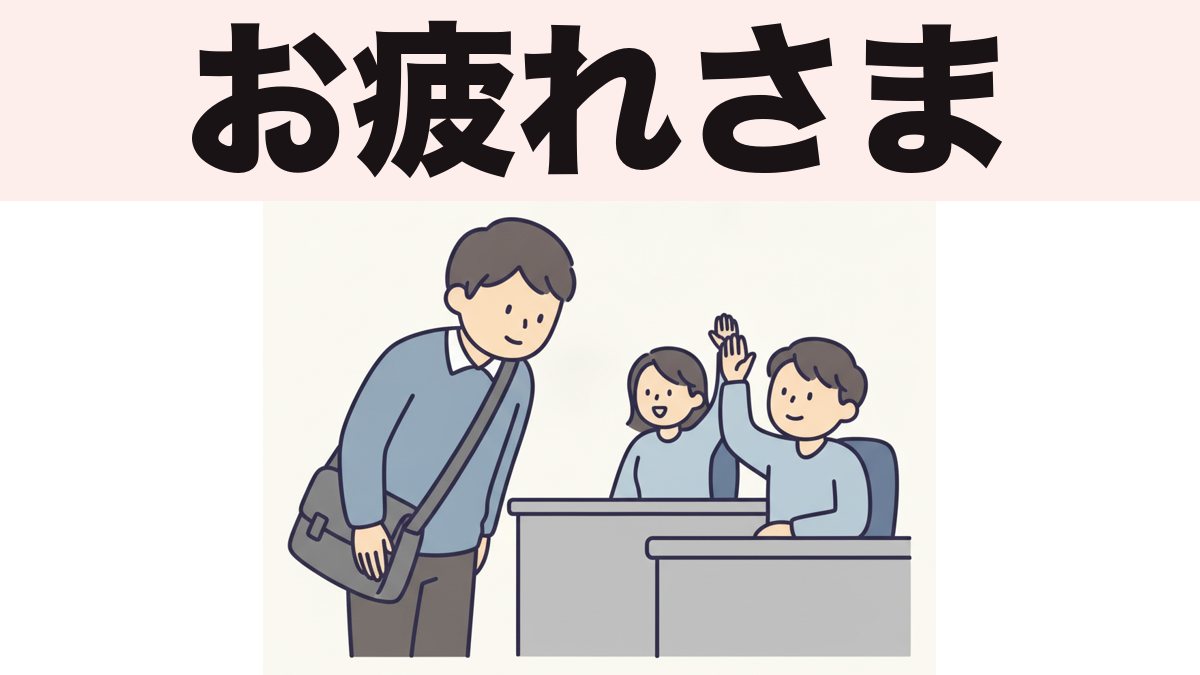
お疲れさまです literally acknowledges that someone is tired — and in practice it is hello, goodbye, thank you, well done, and "I see you have been working," depending entirely on when you say it.
「お疲れさまです」は、意味を直訳すると「つかれましたね」です。でも実さいには、あいさつ・別れ・お礼・「よくやりましたね」のぜんぶになります。言う場面で意味が変わります。
It is almost certainly the phrase you will hear most often in any Japanese workplace, and it does not appear in early textbooks because it does not translate. Learners tend to meet it, assume it means "you must be tired," and then feel odd saying it to someone who is visibly full of energy at 9am. That reading is the problem. It is not a comment on their state; it is an acknowledgement of their effort, and effort is assumed.
The basics
What is it actually made of?
疲れる (つかれる) is "to get tired." 疲れ is the noun, "tiredness." お and さま wrap it in respect, exactly as they do in お客さま. Put together, it is a respectful acknowledgement of someone's exertion.
お疲れさまです。 — (greeting a colleague at any hour; "hello", roughly) お疲れさまでした。 — (said as someone leaves, or when something has ended)
The English column is deliberately empty of a literal translation, because there is not one. Treat it as a social move rather than a sentence with content.
です or でした?
This is the one distinction worth getting right, and it is about whether the effort is ongoing or finished.
- お疲れさまです — present. In passing, on arrival, in the corridor, at the start of an email or a phone call.
- お疲れさまでした — past. When someone finishes, leaves, or the thing you did together is over.
お疲れさまです。今、大丈夫ですか。 — Hi — do you have a moment? (polite; standard way to open a request to a colleague) お先に失礼します。— お疲れさまでした。 — "I'm off, excuse me." — "Thanks for your work today." (the standard exchange at the end of a day)
That second exchange is worth memorising as a unit. The person leaving says 先に失礼します; the people remaining say お疲れさまでした. It happens thousands of times a day across the country in exactly that shape.
The casual versions
Among friends and equals it shortens, like everything else in Japanese.
お疲れ! — Nice one / see you / hi. (casual; friends, or colleagues you are close to) おつかれ〜。 — (very casual, drawn out; the written form you will see in messages)
Young people write おつ or 乙 in chat, the second being a kanji chosen purely because it is read おつ. If you see 乙 alone in a message, nobody is talking about the second in a series.
Beyond the basics
Do not say ご苦労さま upwards
ご苦労さま (ごくろうさま) means almost the same thing and carries the opposite social direction. It is what a superior says to a subordinate for work done on their behalf. Said to your boss, it is a small disaster.
ご苦労さま。 — Thanks for your trouble. (from a superior to a subordinate only)
The safe rule: use お疲れさまです with everyone, in every direction, forever. It works upward, downward and sideways. ご苦労さま is one to recognise, not to produce. This is the same territory as knowing when to drop polite forms at all, covered in keigo vs casual.
It is not only for work
Anything undertaken with effort qualifies. A long train journey, a move, an exam, a performance, a tour.
長旅、お疲れさまでした。 — You must have had a long journey. (polite; said to someone who has just arrived) 練習、お疲れさま。 — Good work at practice. (casual)
It is also the standard thing to say to someone who has just finished a performance or a shift, where English would reach for "good job." The difference is that お疲れさま carries no judgement of quality — it acknowledges that effort happened, which makes it safe to say before you have any idea whether the thing went well.
As a toast, a sign-off, and an email opener
At a drinking party it frequently replaces 乾杯 for the second and subsequent rounds, and it is what you say when someone arrives late. In email, お疲れさまです is the standard internal opening line, where an external email would use いつもお世話になっております.
お疲れさまです。会議の件ですが… — Hi — about the meeting… (polite; standard internal email opening)
That distinction — お疲れさまです inside the company, お世話になっております outside it — is one of the most useful pieces of business Japanese you can learn early, because getting it backwards is immediately noticeable. The rest of the drinking-party vocabulary is in 飲み会 and 無礼講.
What it is not
It is not thanks for a favour. If someone helps you personally, you say ありがとうございます. お疲れさま acknowledges their labour in general; ありがとう thanks them for something specific done for you. Saying お疲れさま when someone has just carried your bag up three flights of stairs sounds oddly institutional, like a manager signing off a timesheet. The full range of thanks is in how to say thank you in Japanese.
It is also not a question. お疲れさまですか is not a thing.
疲れた on its own
The plain 疲れた ("I'm tired") is a separate, everyday complaint, and it is not polite to say it at someone as a greeting.
疲れた〜。 — I'm exhausted. (casual; about yourself, to someone you're comfortable with) お疲れでしょう。 — You must be tired. (polite; genuine concern, e.g. to a guest who has travelled)
お疲れでしょう is a real observation about their state, and it belongs with hospitality — offering a seat, a drink, a rest. That is different from the ritual お疲れさまです, which says nothing about how anyone actually feels.
Common mistakes
- Saying ご苦労さま to a superior. The most consequential mistake on this page. It reads as talking down to them.
- Treating it as a literal comment on tiredness. It is a greeting. Nobody is claiming you look exhausted at 9:15am.
- Using it for personal thanks. ありがとうございます for a favour; お疲れさま for effort in general.
- Getting です and でした backwards. でした is for something finished. Saying お疲れさまでした to someone who has just arrived for the day implies their day is over.
- Opening an external email with it. To a client or another company, いつもお世話になっております is the expected line.
Which phrase, when
| Situation | Say | Notes |
|---|---|---|
| Passing a colleague | お疲れさまです | Works as hello, all day |
| Someone is leaving | お疲れさまでした | The thing is finished |
| You are leaving | お先に失礼します | They answer with お疲れさまでした |
| Friend, casually | お疲れ! | Also written おつかれ〜, おつ, 乙 |
| Someone did you a favour | ありがとうございます | Thanks, not acknowledgement |
| Internal email opening | お疲れさまです | Inside your organisation |
| External email opening | いつもお世話になっております | Outside your organisation |
| A superior to a subordinate | ご苦労さま | Recognise it; do not say it upward |
| A guest who has travelled far | お疲れでしょう | Real concern, not ritual |
FAQ
Can I say it to someone who is not working? Yes, if they have done something effortful — a long trip, a match, a move, a rehearsal. What it does not fit is someone who has just been relaxing, where it sounds like a joke. Often it is one.
Is it rude to say お疲れさま without です to a superior? It is too casual. Keep です for anyone above you or anyone you do not know well. The bare お疲れ is for friends and close colleagues.
Why do people say it when they arrive, not just when they leave? Because it is not about the end of a day; it is an acknowledgement of ongoing effort. Arriving into a room where people are working, you are recognising the work already in progress.
What do I say back? The same thing. お疲れさまです is answered with お疲れさまです, and nobody finds that strange. Matching the phrase exactly is the norm.
Is 乙 really used? In casual online writing, yes. It is read おつ and stands in for お疲れ. It is internet register — not something to put in an email.
Does it work outside Japan with Japanese friends? Completely. It travels with the language rather than the workplace, and many bilingual speakers keep using it in English conversations because there is no English word that does the job.
Practice
Build each answer before opening it. Questions 1 and 2 are a pair, and so are 6 and 7.
1. You pass a colleague in the corridor in the morning. What do you say?
Show answer
お疲れさまです — present tense, because the work is ongoing. This is the pair to question 2.
2. A colleague is going home for the day. What do you say?
Show answer
お疲れさまでした — past tense, because their day is finished. This is the pair to question 1.
3. You are the one leaving first. What do you say?
Show answer
お先に失礼します — "excuse me for going ahead." The others answer with お疲れさまでした.
4. Something is wrong here: saying ご苦労さま to your boss.
Show answer
お疲れさまです — ご苦労さま travels downward only. Said upward it sounds like you are the one dispensing praise.
5. Open an email to a colleague inside your company.
Show answer
お疲れさまです — the standard internal opener. Externally it would be いつもお世話になっております.
6. A friend carries your suitcase up the stairs. What do you say?
Show answer
ありがとうございます(ありがとう) — a personal favour takes thanks, not acknowledgement of labour. This is the pair to question 7.
7. That same friend finishes a three-hour shift. What do you say?
Show answer
お疲れさま — effort in general, with no comment on how it went. This is the pair to question 6.
8. A guest arrives after a long flight. Say something that shows real concern.
Show answer
お疲れでしょう — "you must be tired." This one is about their actual state, and it pairs with offering a seat.
9. What does 乙 mean in a casual message?
Show answer
お疲れ — the kanji is borrowed purely for its おつ reading. Internet register only.
10. Someone says お疲れさまです to you. What is the normal reply?
Show answer
お疲れさまです — the same phrase back. Matching it exactly is the norm, not a lack of imagination.
Vocabulary from this article
Tap the block to select all of it, then copy. In Anki: File → Import, note type Basic, separator Tab — the first column becomes the front, the second the back.
お疲れさま	おつかれさま — acknowledgement of someone's effort
ご苦労さま	ごくろうさま — the same, said downward only
疲れる	つかれる — to get tired
失礼	しつれい — rudeness; "excuse me"
先に	さきに — first, ahead of others
会議	かいぎ — meeting
件	けん — matter, item (in emails)
世話	せわ — care, assistance
長旅	ながたび — a long journey
練習	れんしゅう — practice
大丈夫	だいじょうぶ — all right, okay
今	いま — now
仕事	しごと — work
帰る	かえる — to go home
言う	いう — to say
休む	やすむ — to rest, to take time off
I'm Yuuki, a Japanese teacher based in Tokyo. I've taught on italki as a Top 1% teacher and watched over 1,500 anime. If you learn one phrase before arriving in Japan, make it this one — it covers more situations than こんにちは, and it is the phrase that makes you sound like someone who has been here rather than someone who has studied here.
Sources: the author's own lessons and standard reference grammars.
日本の職場でいちばん多く聞く言葉です。教科書に早く出ないのは、英語にならないからです。「あなたはつかれている」と思うと、朝9時に元気な人に言うのがへんに感じます。でも、この言葉は相手のじょうたいの話ではありません。相手の努力をみとめる言葉です。
基本
何でできているか
「疲れる(つかれる)」は to get tired。「疲れ」はその名詞です。「お」と「さま」がていねいにしています。「お客さま」と同じ形です。
お疲れさまです。 — (greeting a colleague at any hour; "hello", roughly) お疲れさまでした。 — (said as someone leaves, or when something has ended)
英語の訳は書いていません。ぴったりの訳がないからです。文の意味より、場面の動きだと思ってください。
「です」と「でした」
ちがいは、努力が続いているか、終わったかです。
- お疲れさまです — 続いている。会ったとき、ろうかで、メールのはじめ。
- お疲れさまでした — 終わった。帰る人に、仕事が終わったときに。
お疲れさまです。今、大丈夫ですか。 — Hi — do you have a moment? (polite; standard way to open a request to a colleague) お先に失礼します。— お疲れさまでした。 — "I'm off, excuse me." — "Thanks for your work today." (the standard exchange at the end of a day)
2つめは、セットでおぼえてください。帰る人が「先に失礼します」、のこる人が「お疲れさまでした」です。
くだけた形
お疲れ! — Nice one / see you / hi. (casual; friends, or colleagues you are close to) おつかれ〜。 — (very casual, drawn out; the written form you will see in messages)
メッセージでは「おつ」「乙」と書く人もいます。「乙」は読み方が「おつ」だから使われているだけです。
もう少し先へ
「ご苦労さま」を上の人に言わない
「ご苦労さま(ごくろうさま)」は意味は近いですが、向きが反対です。上の人が下の人に言う言葉です。
ご苦労さま。 — Thanks for your trouble. (from a superior to a subordinate only)
安全なルールは一つです。だれにでも「お疲れさまです」。上にも下にも横にも使えます。「ご苦労さま」は、聞いて分かればいいです。
仕事だけの言葉ではありません
努力のいることなら何でも使えます。長い旅、引っこし、試験、練習、ツアー。
長旅、お疲れさまでした。 — You must have had a long journey. (polite; said to someone who has just arrived) 練習、お疲れさま。 — Good work at practice. (casual)
「うまくいったかどうか」は言っていません。だから、結果を知る前でも言えます。
乾杯のかわり、メールのはじめ
飲み会では、二杯目からの乾杯のかわりにもなります。おくれて来た人にも言います。
メールでは、会社の中は「お疲れさまです」、会社の外は「いつもお世話になっております」です。
お疲れさまです。会議の件ですが… — Hi — about the meeting… (polite; standard internal email opening)
この2つを反対にすると、すぐに分かってしまいます。早くおぼえるとよい形です。
これは「お礼」ではありません
だれかが自分のために何かしてくれたときは「ありがとうございます」です。「お疲れさま」は、その人の仕事ぜんたいをみとめる言葉です。かばんを持ってくれた人に「お疲れさま」と言うと、へんに事むてきに聞こえます。
質問の形にもなりません。「お疲れさまですか」とは言いません。
「疲れた」だけのとき
疲れた〜。 — I'm exhausted. (casual; about yourself, to someone you're comfortable with) お疲れでしょう。 — You must be tired. (polite; genuine concern, e.g. to a guest who has travelled)
「お疲れでしょう」は、本当に相手のじょうたいを言っています。いすをすすめる、飲み物を出す、という場面の言葉です。
よくあるまちがい
- 上の人に「ご苦労さま」と言う。 このページでいちばん大きいまちがいです。
- 「つかれていますね」の意味だと思う。 あいさつです。
- お礼のかわりに使う。 何かしてもらったら「ありがとうございます」。
- 「です」と「でした」を反対にする。 来たばかりの人に「でした」と言うと、「もう終わりですね」に聞こえます。
- 社外のメールに使う。 社外は「いつもお世話になっております」です。
場面と言葉
| 場面 | 言う言葉 | メモ |
|---|---|---|
| 同りょうとすれちがう | お疲れさまです | 一日じゅう「こんにちは」として使える |
| 相手が帰る | お疲れさまでした | 終わったから |
| 自分が帰る | お先に失礼します | 相手は「お疲れさまでした」 |
| 友だちに | お疲れ! | 「おつかれ〜」「おつ」「乙」も |
| 何かしてもらった | ありがとうございます | お礼はこちら |
| 社内メールのはじめ | お疲れさまです | 会社の中 |
| 社外メールのはじめ | いつもお世話になっております | 会社の外 |
| 上から下へ | ご苦労さま | 聞いて分かればいい |
| 遠くから来たお客さん | お疲れでしょう | 本当のしんぱい |
FAQ
仕事をしていない人にも言えますか。 努力のいることをした人には言えます。長い旅、試合、引っこし。何もしていない人に言うと、じょうだんになります。
上の人に「お疲れさま」だけはだめですか。 くだけすぎます。「です」をつけてください。
なぜ帰るときだけでなく、来たときにも言うのですか。 一日の終わりの言葉ではなく、続いている努力をみとめる言葉だからです。
言われたら何と返しますか。 同じ言葉です。「お疲れさまです」。同じ言葉を返すのがふつうです。
「乙」は本当に使いますか。 ネットの書き方では使います。メールには書きません。
日本の外でも使えますか。 使えます。英語で話しているときも、この言葉だけ日本語のまま使う人が多いです。
練習
答えを見る前に、自分で作ってください。1と2、6と7は組です。
1. 朝、ろうかで同りょうとすれちがいました。何と言いますか。
答えを見る
お疲れさまです — 仕事は続いているので「です」。2と組です。
2. 同りょうが帰ります。何と言いますか。
答えを見る
お疲れさまでした — その人の一日が終わったので「でした」。1と組です。
3. 自分が先に帰ります。何と言いますか。
答えを見る
お先に失礼します — のこる人は「お疲れさまでした」と返します。
4. 上司に「ご苦労さま」と言いました。どこがちがいますか。
答えを見る
お疲れさまです — 「ご苦労さま」は上から下へだけです。上に言うと、ほめる立場のようになります。
5. 社内の同りょうへのメールのはじめを書いてください。
答えを見る
お疲れさまです — 社外なら「いつもお世話になっております」です。
6. 友だちがスーツケースを階だんで持ってくれました。何と言いますか。
答えを見る
ありがとうございます(ありがとう) — 自分のためにしてくれたことにはお礼です。7と組です。
7. その友だちが3時間のシフトを終えました。何と言いますか。
答えを見る
お疲れさま — 努力ぜんたいをみとめる言葉で、出来ばえの話はしていません。6と組です。
8. 長いフライトで来たお客さんに、本当のしんぱいを言ってください。
答えを見る
お疲れでしょう — 相手のじょうたいの話です。いすをすすめる場面の言葉です。
9. メッセージの「乙」は何の意味ですか。
答えを見る
お疲れ — 読み方が「おつ」だから使われています。ネットの書き方だけです。
10. 「お疲れさまです」と言われました。ふつうは何と返しますか。
答えを見る
お疲れさまです — 同じ言葉を返します。それがふつうです。
この記事に出た単語
ブロックをタップして全部を選んでから、コピーしてください。Anki では ファイル → 読み込み、ノートタイプは 基本、区切りは タブ です。左が表、右が裏になります。
お疲れさま	おつかれさま — acknowledgement of someone's effort
ご苦労さま	ごくろうさま — the same, said downward only
疲れる	つかれる — to get tired
失礼	しつれい — rudeness; "excuse me"
先に	さきに — first, ahead of others
会議	かいぎ — meeting
件	けん — matter, item (in emails)
世話	せわ — care, assistance
長旅	ながたび — a long journey
練習	れんしゅう — practice
大丈夫	だいじょうぶ — all right, okay
今	いま — now
仕事	しごと — work
帰る	かえる — to go home
言う	いう — to say
休む	やすむ — to rest, to take time off
私はユウキです。東京で日本語を教えています。 italki の Top 1% の先生で、アニメは1,500本以上見ました。日本に来る前に一つだけおぼえるなら、この言葉です。「こんにちは」より使う場面が多く、「勉強した人」ではなく「いた人」に聞こえます。
More drills like the ones above, plus a timed JLPT-style mock test: Practice · N4上のような練習問題と、時間つきのJLPT形式のもぎ試験: 練習ページ · N4
Want to try this in a real conversation?
本当の会話で、ためしてみませんか?
30-minute trial lesson, $13. Times shown in your own timezone.
30分の体験レッスン、$13。時間はあなたのタイムゾーンで表示されます。
Book a trial lesson · $13