〜にとって: the Japanese way to say "for me, this matters〜にとって: 「私にとって大切です」の使い方
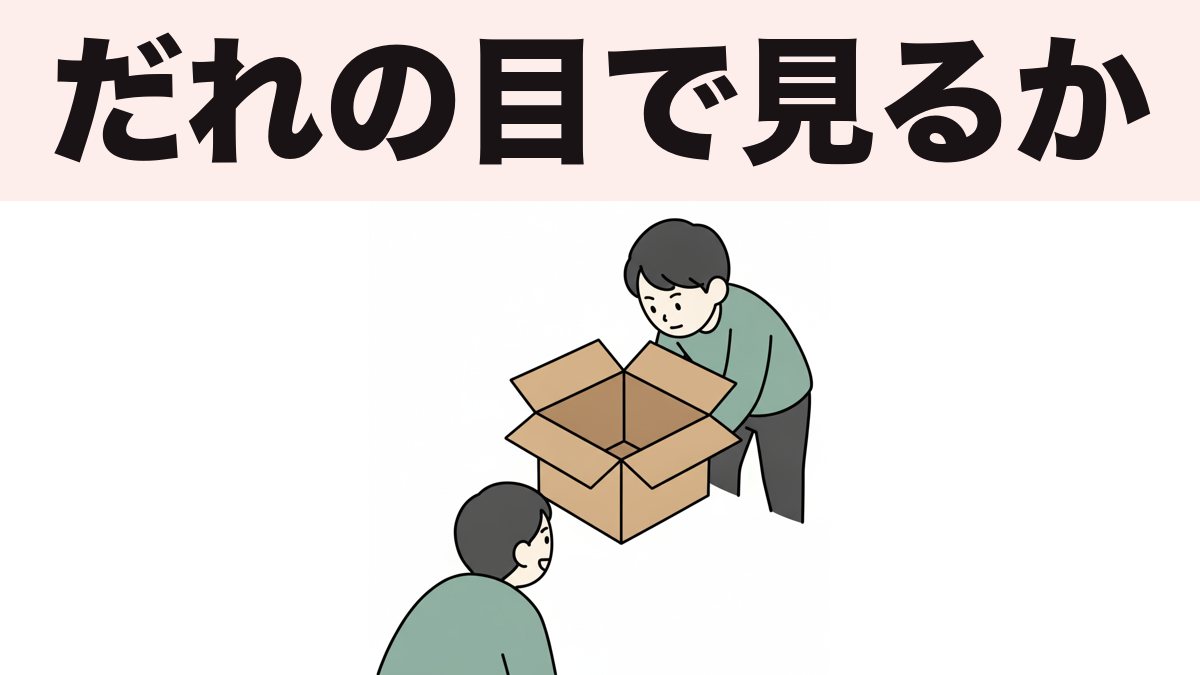
〜にとって names the person a judgement is being made from, not the person something is done for — which is the entire difference between it and のために.
「〜にとって」は、「だれの目から見た評価か」を言うことばです。「だれのためにするか」ではありません。ここが「のために」とのちがいの全部です。
English uses one word, "for," to cover both. This is important for me and I bought it for you look like the same sentence shape in English and are two completely different grammar points in Japanese. Learners who map "for" onto にとって produce sentences that are grammatical-looking and quietly wrong.
The basics
What does にとって mean?
Xにとって means "from X's standpoint" or "as far as X is concerned." It sets whose eyes you are seeing the evaluation through.
私にとって、日本語は大切です。 — For me, Japanese is important. (polite; the importance is measured from my position) 子どもにとって、遊びは仕事です。 — For a child, play is work. (a general truth, seen from the child's side)
Attach it straight to a noun: 私にとって, 学生にとって, 日本にとって. No particle in between, and no の.
What comes after it?
An evaluation. That is the rule that decides everything else.
彼氏にとって忘れられない思い出になりました。 — It became an unforgettable memory for her boyfriend. (polite; 忘れられない is a judgement) この試験は私にとって難しすぎる。 — This exam is too hard for me. (plain; 難しい is a judgement) 英語は日本人にとって必要な技能だ。 — English is a necessary skill for Japanese people. (plain, written; 必要 is a judgement)
The words that follow にとって are nearly always from one small family: 大切/重要/必要/大事, 難しい/簡単, ありがたい, 忘れられない, 幸せ/不幸, 意味がある. If the word after it is not an opinion about value or difficulty, にとって is probably the wrong tool.
Where does it go in the sentence?
Usually near the front, before the thing being judged. Both of these are fine:
私にとってこの本は宝物です。 — For me, this book is a treasure. (polite) この本は私にとって宝物です。 — Same meaning, slightly more weight on the book. (polite)
The topic particle は can ride along as にとっては, which adds contrast — "for me at least, whatever it is for you." That is the same contrastive job は does everywhere, described in は and が.
私にとっては大きな問題です。 — For me, it's a big problem. (polite; implies others may not see it that way)
Beyond the basics
にとって or のために?
This is the mistake worth memorising, because both translate as "for."
- にとって — whose viewpoint the judgement comes from. Followed by an evaluation.
- のために — who benefits from an action. Followed by a verb.
家族にとって大切な日です。 — It's an important day for the family. (their viewpoint) 家族のためにケーキを作りました。 — I made a cake for my family. (their benefit)
Swap them and both sentences break. ×家族のために大切な日です reads as "it's an important day in order to benefit the family," and ×家族にとってケーキを作りました is not a sentence at all, because 作る is an action, not a judgement. The purpose side of this is covered in ために and ように.
Why 私にとって勉強します is wrong
Because 勉強する is something you do, and にとって cannot introduce an action. にとって needs a state or a judgement to attach to.
×私にとって日本語を勉強します。 ○私は日本語を勉強します。 — I study Japanese. (the simple, correct sentence) ○私にとって日本語の勉強は楽しいです。 — For me, studying Japanese is fun. (the study is now a noun being judged)
If you want にとって in the sentence, turn the action into a noun and judge it.
にとって, にしたら, にしてみれば
All three set a viewpoint, and they are not interchangeable in tone.
私にとって、これは普通のことです。 — For me, this is normal. (neutral, works in writing) 子どもにしたら、つまらないだろうね。 — From a kid's point of view, it's probably boring. (spoken, sympathetic, imagining their feelings) 親にしてみれば、心配なのは当然だ。 — Seen from a parent's side, worrying is only natural. (spoken or written, strongly empathetic)
にとって is the neutral one and the only one you need for an essay. にしたら and にしてみれば carry a feeling of stepping into someone's shoes, so they attach to people, almost never to things or countries.
からすると and からいうと
These look similar and do a different job: they mark the basis for a conclusion, not the person affected.
この点数からすると、合格は難しい。 — Judging from this score, passing will be difficult. (basis) 私にとって、合格は難しい。 — For me, passing is difficult. (viewpoint)
からすると takes evidence; にとって takes a person or a group. If you can replace the phrase with "judging from," it is not にとって.
The formal version
In a speech or a business document you will meet にとりまして, which is the same grammar dressed up.
弊社にとりまして、大変ありがたいお話です。 — For our company, this is a most welcome proposal. (formal business)
You will rarely need to produce it, but it is worth recognising, and it pairs naturally with the written register described in 書き言葉 and 話し言葉.
にとって with things and places
にとって is not limited to people. Countries, companies and even animals take it, as long as they can be said to have a stake.
日本にとって、観光は重要な産業だ。 — For Japan, tourism is an important industry. (written) 猫にとって、この部屋は広すぎる。 — For a cat, this room is too big. (plain)
What it cannot take is a thing with no perspective. ×机にとって is odd unless you are being deliberately playful, because a desk has no stake in anything.
Common mistakes
- Following it with a verb of action. にとって introduces a judgement, so 〜にとって買いました, 〜にとって行きます and 〜にとって勉強します are all broken. Use のために, or restructure.
- Adding の before it. It is 私にとって, never ×私のにとって.
- Using it where は alone is enough. 私にとって好きです is heavy; 私は〜が好きです is what a Japanese speaker says. にとって earns its place when the viewpoint is the point — when you are contrasting it with somebody else's.
- Reaching for it to translate every English "for." "For three hours," "for you," "for example" are 三時間, のために, 例えば. None of them are にとって.
- Using にしたら for a country or a company. にしたら imagines someone's feelings, so 日本にしたら sounds strange where 日本にとって is natural.
にとって and its neighbours at a glance
| Form | Marks | Followed by | Example |
|---|---|---|---|
| 〜にとって | Whose viewpoint | An evaluation | 私にとって大切だ |
| 〜のために | Who benefits | An action | 家族のために働く |
| 〜にしたら | Whose feelings (spoken) | A guess or judgement | 子どもにしたらつまらない |
| 〜にしてみれば | Whose side, with empathy | A judgement | 親にしてみれば当然だ |
| 〜からすると | The basis for a conclusion | A conclusion | 点数からすると難しい |
| 〜にとりまして | Whose viewpoint (formal) | An evaluation | 弊社にとりましてありがたい |
Practice
Answers are hidden — build the sentence first, then open. Questions 1 and 2 are a pair: the same family, once judging and once benefiting.
1. Say: "It's an important day for my family."
Show answer
家族にとって大切な日です。 — 大切 is a judgement, so the viewpoint marker にとって is right.
2. Now say: "I made a cake for my family."
Show answer
家族のためにケーキを作りました。 — 作る is an action, so this is benefit, not viewpoint. にとって cannot introduce an action.
3. What is wrong with 私にとって日本語を勉強します?
Show answer
勉強します is an action. — Either drop it (私は日本語を勉強します) or turn the action into a noun and judge it: 私にとって日本語の勉強は楽しいです.
4. Say: "This exam is too hard for me."
Show answer
この試験は私にとって難しすぎます。 — 難しい is an evaluation, and にとって attaches straight to 私 with no の.
5. What does adding は do in 私にとっては大きな問題です?
Show answer
It adds contrast. — "For me at least, whatever it may be for you." That is the same contrastive job は does elsewhere.
6. Rewrite in a warmer, spoken way: 子どもにとってつまらないでしょう。
Show answer
子どもにしたら、つまらないだろうね。 — にしたら steps into their feelings. にとって is the neutral form and fine in writing.
7. Choose: この点数( )合格は難しい。 にとって or からすると?
Show answer
からすると。 — A score is evidence, not a person with a viewpoint. からすると means "judging from."
8. Say: "For Japan, tourism is an important industry."
Show answer
日本にとって、観光は重要な産業だ。 — Countries and companies have a stake, so they take にとって. 日本にしたら would sound odd here.
9. Is 私のにとって correct?
Show answer
No. — にとって attaches directly to the noun: 私にとって. There is never a の in front of it.
10. In a business speech, how would you say "for our company, this is a welcome proposal"?
Show answer
弊社にとりまして、大変ありがたいお話です。 — にとりまして is the formal dress of にとって, and 弊社 is the humble word for one's own company.
FAQ
Is にとって the same as には? Close, and には is often the shorter everyday choice: 私には難しいです is natural and common. にとって is heavier and more explicit, which makes it the better choice in writing and whenever you are setting one viewpoint against another.
Can I use it with いい or 好き? With いい, yes — 体にいい食べ物 works, and 私にとっていい選択です is fine. With 好き it is usually unnecessary, because 好き already belongs to the person feeling it. 私は〜が好きです is what you want.
Does にとって need a comma after it? Not required. A comma is common when the phrase opens the sentence and the sentence is long, purely for readability.
Is 〜にとって used in casual speech? Yes, but less often than in writing. In conversation people shorten to には or just use は. にとって appears when someone wants to mark the viewpoint deliberately.
What level is this grammar? It usually turns up around N3, though it is simple enough to use from much earlier. The hard part is not the form, it is resisting the pull of the English word "for."
How is it different from について? について means "about" — the topic of the discussion. にとって means "for" — whose judgement it is. 日本についての本 is a book about Japan; 日本にとって大切な本 is a book that matters to Japan. See について and として.
Vocabulary from this article
Tap the block to select all of it, then copy. In Anki: File → Import, note type Basic, separator Tab — the first column becomes the front, the second the back.
にとって	にとって — for, from the standpoint of
のために	のために — for the benefit of, in order to
大切	たいせつ — important, precious
重要	じゅうよう — important, significant
必要	ひつよう — necessary
宝物	たからもの — treasure
思い出	おもいで — memory
忘れられない	わすれられない — unforgettable
試験	しけん — exam
技能	ぎのう — skill
産業	さんぎょう — industry
観光	かんこう — tourism
点数	てんすう — score, marks
合格	ごうかく — passing (an exam)
弊社	へいしゃ — our company (humble)
ありがたい	ありがたい — welcome, much appreciated
当然	とうぜん — natural, only to be expected
心配	しんぱい — worry
I'm Yuuki, a Japanese teacher based in Tokyo. I've taught on italki as a Top 1% teacher and watched over 1,500 anime. にとって is one of those points students can define perfectly and still misuse, because the English word "for" keeps pulling it toward sentences that need のために instead.
Sources: the author's own lessons and standard reference grammars.
英語はどちらも "for" です。This is important for me と I bought it for you は、英語では同じ形に見えます。日本語では全然ちがう文法です。"for" を全部「にとって」にすると、正しそうに見えて実はまちがっている文ができます。
基本
「にとって」の意味
Xにとっては「Xの立場から見ると」という意味です。だれの目で見た評価かを決めます。
私にとって、日本語は大切です。 — For me, Japanese is important. (ていねい。「大切さ」は私の立場から見たもの) 子どもにとって、遊びは仕事です。 — For a child, play is work. (子どもの側から見た話)
名詞にそのままつけます。「私にとって」「学生にとって」「日本にとって」。間に助詞は入りません。「の」も入りません。
後ろに来ることば
「評価」です。これが全部を決めるルールです。
彼氏にとって忘れられない思い出になりました。 — It became an unforgettable memory for her boyfriend. (「忘れられない」は評価) この試験は私にとって難しすぎる。 — This exam is too hard for me. (「難しい」は評価) 英語は日本人にとって必要な技能だ。 — English is a necessary skill for Japanese people. (書き言葉。「必要」は評価)
後ろに来るのは、だいたいこのなかまです。大切/重要/必要/大事、難しい/簡単、ありがたい、忘れられない、幸せ/不幸、意味がある。評価のことばでなければ、「にとって」ではないかもしれません。
文のどこに置く?
前の方、評価されるものの前に置きます。どちらも自然です。
私にとってこの本は宝物です。 — For me, this book is a treasure. この本は私にとって宝物です。 — 同じ意味。本の方に少し重みがあります。
「は」をつけて「にとっては」にすると、くらべる気持ちが入ります。「少なくとも私には」という感じです。これは は と が と同じはたらきです。
私にとっては大きな問題です。 — For me, it's a big problem. (ほかの人はちがうかもしれない、という感じ)
もう少し先へ
「にとって」と「のために」
これが覚える価値のあるちがいです。英語ではどちらも "for" です。
- にとって — だれの目から見た評価か。後ろは評価。
- のために — だれがとくをするか。後ろは動作。
家族にとって大切な日です。 — It's an important day for the family. (家族の目) 家族のためにケーキを作りました。 — I made a cake for my family. (家族のとく)
入れかえると、どちらもこわれます。「×家族のために大切な日です」は「家族のためになるように大切な日」という変な意味です。「×家族にとってケーキを作りました」は文になりません。「作る」は動作で、評価ではないからです。目的の方は ために と ように を見てください。
「私にとって日本語を勉強します」がまちがいな理由
「勉強する」はすることだからです。「にとって」は動作をつれてこられません。状態か評価が必要です。
×私にとって日本語を勉強します。 ○私は日本語を勉強します。 — I study Japanese. ○私にとって日本語の勉強は楽しいです。 — For me, studying Japanese is fun. (「勉強」が名詞になって、評価される)
「にとって」を使いたいなら、動作を名詞にして評価してください。
にとって・にしたら・にしてみれば
3つとも視点を決めますが、気持ちがちがいます。
私にとって、これは普通のことです。 — For me, this is normal. (中立。書き言葉でも使える) 子どもにしたら、つまらないだろうね。 — From a kid's point of view, it's probably boring. (話し言葉。気持ちに入る) 親にしてみれば、心配なのは当然だ。 — Seen from a parent's side, worrying is only natural. (強く相手の側に立つ)
中立なのは「にとって」だけで、作文に使えるのもこれです。「にしたら」「にしてみれば」は人につきます。ものや国にはあまり使いません。
「からすると」「からいうと」
似ていますが、仕事がちがいます。これは「何をもとに考えたか」です。
この点数からすると、合格は難しい。 — Judging from this score, passing will be difficult. (もとになるもの) 私にとって、合格は難しい。 — For me, passing is difficult. (視点)
"judging from" と言いかえられるなら、「にとって」ではありません。
かたい言い方
スピーチやビジネス文書ではにとりましてが出ます。同じ文法のかたい形です。
弊社にとりまして、大変ありがたいお話です。 — For our company, this is a most welcome proposal. (ビジネス)
自分で使うことは少ないですが、聞いて分かると便利です。書き言葉と話し言葉 と同じ世界のことばです。
ものや場所につく「にとって」
人だけではありません。国・会社・動物にもつきます。「立場がある」と言えればいいです。
日本にとって、観光は重要な産業だ。 — For Japan, tourism is an important industry. 猫にとって、この部屋は広すぎる。 — For a cat, this room is too big.
つかないのは、立場のないものです。「×机にとって」は、わざとふざけて言う時以外は変です。
よくあるまちがい
- 後ろに動作の動詞を置く。 「〜にとって買いました」「〜にとって行きます」「〜にとって勉強します」は全部まちがいです。「のために」を使うか、形を変えてください。
- 前に「の」を入れる。 「私にとって」です。「×私のにとって」はありません。
- 「は」だけでいい所で使う。 「私にとって好きです」は重いです。「私は〜が好きです」が自然です。「にとって」は、だれの目かが話の中心の時に使います。
- 英語の "for" を全部これにする。 "for three hours" "for three hours"三時間、"for you""for you"のために、"for example""for example"例えば。どれも「にとって」ではありません。
- 国や会社に「にしたら」を使う。 「にしたら」は気持ちを想像することばなので、「日本にしたら」は変です。「日本にとって」が自然です。
まとめの表
| 形 | 何を示すか | 後ろに来るもの | 例 |
|---|---|---|---|
| 〜にとって | だれの視点か | 評価 | 私にとって大切だ |
| 〜のために | だれがとくをするか | 動作 | 家族のために働く |
| 〜にしたら | だれの気持ちか(話し言葉) | 推測・評価 | 子どもにしたらつまらない |
| 〜にしてみれば | だれの側か(共感) | 評価 | 親にしてみれば当然だ |
| 〜からすると | 何をもとにしたか | 結論 | 点数からすると難しい |
| 〜にとりまして | だれの視点か(かたい) | 評価 | 弊社にとりましてありがたい |
練習
答えはかくしてあります。先に自分で作ってから開けてください。1と2は同じ家族の、評価ととくです。
1. 「家族にとって大切な日です」を作ってください。(「家族・大切な日」)
答えを見る
家族にとって大切な日です。 — 「大切」は評価なので、視点の「にとって」が正しいです。
2. 「家族のためにケーキを作りました」を作ってください。(「家族・ケーキ・作る」)
答えを見る
家族のためにケーキを作りました。 — 「作る」は動作なので「とく」の方です。「にとって」は動作をつれてこられません。
3. 「私にとって日本語を勉強します」の何がまちがいですか。
答えを見る
「勉強します」が動作だからです。 — 「私は日本語を勉強します」にするか、「私にとって日本語の勉強は楽しいです」のように名詞にして評価します。
4. 「この試験は私には難しすぎます」を「にとって」で言ってください。
答えを見る
この試験は私にとって難しすぎます。 — 「難しい」は評価です。「私」に直接つけます。「の」は入りません。
5. 「私にとっては大きな問題です」の「は」は何をしていますか。
答えを見る
くらべています。 — 「ほかの人はちがうかもしれないが、少なくとも私には」という気持ちが入ります。
6. やさしい話しことばに: 「子どもにとってつまらないでしょう。」
答えを見る
子どもにしたら、つまらないだろうね。 — 「にしたら」は相手の気持ちに入ります。「にとって」は中立で、書く時に向きます。
7. えらんでください: この点数( )合格は難しい。「にとって」か「からすると」か。
答えを見る
からすると。 — 点数は「もとになるもの」で、視点を持つ人ではありません。
8. 「日本・観光・重要な産業」で文を作ってください。
答えを見る
日本にとって、観光は重要な産業だ。 — 国や会社は立場があるので「にとって」がつきます。「日本にしたら」は変です。
9. 「私のにとって」は正しいですか。
答えを見る
いいえ。 — 名詞にそのままつけます。「私にとって」です。前に「の」は入りません。
10. ビジネスのスピーチで「弊社にとって、ありがたいお話です」をかたく言うと?
答えを見る
弊社にとりまして、大変ありがたいお話です。 — 「にとりまして」は「にとって」のかたい形です。
よくある質問
「にとって」と「には」は同じですか。 近いです。ふだんは「には」の方が短くて自然です(「私には難しいです」)。「にとって」は重くてはっきりしているので、書く時や、だれかの視点とくらべる時に向いています。
「いい」「好き」と使えますか。 「いい」は使えます(「私にとっていい選択です」)。「好き」はふつう要りません。「好き」はもう感じている人のものだからです。「私は〜が好きです」でいいです。
後ろに読点(、)は必要ですか。 必要ではありません。文の最初に来て、文が長い時に読みやすくするためによく打ちます。
会話でも使いますか。 使いますが、書く時より少ないです。会話では「には」や「は」で短くします。視点をはっきり示したい時に出てきます。
レベルはどのくらいですか。 だいたいN3で出ます。形はかんたんです。むずかしいのは、英語の "for" に引っぱられないことです。
「について」とどうちがいますか。 「について」は "about"(話題)です。「にとって」は "for"(だれの評価か)です。「日本についての本」は日本について書いた本、「日本にとって大切な本」は日本に大事な本です。について と として を見てください。
この記事に出た単語
このブロックをタップして全部えらんでから、コピーしてください。Ankiでは File → Import、ノートタイプは Basic、区切りは Tab。左が表、右が裏になります。
にとって	にとって — for, from the standpoint of
のために	のために — for the benefit of, in order to
大切	たいせつ — important, precious
重要	じゅうよう — important, significant
必要	ひつよう — necessary
宝物	たからもの — treasure
思い出	おもいで — memory
忘れられない	わすれられない — unforgettable
試験	しけん — exam
技能	ぎのう — skill
産業	さんぎょう — industry
観光	かんこう — tourism
点数	てんすう — score, marks
合格	ごうかく — passing (an exam)
弊社	へいしゃ — our company (humble)
ありがたい	ありがたい — welcome, much appreciated
当然	とうぜん — natural, only to be expected
心配	しんぱい — worry
ユウキです。東京で日本語を教えています。 italki の Top 1% 講師で、アニメは1,500本以上見ました。「にとって」は、意味を正しく言えるのに使い方だけまちがえる、めずらしい文法です。英語の "for" が、「のために」を使うべき文の方へ引っぱるからです。
More drills like the ones above, plus a timed JLPT-style mock test: Practice · N3上のような練習問題と、時間つきのJLPT形式のもぎ試験: 練習ページ · N3
Want to try this in a real conversation?
本当の会話で、ためしてみませんか?
30-minute trial lesson, $13. Times shown in your own timezone.
30分の体験レッスン、$13。時間はあなたのタイムゾーンで表示されます。
Book a trial lesson · $13