慣れる: how to say "get used to it" in Japanese — and why it takes に, not を慣れる: 「を」ではなく「に」を使う理由
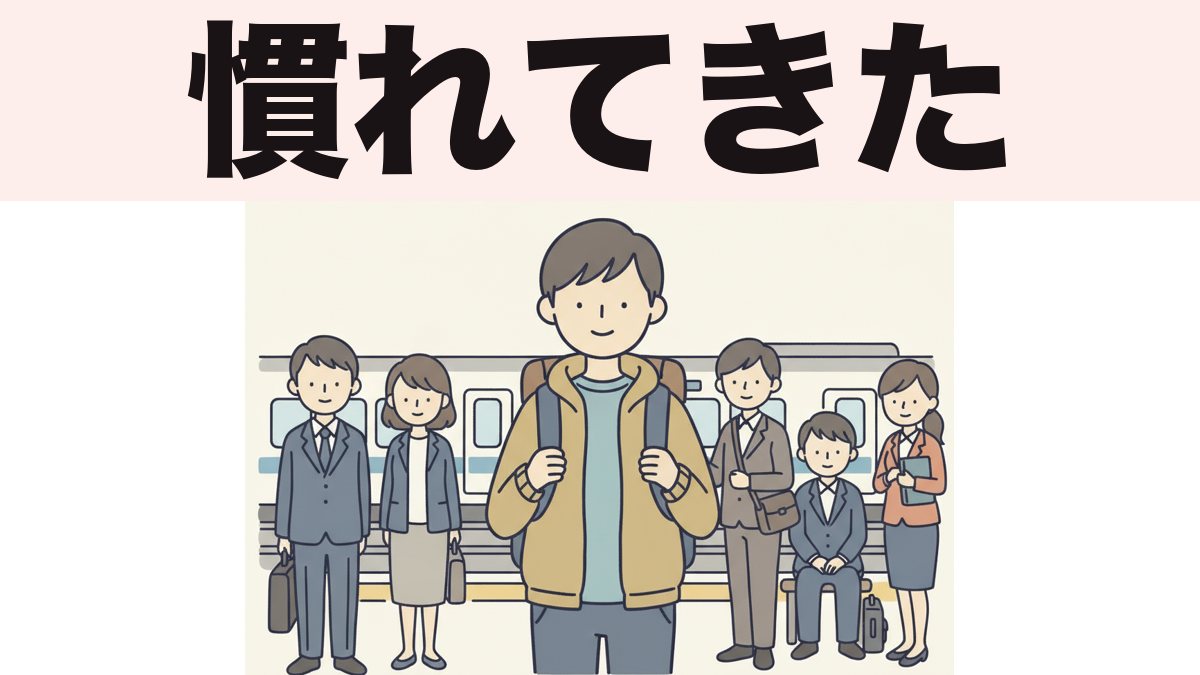
慣れる (なれる) means "to become accustomed to," and it takes に, not を: 日本の生活**に**慣れました. It is an intransitive verb — getting used to something is something that happens to you, not something you do to it — and that is exactly why the particle is に.
「慣れる(なれる)」は「get used to」です。助詞は「に」です。「日本の生活**に**慣れました」。自分が何かをするのではなく、自分がそうなる動詞です。だから「に」を使います。
This is a verb learners need early and often, because "I'm getting used to it" is the honest answer to most questions about living somewhere new. It is also a clean example of the intransitive logic that runs through Japanese.
The basics
〜に慣れる
日本の生活に慣れました。 — I've got used to life in Japan. (polite) 満員電車にはまだ慣れません。 — I still haven't got used to packed trains. (polite)
The thing you are getting used to takes に. 日本の生活を慣れました is wrong — 慣れる has no object, because you are not doing anything to the life in question. It is doing something to you.
This is the same pattern as 乗る (電車に乗る) and 座る (椅子に座る): arriving into a state, marked with に. If that grouping is new, transitive and intransitive verbs is the underlying idea.
慣れている: the state of being used to it
The plain past 慣れました says the change happened. The ている form says you are currently in the resulting state, which is usually what you mean.
もう慣れています。 — I'm used to it now. (polite — describing the current state) まだ慣れていません。 — I'm not used to it yet. (polite)
This is the standard ている-as-state usage, the same one that makes 知っている mean "I know" rather than "I am knowing."
慣れてきた: getting there
The てくる form adds "gradually, up to now," which is the most honest answer about a process still in progress.
少しずつ慣れてきました。 — I'm gradually getting used to it. (polite)
少しずつ慣れてきました is worth memorizing as a unit. It is what you say three months into anything difficult, and it is both true and pleasant to hear.
Beyond the basics
慣れる vs 慣らす: the intransitive pair
慣れる happens to you. 慣らす is the transitive partner — deliberately accustoming something or someone.
体を寒さに慣らします。 — I'm acclimatizing my body to the cold. (polite — deliberate) 体が寒さに慣れました。 — My body got used to the cold. (polite — it happened)
慣らす is much less common and mostly appears in training, health and engineering contexts — breaking in shoes, running in an engine, conditioning an athlete.
〜のに慣れる: getting used to doing something
To get used to an action rather than a thing, nominalize it first.
早く起きるのに慣れました。 — I've got used to getting up early. (polite)
The のに here is の (nominalizer) plus に (the particle 慣れる needs) — not the "even though" のに. Same shape, different origin, and the difference is visible in what comes before it.
You can also use ことに: 早く起きることに慣れました is equally correct and slightly more formal. See こと vs の for which to pick.
慣れ as a noun
慣れ (なれ) on its own is a noun meaning "familiarity, experience, being practised at something."
慣れの問題です。 — It's just a matter of getting used to it. (polite — a very common reassurance)
慣れの問題です is the sentence a Japanese person will say to you when you complain that something is difficult, and it is genuinely encouraging rather than dismissive. The related 慣れている人 means "someone who is experienced at it."
馴染む: settling in, socially
馴染む (なじむ) overlaps with 慣れる and is not the same. 慣れる is about capability and comfort; 馴染む is about blending in.
新しい職場に馴染めました。 — I settled into the new workplace. (polite — socially, I fit in) 新しい仕事に慣れました。 — I got used to the new job. (polite — I can do it now)
You can be 慣れた at a job without being 馴染んだ in the team. The distinction is real and it is one Japanese makes frequently when talking about workplaces and schools.
The negative is usually 慣れない, not 慣れません
Both exist, but 慣れない as a modifier is a common set phrase meaning "unfamiliar."
慣れない道を歩きました。 — I walked along an unfamiliar road. (polite)
慣れない土地 ("a place you don't know"), 慣れない仕事 ("work you're not used to") — this attributive use is very common in writing and adds a note of mild difficulty or unease.
Common mistakes
- Using を with 慣れる. 日本語を慣れました is wrong. It is 日本語に慣れました.
- Using the plain past when you mean the current state. 慣れました says the change happened; 慣れています says you are used to it now. The second is usually what you want.
- Confusing the のに in 慣れるのに with "even though." In 起きるのに慣れる, the の is a nominalizer and the に belongs to 慣れる.
- Using 慣れる for social belonging. Fitting into a group is 馴染む. 慣れる is about capability.
- Reaching for 慣らす. It exists, but it is rare and mostly technical. If in doubt, 慣れる is the one you want.
- Reading 慣れ as かん. The noun and the verb both use なれ. The on-reading かん appears in compounds like 習慣 (しゅうかん, habit).
The 慣れる family
| Form | Meaning | Example |
|---|---|---|
| 〜に慣れる | To get used to | 生活に慣れる |
| 〜に慣れている | To be used to (state) | もう慣れています |
| 〜に慣れてきた | To be gradually getting used to | 少しずつ慣れてきました |
| 〜のに慣れる | To get used to doing | 早く起きるのに慣れる |
| 慣れない + noun | Unfamiliar ~ | 慣れない道 |
| 慣れ (noun) | Familiarity, practice | 慣れの問題です |
| 〜を慣らす | To accustom something (transitive) | 体を寒さに慣らす |
| 〜に馴染む | To settle in socially | 職場に馴染む |
Practice
Questions 1 and 2 are the pair: the change versus the state it leaves behind.
1. Say "I've got used to life in Japan," politely.
Show answer
日本の生活に慣れました。 — に, not を. 慣れる has no object.
2. Say "I'm used to it now," describing your current state.
Show answer
もう慣れています。 — ている for the resulting state, which is usually what you mean.
3. Say "I'm gradually getting used to it," politely.
Show answer
少しずつ慣れてきました。 — てくる adds "gradually, up to now." Worth memorizing as a unit.
4. Say "I've got used to getting up early."
Show answer
早く起きるのに慣れました。 — Nominalize the action first: の plus the に that 慣れる requires.
5. Say "I still haven't got used to packed trains."
Show answer
満員電車にはまだ慣れません。 — The は after に contrasts this with everything you have got used to.
6. Reassure someone that it is just a matter of getting used to it.
Show answer
慣れの問題です。 — 慣れ as a noun. Encouraging rather than dismissive.
7. Say "I settled into the new workplace" — socially.
Show answer
新しい職場に馴染めました。 — 馴染む for fitting in with people. 慣れる would mean you can do the work.
8. Say "I walked along an unfamiliar road," politely.
Show answer
慣れない道を歩きました。 — 慣れない before a noun means "unfamiliar," with a note of mild unease.
9. Fix this: 日本語を慣れました。
Show answer
日本語に慣れました。 — 慣れる is intransitive. The thing you get used to takes に.
10. What is the difference between 仕事に慣れた and 職場に馴染んだ?
Show answer
慣れたたできるようになった / 馴染んだんだ人となじんだ — One is about capability, the other about belonging. You can have one without the other.
FAQ
Why does 慣れる take に when English says "used to"? Because Japanese frames it as arriving into a state rather than acting on something. に is the particle for arrival, the same one in 電車に乗る and 椅子に座る.
Is 慣れました or 慣れています better? 慣れています in most sentences, because you are usually describing how things are now rather than announcing the moment of change. 慣れました is fine when the change itself is the news.
Can I say 慣れつつある? Yes, and it means the same as 慣れてきた but in a distinctly written register. 〜つつある is essay and report Japanese; 〜てきた is what people say.
What is the difference between 慣れる and 覚える? 覚える is learning or memorizing; 慣れる is becoming comfortable. You can 覚えた a route and still not be 慣れた to driving it.
Is 慣れの問題です dismissive? No, the opposite. It means "this is normal and it will pass," which is why people say it to reassure. Hearing it is good news.
How do I say "I'll never get used to it"? ずっと慣れないと思います, or more emphatically 一生慣れないと思います. Both are common and both are usually said with some humour.
Vocabulary from this article
Tap the block to select all of it, then copy. In Anki: File → Import, note type Basic, separator Tab — the first column becomes the front, the second the back.
慣れる	なれる — to get used to
慣らす	ならす — to accustom (something)
慣れ	なれ — familiarity, practice
馴染む	なじむ — to settle in, to fit in
生活	せいかつ — life, daily living
満員電車	まんいんでんしゃ — packed train
職場	しょくば — workplace
少しずつ	すこしずつ — little by little
問題	もんだい — problem, matter
土地	とち — land, a place
道	みち — road, way
体	からだ — body
寒さ	さむさ — the cold
習慣	しゅうかん — habit, custom
覚える	おぼえる — to learn, to memorize
起きる	おきる — to get up
一生	いっしょう — a whole lifetime
仕事	しごと — work, job
I'm Yuuki, a Japanese teacher based in Tokyo. I've taught on italki as a Top 1% teacher and watched over 1,500 anime. 少しずつ慣れてきました is the sentence I most like hearing from students about three months in, because it is the point where the language stops being a project and starts being a habit.
Sources: the author's own lessons and standard reference grammars.
新しい場所の話をする時、いちばん正直な答えが「慣れてきました」です。だから早く覚えると便利です。日本語の「自分がそうなる動詞」の、いい例でもあります。
基本
「〜に慣れる」
日本の生活に慣れました。 — I've got used to life in Japan. (polite) 満員電車にはまだ慣れません。 — I still haven't got used to packed trains. (polite)
慣れる相手は「に」です。「日本の生活を慣れました」は間違いです。生活に何かをしているのではありません。生活が自分を変えているのです。
「電車に乗る」「椅子に座る」と同じです。「その状態になる」ので「に」です。
「慣れている」
「慣れました」は「変わった」です。「慣れています」は「今そうなっている」です。ふつうは下のほうを言いたいはずです。
もう慣れています。 — I'm used to it now. (polite — describing the current state) まだ慣れていません。 — I'm not used to it yet. (polite)
「知っています」が「I know」になるのと同じ形です。
「慣れてきた」
「てくる」で「だんだん、今まで」という意味が入ります。
少しずつ慣れてきました。 — I'm gradually getting used to it. (polite)
「少しずつ慣れてきました」は、そのまま覚えてください。何かを始めて3か月ぐらいの時に言う文です。本当のことで、聞くほうもうれしい文です。
もう少し先へ
「慣れる」と「慣らす」
「慣れる」は自分がそうなります。「慣らす」は、わざとそうさせます。
体を寒さに慣らします。 — I'm acclimatizing my body to the cold. (polite — deliberate) 体が寒さに慣れました。 — My body got used to the cold. (polite — it happened)
「慣らす」はあまり使いません。トレーニング、健康、機械の話に出ます。
「〜のに慣れる」
「すること」に慣れる時は、先に名詞にします。
早く起きるのに慣れました。 — I've got used to getting up early. (polite)
この「のに」は、「の」+「に」です。「〜のに(even though)」ではありません。「ことに」でも同じです。「早く起きることに慣れました」。
名詞の「慣れ」
「慣れ(なれ)」だけで名詞になります。「経験」「やり慣れていること」という意味です。
慣れの問題です。 — It's just a matter of getting used to it. (polite — a very common reassurance)
「難しい」と言った時に、日本の人がよく言う文です。冷たい意味ではありません。「そのうち大丈夫」という意味です。
「馴染む」
「馴染む(なじむ)」は「慣れる」と似ていますが、ちがいます。「慣れる」はできるようになること、「馴染む」は人になじむことです。
新しい職場に馴染めました。 — I settled into the new workplace. (polite — socially, I fit in) 新しい仕事に慣れました。 — I got used to the new job. (polite — I can do it now)
仕事に慣れていても、職場に馴染んでいないことはあります。日本語はこれを分けて言います。
「慣れない」+名詞
慣れない道を歩きました。 — I walked along an unfamiliar road. (polite)
「慣れない土地」「慣れない仕事」もよく使います。少し不安な感じが入ります。
よくある間違い
- 「を」を使う。 「日本語に慣れました」です。
- 今の状態に「慣れました」を使う。 今なら「慣れています」です。
- 「慣れるのに」の「のに」を「even though」だと思う。 ちがう「のに」です。
- 人になじむことに「慣れる」を使う。 それは「馴染む」です。
- 「慣らす」を使いすぎる。 あまり使いません。
- 「慣れ」を「かん」と読む。 「なれ」です。「習慣」の時だけ「かん」です。
「慣れる」のなかま
| 形 | 意味 | 例 |
|---|---|---|
| 〜に慣れる | 慣れる | 生活に慣れる |
| 〜に慣れている | 今、慣れている | もう慣れています |
| 〜に慣れてきた | だんだん慣れてきた | 少しずつ慣れてきました |
| 〜のに慣れる | することに慣れる | 早く起きるのに慣れる |
| 慣れない+名詞 | 知らない〜 | 慣れない道 |
| 慣れ(名詞) | 経験 | 慣れの問題です |
| 〜を慣らす | わざと慣れさせる | 体を寒さに慣らす |
| 〜に馴染む | 人になじむ | 職場に馴染む |
練習
1番と2番が組です。「変わった」と「今そうだ」のちがいです。
1. 「日本の生活に慣れました」と言ってください。
答えを見る
日本の生活に慣れました。 — 「を」ではなく「に」です。
2. 「もう慣れています」と言ってください。
答えを見る
もう慣れています。 — 今の状態は「ています」です。
3. 「少しずつ慣れてきました」と言ってください。
答えを見る
少しずつ慣れてきました。 — 「てくる」で「だんだん」が入ります。
4. 「早く起きるのに慣れました」と言ってください。
答えを見る
早く起きるのに慣れました。 — 先に名詞にしてから「に」をつけます。
5. 「満員電車にはまだ慣れません」と言ってください。
答えを見る
満員電車にはまだ慣れません。 — 「は」で、ほかのものとくらべています。
6. 「そのうち慣れますよ」という意味のひとことを言ってください。
答えを見る
慣れの問題です。 — 冷たい意味ではありません。はげましです。
7. 「新しい職場になじめました」と言ってください。
答えを見る
新しい職場に馴染めました。 — 人になじむ時は「馴染む」です。
8. 「慣れない道を歩きました」と言ってください。
答えを見る
慣れない道を歩きました。 — 少し不安な感じが入ります。
9. 直してください: 日本語を慣れました。
答えを見る
日本語に慣れました。 — 「慣れる」に「を」は使いません。
10. 「仕事に慣れた」と「職場に馴染んだ」は、どうちがいますか。
答えを見る
慣れたたできるようになった。馴染んだんだ人となじんだ。 — 片方だけのこともあります。
よくある質問
どうして「に」ですか。 「その状態になる」という意味だからです。「電車に乗る」「椅子に座る」と同じ「に」です。
「慣れました」と「慣れています」は、どちらがいいですか。 たいてい「慣れています」です。今の話をすることが多いからです。
「慣れつつある」は使えますか。 使えます。意味は「慣れてきた」と同じですが、文章のことばです。
「慣れる」と「覚える」はちがいますか。 「覚える」は覚えること、「慣れる」は楽になることです。道を覚えても、運転に慣れていないことはあります。
「慣れの問題です」は冷たいですか。 いいえ。「ふつうのことだから大丈夫」という意味です。
「一生慣れない」は何と言いますか。 「ずっと慣れないと思います」「一生慣れないと思います」です。たいてい、少し笑いながら言います。
この記事に出た単語
このブロックを長く押して全部選び、コピーしてください。Ankiでは ファイル → 読み込み、ノートタイプは 基本、区切りは タブ にします。左が表、右が裏になります。
慣れる	なれる — to get used to
慣らす	ならす — to accustom (something)
慣れ	なれ — familiarity, practice
馴染む	なじむ — to settle in, to fit in
生活	せいかつ — life, daily living
満員電車	まんいんでんしゃ — packed train
職場	しょくば — workplace
少しずつ	すこしずつ — little by little
問題	もんだい — problem, matter
土地	とち — land, a place
道	みち — road, way
体	からだ — body
寒さ	さむさ — the cold
習慣	しゅうかん — habit, custom
覚える	おぼえる — to learn, to memorize
起きる	おきる — to get up
一生	いっしょう — a whole lifetime
仕事	しごと — work, job
日本語教師のユウキです。東京にいます。 italkiで Top 1% の教師をしています。アニメは1,500本以上見ました。3か月くらいたって「少しずつ慣れてきました」と言ってもらえると、いちばんうれしいです。日本語が「プロジェクト」から「習慣」に変わった合図だからです。
More drills like the ones above, plus a timed JLPT-style mock test: Practice · N3上のような練習問題と、時間つきのJLPT形式のもぎ試験: 練習ページ · N3
Want to try this in a real conversation?
本当の会話で、ためしてみませんか?
30-minute trial lesson, $13. Times shown in your own timezone.
30分の体験レッスン、$13。時間はあなたのタイムゾーンで表示されます。
Book a trial lesson · $13