How to say yes in Japanese: はい is not only "yes「はい」だけじゃない: 日本語の「はい」の言い方
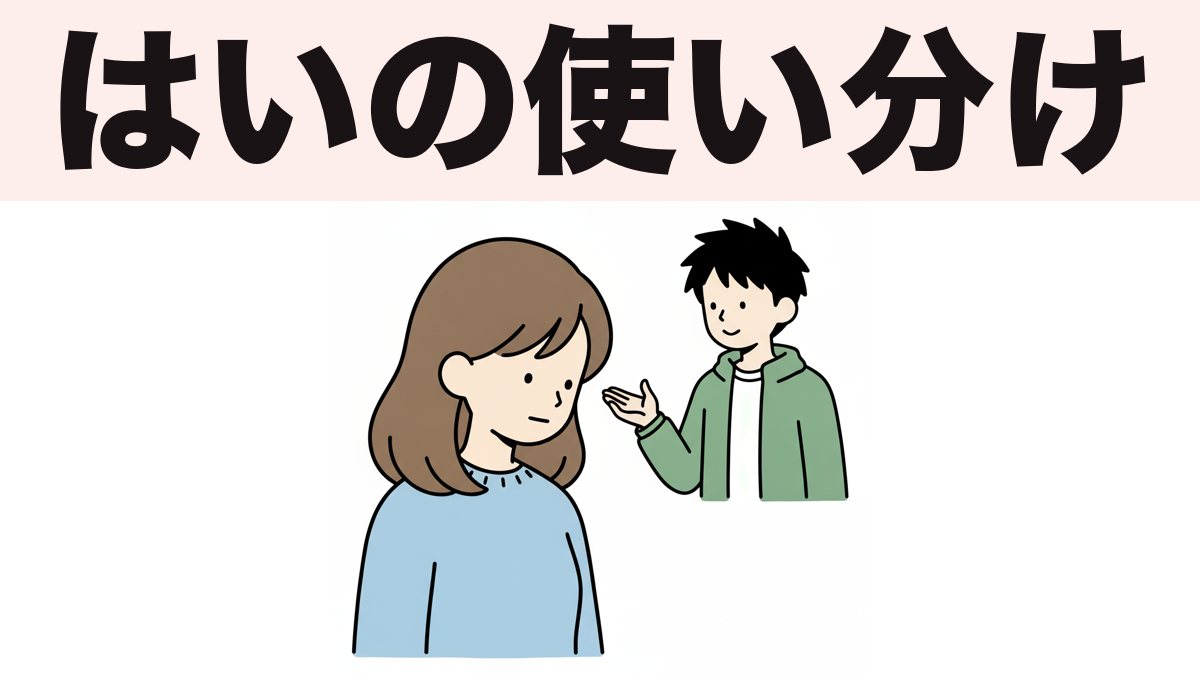
はい is the default yes, but it also means "I'm listening," "here you go" and "present" — and after a negative question it agrees with the question rather than the fact, so はい can mean "no, I don't."
「はい」はいちばんふつうの「yes」です。でも「聞いています」「どうぞ」「出席しています」の意味にもなります。そして、否定の質問の後では、事実ではなく「質問の形」に合わせます。だから「はい」が「いいえ、しません」の意味になります。
Saying yes looks like the easiest thing in Japanese and quietly goes wrong in three places: which word fits the register, what はい is doing when nobody asked a question, and the negative-question flip that reverses the answer.
The basics
What are the everyday words for yes?
Three, sorted by how polite they are.
はい。 — Yes. (polite, the safe default anywhere) ええ。 — Yes. (polite but conversational, softer than はい) うん。 — Yeah. (casual, friends and family only)
ええ is the one learners under-use. It is polite, but relaxed — the yes you give a colleague mid-conversation, where a crisp はい would sound like answering a roll call. うん is friendly and completely normal between friends, and lands as rude to a stranger or a superior.
The negative partner of うん is ううん ("no"), and the only difference is a nasal shape most learners cannot produce for months. If you are not confident, say いや or ちがう rather than gambling on the vowel — the full set is in how to say no in Japanese.
What else does はい do?
More work than "yes." It is also the sound of attention and the sound of handing something over.
はい。 — Mm-hm, I'm following. (as the other person talks) はい、どうぞ。 — Here you go. (handing something to someone) はい! — Present! (answering a roll call)
This is why you hear はい far more often than anyone is agreeing to anything. A Japanese listener produces small sounds constantly, and はい is the most formal of them — the fuller set of listening noises is in Japanese filler words.
How do you say "that's right"?
そうです and its relatives confirm a statement rather than answering a yes-no question.
そうです。 — That's right. (polite, confirming what they said) そうですね。 — Yes, isn't it / let me think. (polite, agreeing or stalling) その通りです。 — Exactly so. (polite, emphatic agreement)
そうですね is doing double duty: as agreement it means "you're right," and stretched out at the start of an answer it means "hmm, let me think." Length and tone decide which, and both are extremely common.
How do you say yes to an instruction?
Not with はい alone, usually. Accepting a task has its own ladder.
わかりました。 — Understood. (polite, the everyday answer to an instruction) 承知しました。 — Certainly / I understand. (formal, to clients and superiors) かしこまりました。 — Certainly, sir/madam. (service register, staff to customer) 了解です。 — Got it. (casual-professional, and a trap — see below)
了解です feels efficient and is widely used, but many Japanese workplaces treat it as something you say downward or sideways, never up. To a manager or a client, 承知しました is the safe choice. Picking the right rung here is the same judgement as everywhere else in keigo vs casual.
Beyond the basics
Why does はい sometimes mean "no"?
Because Japanese はい agrees with the question as asked, while English "yes" agrees with the fact. After a negative question the two languages come apart completely.
肉は食べないんですか。 — You don't eat meat? (the question) はい、食べません。 — Correct, I don't eat it. (はい = your statement is right) いいえ、食べます。 — No, I do eat it. (いいえ = your statement is wrong)
English would answer the same situation with "no, I don't" and "yes, I do" — exactly reversed. This is the single most confusing yes-no moment for learners, and it flows in both directions: when a Japanese speaker answers your negative question with はい, they are confirming your negative, not contradicting it.
The escape hatch is to skip the yes-word and answer with the verb: 食べません on its own is unambiguous in both languages.
Which yes-word for which situation?
| Situation | What to say | Register |
|---|---|---|
| Answering a stranger, a teacher, a form | はい | Polite |
| Mid-conversation agreement with a colleague | ええ | Polite, relaxed |
| Friend asks if you're coming | うん | Casual |
| Confirming a fact they stated | そうです | Polite |
| Agreeing with an opinion | そうですね | Polite |
| Boss gives you a task | 承知しました / わかりました | Formal / polite |
| Friend asks a favour | いいよ | Casual |
| Granting permission politely | いいですよ | Polite |
| Shop staff to a customer | かしこまりました | Service |
| Showing you are listening | はい / ええ / うん | Matches the conversation |
How do you say yes to a request or permission?
いいですよ, not はい. A bare はい answers whether something is true; いいですよ says you are willing.
いいですよ。 — Sure, that's fine. (polite, granting permission) いいよ。 — Sure. (casual) もちろんです。 — Of course. (polite, enthusiastic)
The よ is not optional decoration here — it adds the reassurance that makes the permission sound warm rather than clipped. This is the natural answer to the 〜てもいいですか pattern in asking permission.
What about the yes that is really a no?
大丈夫です is the famous one: at a shop counter it usually declines rather than accepts. If you mean an enthusiastic yes to an offer, お願いします is the only phrasing that cannot be misread — the full trap is unpacked in 大丈夫.
お願いします。 — Yes please. (polite, accepting an offer) 結構です。 — No thank you. (polite but firm refusal, despite sounding positive)
結構 is the mirror image: it contains the character for "fine" and it means no. 結構です almost always declines, and 結構いいですね ("quite good, isn't it") uses the same word as an intensifier. Context carries all of it.
What are the anime yeses?
Short, blunt and mostly masculine.
ああ。 — Yeah. (casual masculine, often gruff) おう。 — Yeah / sure. (casual masculine, energetic) うむ。 — Indeed. (archaic, an older or self-important character) はいはい。 — Yeah yeah, whatever. (dismissive — doubling はい makes it sarcastic)
ああ and おう are usable between close male friends and nowhere else. はいはい is worth knowing defensively: repeating はい does not make it more polite, it makes it impatient. Saying it to a teacher or a boss is a genuine mistake, not a stylistic one.
Common mistakes
- はい to a negative question, meaning English "yes." 行かないんですか → はい means "right, I'm not going." Answer with the verb if you are unsure.
- はいはい to anyone you respect. Doubling it turns agreement into "yeah yeah, I heard you."
- 了解です to your boss. Common in speech, still read as too casual upward in many offices. 承知しました is safe.
- うん to a stranger. Fine with friends, noticeably rude to someone you just met or to staff.
- はい where いいですよ belongs. Asked "can I borrow this?", はい is thin; いいですよ is the natural yes.
- Silence plus a nod. English speakers often nod and say nothing. Japanese conversation expects an audible はい or ええ every few seconds, and silence reads as disagreement.
Practice
Answers are hidden — build yours first, then open. Questions 4 and 5 are a pair: the same fact, one positive question and one negative.
1. A stranger asks if you are the person waiting for a table. Answer politely.
Show answer
はい — the default polite yes, correct with anyone you do not know. うん here would be noticeably rude.
2. Your friend asks if you want to get ramen. You do.
Show answer
うん — casual and completely natural between friends. はい would sound stiff, as if answering a teacher.
3. Your manager asks you to send a file by 3pm.
Show answer
承知しました — or わかりました in a relaxed office. 了解です is widely used but reads as casual pointed upward.
4. Someone asks 日本に住んでいますか and you do live in Japan.
Show answer
はい、住んでいます — positive question, positive fact, so はい behaves exactly like English "yes."
5. Someone asks 日本に住んでいないんですか and you do live in Japan.
Show answer
いいえ、住んでいます — the negative question flips it. いいえ says "your statement is wrong," and English would have said "yes, I do." This is the pair to question 4.
6. A friend asks to borrow your charger. Say yes.
Show answer
いいよ — permission, not fact, so いい rather than はい. The polite version is いいですよ.
7. Confirm politely that what the other person just said is correct.
Show answer
そうです — confirms a statement. For stronger agreement, その通りです.
8. You are a shop assistant and a customer asks you to gift-wrap something.
Show answer
かしこまりました — the service register. Staff say this to customers; you would not use it with friends.
9. A colleague is telling a long story. You are listening. What do you say, and when?
Show answer
はい or ええ every few seconds — this is あいづち, not agreement. Staying silent reads as bored or disagreeing.
10. Shop staff ask if you would like a receipt, and you would.
Show answer
お願いします — the unambiguous yes to an offer. 大丈夫です would decline it, which is the opposite of what you meant.
FAQ
Is はい always safe? Almost. It is never rude. It is only wrong when the question was negative, or when the situation wanted a willingness word like いいですよ or an acceptance word like わかりました.
What is the real difference between はい and ええ? Formality and warmth. はい is crisper and works in any formal setting; ええ is polite but conversational, and slightly softer. Both are correct with a colleague.
Is うん rude? Only upward or to strangers. Between friends and inside a family it is the normal yes, and using はい there would create distance.
How do I answer a negative question without getting confused? Skip the yes-word. Answer with the verb — 行きます or 行きません — and the ambiguity disappears in both languages.
Why do Japanese speakers say はい so often? Because listening out loud is expected. Those はい sounds mean "I'm with you," not "I agree," which is why a business meeting can be full of them and still end in no.
Is 了解 really rude? Not rude, but casual. It is fine to peers and juniors and common in messaging; to a client or a manager, 承知しました avoids the question entirely.
Vocabulary from this article
Tap the block to select all of it, then copy. In Anki: File → Import, note type Basic, separator Tab — the first column becomes the front, the second the back.
はい	はい — yes; I'm listening; here you go
ええ	ええ — yes (polite, conversational)
うん	うん — yeah (casual)
ううん	ううん — no (casual)
そうです	そうです — that's right
そうですね	そうですね — yes, isn't it; let me think
その通りです	そのとおりです — exactly so
わかりました	わかりました — understood
承知しました	しょうちしました — certainly, I understand (formal)
かしこまりました	かしこまりました — certainly (service register)
了解	りょうかい — got it (casual-professional)
いいですよ	いいですよ — sure, that's fine
いいよ	いいよ — sure (casual)
もちろん	もちろん — of course
お願いします	おねがいします — yes please
結構です	けっこうです — no thank you (firm)
あいづち	あいづち — listener's responses in conversation
はいはい	はいはい — yeah yeah (dismissive)
I'm Yuuki, a Japanese teacher based in Tokyo. I've taught on italki as a Top 1% teacher and watched over 1,500 anime. The negative-question flip is the one I correct most often, and never just once — students understand it instantly and then get it wrong in conversation for another six months, because the English reflex is faster than the rule.
Sources: the author's own lessons and standard reference grammars.
「はい」と言うのは、かんたんに見えます。でも3つの所でつまずきます。ていねいさの選び方。だれも質問していないのに言う「はい」。そして、否定の質問で答えがひっくり返ることです。
基本
毎日使う「はい」は?
3つです。ていねいな順に並べます。
はい。 — Yes. (ていねい。どこでも安全) ええ。 — Yes. (ていねい。でも会話っぽい。はいよりやわらかい) うん。 — Yeah. (カジュアル。友だち・家族だけ)
学習者があまり使わないのが「ええ」です。ていねいですが、力がぬけています。同僚との会話の途中なら、はっきりした「はい」は点呼の返事のように聞こえます。「うん」は友だちならふつうですが、知らない人や上の人には失礼です。
「うん」の反対は「ううん」(いいえ)です。ちがいは鼻の音だけで、最初は出せません。自信がなければ「いや」「ちがう」と言う方が安全です。断り方は 「いいえ」の言い方 にまとめました。
「はい」はほかに何をする?
「yes」よりたくさん働きます。聞いている合図にも、物をわたす時にも使います。
はい。 — Mm-hm, I'm following. (相手が話している間に) はい、どうぞ。 — Here you go. (物をわたす時) はい! — Present! (点呼の返事)
だから、だれも「同意」していないのに「はい」がたくさん聞こえます。日本語の聞き手は、小さい音をずっと出します。「はい」はその中でいちばんていねいな音です。ほかの音は あいづち・フィラー にあります。
「その通りです」はどう言う?
「そうです」の仲間です。はい・いいえの質問ではなく、相手の言ったことを確認します。
そうです。 — That's right. (ていねい。相手の言葉を確認) そうですね。 — Yes, isn't it / let me think. (ていねい。同意、または考え中) その通りです。 — Exactly so. (ていねい。強い同意)
「そうですね」は2つの仕事をします。同意なら「おっしゃる通りです」。答えの最初にのばして言うと「うーん、そうですね…」考え中です。長さと言い方で決まります。どちらもよく使います。
指示への「はい」は?
「はい」だけではふつう足りません。仕事を受ける言い方には、段があります。
わかりました。 — Understood. (ていねい。ふつうの返事) 承知しました。 — Certainly. (かたい。お客様・上の人に) かしこまりました。 — Certainly. (店の言葉。お客様に) 了解です。 — Got it. (軽い。でもわながある)
「了解です」は便利で、よく使われます。でも多くの会社では「下や横に言う言葉」と考えます。上司やお客様には「承知しました」が安全です。この選び方は ていねいとカジュアルの切りかえ と同じです。
もう少し先へ
どうして「はい」が「いいえ」になる?
日本語の「はい」は「あなたの質問の形」に合わせます。英語の yes は「事実」に合わせます。否定の質問では、2つがずれます。
肉は食べないんですか。 — You don't eat meat? (質問) はい、食べません。 — Correct, I don't eat it. (はいはいあなたの言う通りです) いいえ、食べます。 — No, I do eat it. (いいえいいえあなたの言うことはちがいます)
英語では、同じ場面で "no, I don't" と "yes, I do" になります。ちょうど逆です。学習者がいちばんまよう所です。逆も同じで、日本の人があなたの否定の質問に「はい」と答えたら、あなたの否定を「その通り」と言っています。
にげ道があります。「はい・いいえ」を言わずに、動詞で答えることです。「食べません」だけなら、どちらの言葉でも意味は1つです。
場面と言葉の表
| 場面 | 言う言葉 | 丁寧さ |
|---|---|---|
| 知らない人・先生・受付 | はい | ていねい |
| 同僚との会話の途中 | ええ | ていねい・軽い |
| 友だちの「行く?」 | うん | カジュアル |
| 相手の言った事実の確認 | そうです | ていねい |
| 意見への同意 | そうですね | ていねい |
| 上司からの指示 | 承知しました / わかりました | かたい / ていねい |
| 友だちのお願い | いいよ | カジュアル |
| ていねいに許可する | いいですよ | ていねい |
| 店の人がお客に | かしこまりました | 店の言葉 |
| 聞いている合図 | はい / ええ / うん | 会話に合わせる |
お願いや許可への「はい」は?
「はい」ではなく「いいですよ」です。「はい」は事実の答え、「いいですよ」は「いいですよ、どうぞ」という気持ちです。
いいですよ。 — Sure, that's fine. (ていねい。許可する) いいよ。 — Sure. (カジュアル) もちろんです。 — Of course. (ていねい。よろこんで)
「よ」はかざりではありません。「心配いりませんよ」という安心が入ります。これが 「〜てもいいですか」 への自然な答えです。
「はい」に見える「いいえ」は?
有名なのが「大丈夫です」です。お店では、たいてい断る意味になります。すすめられた物がほしい時は「お願いします」だけが、まちがえられません。くわしくは 大丈夫 にあります。
お願いします。 — Yes please. (ていねい。受ける) 結構です。 — No thank you. (ていねい。でもはっきり断る)
「結構」は逆の形です。「結構」の字は良い意味なのに、「結構です」は断りです。「結構いいですね」なら「かなりいいですね」です。場面で決まります。
アニメの「はい」は?
短くて、ぶっきらぼうで、だいたい男性的です。
ああ。 — Yeah. (カジュアル・男性的。低い感じ) おう。 — Yeah / sure. (カジュアル・男性的。元気) うむ。 — Indeed. (古い感じ。年上や、えらそうな人) はいはい。 — Yeah yeah, whatever. (そっけない。2回言うといやみになる)
「ああ」「おう」は、仲のいい男どうしだけです。「はいはい」は、知っておくと身を守れます。2回言ってもていねいになりません。いらいらして聞こえます。先生や上司に言うのは、本当の失敗です。
よくある間違い
- 否定の質問に、英語の yes のつもりで「はい」。 「行かないんですか」→「はい」は「行きません」です。まよったら動詞で答えます。
- 目上の人に「はいはい」。 2回で「はい、はい、聞こえました」になります。
- 上司に「了解です」。 よく使われますが、上に向けるとくだけて見えます。「承知しました」が安全です。
- 知らない人に「うん」。 友だちならふつう、初対面や店の人には失礼です。
- 「いいですよ」の場面で「はい」。 「これ借りていい?」への「はい」はうすいです。「いいですよ」が自然です。
- うなずくだけで声を出さない。 日本語の会話は、数秒ごとに「はい」「ええ」を待っています。だまっていると、反対していると思われます。
練習
答えはかくしてあります。先に自分で作ってから開いてください。4と5は同じ事実で、質問の形だけがちがいます。
1. 知らない人に「お待ちの方ですか」と聞かれました。ていねいに答えます。
答えを見る
はい — 知らない人にはこれです。「うん」ははっきり失礼になります。
2. 友だちに「ラーメン行く?」と聞かれました。行きます。
答えを見る
うん — 友だちにはこれがふつうです。「はい」だと先生に答えているようにかたく聞こえます。
3. 上司に「3時までにファイルを送って」と言われました。
答えを見る
承知しました — 軽い職場なら「わかりました」。「了解です」は上に向けるとくだけて見えます。
4. 「日本に住んでいますか」と聞かれました。住んでいます。
答えを見る
はい、住んでいます — ふつうの質問なので、英語の yes と同じ動きです。
5. 「日本に住んでいないんですか」と聞かれました。住んでいます。
答えを見る
いいえ、住んでいます — 否定の質問なのでひっくり返ります。英語なら "yes, I do" です。4と対になっています。
6. 友だちに「充電器かして」と言われました。いいですよ。
答えを見る
いいよ — 事実ではなく許可なので「いい」です。ていねいには「いいですよ」。
7. 相手の言ったことが正しいと、ていねいに確認します。
答えを見る
そうです — 相手の言葉の確認です。強く同意するなら「その通りです」。
8. あなたは店員です。お客様に「プレゼント包装をお願いします」と言われました。
答えを見る
かしこまりました — 店の言葉です。友だちには使いません。
9. 同僚が長い話をしています。あなたは聞いています。何を、いつ言いますか。
答えを見る
数秒ごとに「はい」か「ええ」 — これはあいづちで、同意ではありません。だまっていると、つまらないか反対だと思われます。
10. 店員に「レシートはご入用ですか」と聞かれました。ほしいです。
答えを見る
お願いします — すすめられた物を受ける時の、まちがえられない言い方です。「大丈夫です」だと断ることになります。
よくある質問
「はい」はいつでも安全ですか。 ほとんど安全です。失礼にはなりません。合わないのは、否定の質問の後と、「いいですよ」「わかりました」が必要な場面だけです。
「はい」と「ええ」のちがいは。 かたさとやわらかさです。「はい」ははっきりしていて、どんな場面でも使えます。「ええ」はていねいですが会話っぽく、少しやわらかいです。同僚にはどちらも正しいです。
「うん」は失礼ですか。 上の人と知らない人にだけです。友だちや家族ではふつうで、そこで「はい」を使うと、きょりができます。
否定の質問でまよわない方法は。 「はい・いいえ」を使わないことです。「行きます」「行きません」と動詞で答えれば、どちらの言葉でも1つの意味になります。
どうして「はい」をたくさん言うのですか。 聞いていることを声で示すからです。あの「はい」は「聞いています」で、「賛成です」ではありません。会議が「はい」だらけでも、結論が「いいえ」になることがあります。
「了解」は本当に失礼ですか。 失礼ではありません。軽いだけです。同じ立場や下の人には大丈夫で、メッセージでもよく使います。お客様や上司には「承知しました」にすれば問題になりません。
この記事に出た単語
ブロックをタップすると全部選べます。そのままコピーしてください。Anki では ファイル → 読み込み、ノートタイプ 基本、区切り タブ。1列目が表、2列目が裏になります。
はい	はい — yes; I'm listening; here you go
ええ	ええ — yes (polite, conversational)
うん	うん — yeah (casual)
ううん	ううん — no (casual)
そうです	そうです — that's right
そうですね	そうですね — yes, isn't it; let me think
その通りです	そのとおりです — exactly so
わかりました	わかりました — understood
承知しました	しょうちしました — certainly, I understand (formal)
かしこまりました	かしこまりました — certainly (service register)
了解	りょうかい — got it (casual-professional)
いいですよ	いいですよ — sure, that's fine
いいよ	いいよ — sure (casual)
もちろん	もちろん — of course
お願いします	おねがいします — yes please
結構です	けっこうです — no thank you (firm)
あいづち	あいづち — listener's responses in conversation
はいはい	はいはい — yeah yeah (dismissive)
More drills like the ones above, plus a timed JLPT-style mock test: Practice · N5上のような練習問題と、時間つきのJLPT形式のもぎ試験: 練習ページ · N5
Want to try this in a real conversation?
本当の会話で、ためしてみませんか?
30-minute trial lesson, $13. Times shown in your own timezone.
30分の体験レッスン、$13。時間はあなたのタイムゾーンで表示されます。
Book a trial lesson · $13