で vs に: the particle pair that decides whether you live or work somewhereで と に: 「住む」と「働く」で助詞が変わります
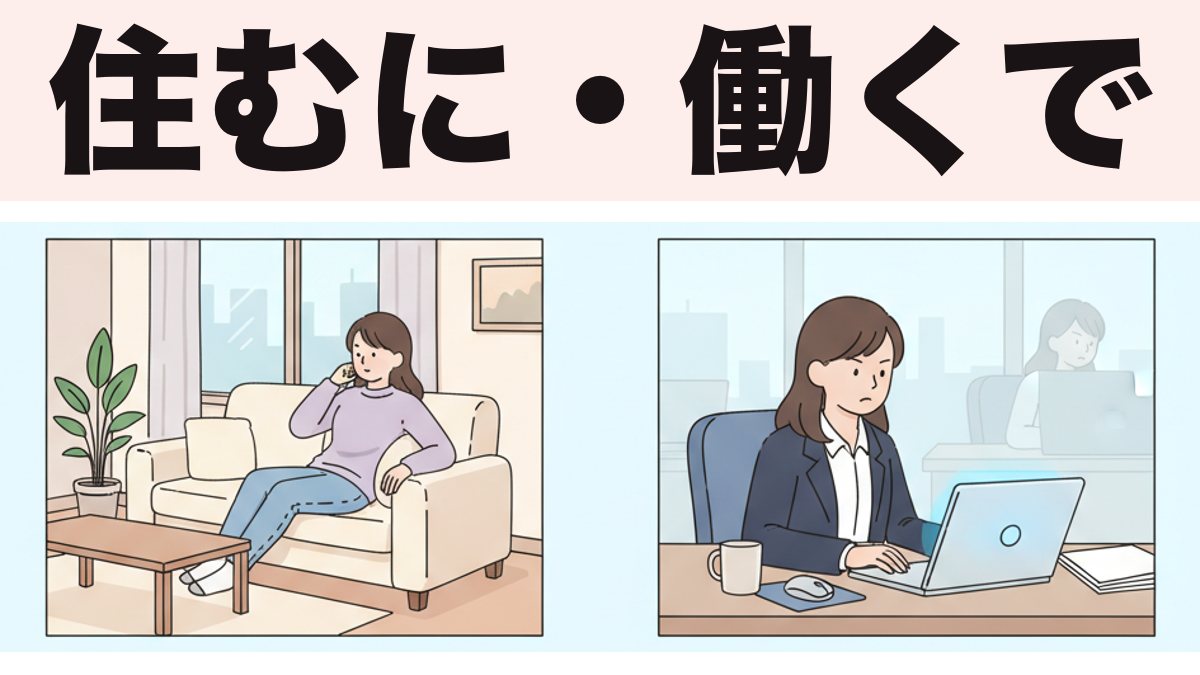
に marks a point: where something exists, where you are heading, when something happens. で marks the stage an action is performed on. 東京**に**住んでいます ("I live in Tokyo") but 東京**で**働いています ("I work in Tokyo") — and which one you need is decided by the verb, not by the place.
「に」は**点**をさします。ある場しょ、行き先、時こく。「で」は動作をする**場**をさします。「東京**に**住んでいます」でも「東京**で**働いています」。どちらになるかは、場しょではなく**動詞**が決めます。
This pair produces more corrections in beginner lessons than any other, because English uses "in" for both. Once you can ask "is this verb about existing somewhere, or doing something somewhere?", most of it resolves.
The basics
The one-line rule
- に = a point. A destination, a location of existence, a moment in time.
- で = a stage. The place an action is carried out, or the means used to carry it out.
公園に行きます。 — I'll go to the park. (polite — destination, so に) 公園で走ります。 — I'll run in the park. (polite — the action happens there, so で)
Same park, different particle, because 行く is arriving at a point and 走る is doing something on a stage.
The verbs that always take に
Some verbs are about reaching or existing at a point, and they take に every time:
| Verb | Meaning | Example |
|---|---|---|
| 行く / 来る / 帰る | go / come / return | 日本に行く |
| いる / ある | exist | 部屋にいる |
| 住む | live (reside) | 東京に住む |
| 入る | enter | 部屋に入る |
| 乗る | board | 電車に乗る |
| 会う | meet | 友達に会う |
| 着く | arrive | 駅に着く |
住む is the one that catches people, because "living in Tokyo" feels like an activity. In Japanese it is a state of existing somewhere, so it patterns with いる and ある, not with 働く.
で for the place of an action, and for means
図書館で勉強しました。 — I studied at the library. (polite past — the studying happened there) 電車で行きます。 — I'll go by train. (polite — で for the means) 日本語で話しましょう。 — Let's talk in Japanese. (polite — で for the language used)
The "means" で is the same particle doing a related job: the train and the language are both the instrument the action is carried out with.
Beyond the basics
The pair that explains everything: 住む vs 働く
東京に住んでいます。 — I live in Tokyo. (polite — existence) 東京で働いています。 — I work in Tokyo. (polite — activity)
Both use the teiru form and both mean something ongoing, but 住む describes where you are and 働く describes what you do. If you can produce this pair without thinking, you have the rule.
A very common learner sentence is 家からに仕事します, built by stacking particles because none of them felt right. The natural version is 家で仕事します or 在宅で働いています — で, because working is an activity.
Time takes に, but only for a point
に marks a moment on the clock or calendar. It does not attach to relative time words.
| Takes に | Does not take に |
|---|---|
| 3時に, 月曜日に, 5月に, 2026年に | 今日, 明日, 昨日, 毎日, 今 |
7時に起きます。 — I get up at seven. (polite — a point on the clock) 明日行きます。 — I'll go tomorrow. (polite — no particle; 明日に is wrong)
The test is whether you could point at it on a calendar. Monday is a point; "tomorrow" moves depending on when you say it.
で also marks a scope, and a limit
日本で一番高い山は富士山です。 — The highest mountain in Japan is Mt Fuji. (polite — で marks the range being compared within) 一日で終わりました。 — It was finished within a day. (polite — で for the span it took)
The superlative use is worth memorising as a phrase: 〜で一番. Learners often reach for に here and it sounds clearly wrong.
に for the target of an action toward someone
When an action is aimed at a person, に marks the receiver:
友達に電話しました。 — I called my friend. (polite past — に for the person aimed at)
This is the same に that appears in 教える, あげる, 送る and 見せる. If your English has an implicit "to," you almost certainly want に.
The one where both work, differently
Some verbs accept either and change meaning:
黒板に書いてください。 — Please write it on the blackboard. (polite — に, the surface it ends up on) 教室で書いてください。 — Please write it in the classroom. (polite — で, where the writing takes place)
に is where the writing lands; で is where the writer is. Once you see that, the pair stops feeling arbitrary. The same logic distinguishes は and が — Japanese particles almost always encode a role rather than a translation.
Common mistakes
- 東京で住んでいます. 住む is existence. It has to be 東京に住んでいます.
- 東京に働いています. 働く is an activity. It has to be 東京で.
- 明日に行きます. Relative time words take no particle.
- 日本に一番高い山. The superlative scope is で: 日本で一番.
- Stacking particles. 家からに, 学校でに — if two feel right, one of them is wrong. Decide whether the verb is about existing or doing, then pick one.
Practice
Answers are hidden — build yours first, then open. Questions 1 and 2 are a pair: same city, and only the verb changes.
1. Say "I live in Tokyo."
Show answer
東京に住んでいます — 住む is a state of existing somewhere, so it takes に, like いる and ある.
2. Say "I work in Tokyo."
Show answer
東京で働いています — working is an activity, so で. This is the pair to question 1: the place did not change, the verb did.
3. Something is wrong here: 公園で行きます。
Show answer
公園に行きます — 行く is reaching a point, so に marks the destination.
4. Say "I studied at the library."
Show answer
図書館で勉強しました — the studying is carried out there, so the library is a stage: で.
5. Something is wrong here: 明日に行きます。
Show answer
明日行きます — relative time words (今日, 明日, 毎日) take no particle. Only fixed points on the clock or calendar take に.
6. Say "the highest mountain in Japan is Mt Fuji."
Show answer
日本で一番高い山は富士山です — 〜で一番 marks the range you are comparing within. に is wrong here.
7. Say "I'll go by train."
Show answer
電車で行きます — で also marks the means. Same particle, related job: the train is the instrument.
8. Something is wrong here: 家からに仕事します。
Show answer
家で仕事します — stacking particles is the sign that none of them felt right. Working is an activity, so で.
9. Say "please write it on the blackboard" and "please write it in the classroom."
Show answer
黒板に書いてください / 教室で書いてください — に is where the writing lands, で is where the writer is.
10. Say "I called my friend."
Show answer
友達に電話しました — に marks the person an action is aimed at. If your English has an implicit "to," you want に.
FAQ
Which one goes with 会う? に: 友達に会います. It feels like an English "meet with," which tempts people toward と — and と会う does exist, with a slightly more mutual flavour.
What about 乗る? に: 電車に乗ります. You are boarding into a point. で乗る is not a thing.
Is 〜において the same as で? Yes, in formal writing. 会議において = 会議で. Recognise it in documents; use で when speaking.
How do I say "in Japan" generally? It depends on the verb, as always. 日本に住む, 日本で買う, 日本に行く. There is no default translation of "in."
Can で mark a reason? Yes: 病気で休みました ("I was off sick"). That is another use of the "means" sense — the illness is what brought the absence about.
Why do some verbs take を for a place? Movement-through verbs: 公園を散歩する ("walk through the park"), 橋を渡る ("cross the bridge"). The place is the path, not a point or a stage.
Vocabulary from this article
Tap the block to select all of it, then copy. In Anki: File → Import, note type Basic, separator Tab — the first column becomes the front, the second the back.
公園	こうえん — park
行く	いく — to go
走る	はしる — to run
住む	すむ — to live, to reside
働く	はたらく — to work
東京	とうきょう — Tokyo
図書館	としょかん — library
勉強	べんきょう — study
電車	でんしゃ — train
日本語	にほんご — Japanese language
部屋	へや — room
入る	はいる — to enter
乗る	のる — to board, to ride
会う	あう — to meet
着く	つく — to arrive
駅	えき — station
友達	ともだち — friend
仕事	しごと — work, job
起きる	おきる — to get up
明日	あした — tomorrow
月曜日	げつようび — Monday
一番	いちばん — the most, number one
山	やま — mountain
富士山	ふじさん — Mt Fuji
黒板	こくばん — blackboard
書く	かく — to write
教室	きょうしつ — classroom
電話	でんわ — telephone, phone call
病気	びょうき — illness
橋	はし — bridge
渡る	わたる — to cross
散歩	さんぽ — a walk
I'm Yuuki, a Japanese teacher based in Tokyo. I've taught on italki as a Top 1% teacher and watched over 1,500 anime. When a learner stacks particles — 家からに, 学校でに — it is never carelessness. It is the sound of someone who knows one of them is right and is hedging. Deciding "existing or doing?" first removes the hedge.
Sources: the author's own lessons and standard reference grammars.
英語はどちらも "in" なので、初級のレッスンでいちばん多く直すペアです。「この動詞は『そこにいる』話か、『そこで何かする』話か」と聞けるようになると、ほとんど解決します。
基本
1行のルール
- に 点。行き先・いる場しょ・時こく。
- で 場。動作をする場しょ、または使う手だん。
公園に行きます。 — I'll go to the park. 公園で走ります。 — I'll run in the park.
同じ公園でも助詞がちがいます。「行く」は点に着くこと、「走る」は場でする動作だからです。
いつも「に」をとる動詞
| 動詞 | 意味 | れい |
|---|---|---|
| 行く / 来る / 帰る | go / come / return | 日本に行く |
| いる / ある | exist | 部屋にいる |
| 住む | live | 東京に住む |
| 入る | enter | 部屋に入る |
| 乗る | board | 電車に乗る |
| 会う | meet | 友達に会う |
| 着く | arrive | 駅に着く |
「住む」でつまずく人が多いです。「東京に住む」は活動のように感じますが、日本語では「そこにいる」じょうたいなので、「いる」「ある」のなかまです。
「で」」 動作の場しょ・手だん
図書館で勉強しました。 — I studied at the library. 電車で行きます。 — I'll go by train. 日本語で話しましょう。 — Let's talk in Japanese.
手だんの「で」も同じしくみです。電車もことばも、その動作をするための道具です。
もう少しくわしく
「住む」と「働く」
東京に住んでいます。 — I live in Tokyo. 東京で働いています。 — I work in Tokyo.
どちらも「ています」ですが、「住む」はどこにいるか、「働く」は何をしているかです。これが考えずに出るようになれば、ルールは入っています。
「家からに仕事します」という文をよく見ます。どれもしっくり来なくて、助詞をかさねてしまった形です。自ぜんなのは「家で仕事します」「在宅で働いています」です。
時間は「点」だけ「に」
| 「に」がつく | 「に」がつかない |
|---|---|
| 3時に・月曜日に・5月に・2026年に | 今日・明日・昨日・毎日・今 |
7時に起きます。 — I get up at seven. 明日行きます。 — I'll go tomorrow.
カレンダーや時計で指させるかどうかがテストです。「明日」は、言う日によって動きます。
「で」ははんいもさす
日本で一番高い山は富士山です。 — The highest mountain in Japan is Mt Fuji. 一日で終わりました。 — It was finished within a day.
「〜で一番」はかたまりでおぼえてください。ここで「に」を使うと、はっきり変です。
人に向かう動作は「に」
友達に電話しました。 — I called my friend.
「教える」「あげる」「送る」「見せる」も同じです。英語で "to" がかくれているなら、たいてい「に」です。
どちらも使えて、意味が変わる
黒板に書いてください。 — Please write it on the blackboard. 教室で書いてください。 — Please write it in the classroom.
「に」は字が着くところ、「で」は書く人がいるところです。
よくある間違い
- 東京で住んでいます。 「住む」はじょうたいなので「に」です。
- 東京に働いています。 「働く」は動作なので「で」です。
- 明日に行きます。 「明日」には助詞をつけません。
- 日本に一番高い山。 はんいは「で」です。
- 助詞をかさねる。 「家からに」「学校でに」。2つ合いそうなら、どちらかが間違いです。
練習
答えはかくれています。まず自分で作ってから開いてください。1番と2番が対です。同じ町で、動詞だけが変わります。
1. 「東京に住んでいます」— どうして「に」ですか。
答えを見る
「住む」は「そこにいる」じょうたいだから — 「いる」「ある」と同じなかまです。
2. 「東京で働いています」— どうして「で」ですか。
答えを見る
「働く」は動作だから — 1番と対で、変わったのは場しょではなく動詞です。
3. 直してください: 公園で行きます。
答えを見る
公園に行きます — 「行く」は点に着くことなので「に」です。
4. 「図書館で勉強しました」— どうして「で」ですか。
答えを見る
勉強はそこでする動作だから — 図書館は「場」です。
5. 直してください: 明日に行きます。
答えを見る
明日行きます — 「今日」「明日」「毎日」には助詞をつけません。
6. 「日本でいちばん高い山は富士山です」— 「に」ではだめですか。
答えを見る
だめです。「〜で一番」です — 「で」がくらべるはんいをさします。
7. 「電車で行きます」の「で」は何ですか。
答えを見る
手だん — 場しょの「で」と同じしくみで、電車は道具です。
8. 直してください: 家からに仕事します。
答えを見る
家で仕事します — 助詞をかさねるのは、どれか1つに決めていないしるしです。
9. 「黒板に書いてください」と「教室で書いてください」のちがいは?
答えを見る
字が着くところ/書く人がいるところ — 「に」は点、「で」は場です。
10. 「友達に電話しました」の「に」は何ですか。
答えを見る
動作が向かう相手 — 英語で "to" がかくれているなら「に」です。
この記事に出た単語
ブロックをタップすると全部選べます。そのままコピーしてください。Anki では ファイル → 読み込み、ノートタイプ 基本、区切り タブ。1列目が表、2列目が裏になります。
公園	こうえん — park
行く	いく — to go
走る	はしる — to run
住む	すむ — to live, to reside
働く	はたらく — to work
東京	とうきょう — Tokyo
図書館	としょかん — library
勉強	べんきょう — study
電車	でんしゃ — train
日本語	にほんご — Japanese language
部屋	へや — room
入る	はいる — to enter
乗る	のる — to board, to ride
会う	あう — to meet
着く	つく — to arrive
駅	えき — station
友達	ともだち — friend
仕事	しごと — work, job
起きる	おきる — to get up
明日	あした — tomorrow
月曜日	げつようび — Monday
一番	いちばん — the most, number one
山	やま — mountain
富士山	ふじさん — Mt Fuji
黒板	こくばん — blackboard
書く	かく — to write
教室	きょうしつ — classroom
電話	でんわ — telephone, phone call
助詞	じょし — particle
私はユウキです。東京で日本語を教えています。 italki の Top 1% の先生で、アニメは1,500本以上見ました。助詞をかさねる文(「家からに」「学校でに」)は、いいかげんに書いたのではありません。どれかが正しいと分かっていて、まよっている音です。先に「いる話か、する話か」を決めると、まよいが消えます。
More drills like the ones above, plus a timed JLPT-style mock test: Practice · N5上のような練習問題と、時間つきのJLPT形式のもぎ試験: 練習ページ · N5
Want to try this in a real conversation?
本当の会話で、ためしてみませんか?
30-minute trial lesson, $13. Times shown in your own timezone.
30分の体験レッスン、$13。時間はあなたのタイムゾーンで表示されます。
Book a trial lesson · $13