Things to Do in Akihabara: What a Local Anime Tour Guide Actually Recommends (for Anime Fans, at Night, and with Kids)
The best things to do in Akihabara: walk Chuo-dori from the Electric Town Exit, go up the multi-floor anime shops instead of along the street, give one figure floor and one retro game floor a proper hour, play one arcade, and eat a real lunch a few minutes from the station. That is half a day. I run private anime tours in Akihabara most weeks, and this is the list I give guests before we meet.
Akihabara is small. The mistake almost everyone makes is treating it like a street to walk down, when the whole point is the floors stacked above the street. There is no single must-do landmark here — the activities that matter are all vertical. Below is what is actually worth your time, split the way people search for it: anime fans, night, kids, first-timers, and adults who are not here for the anime at all.
What are the things to do in Akihabara?
The things to do in Akihabara are vertical: go up the multi-floor anime shops rather than along the street, give one figure floor and one retro game floor a proper hour, play one arcade, and eat a real lunch. The sections below split the same list for anime fans, night visits, kids and first-timers.
What is the short list of things to do in Akihabara?
Five things: walk Chuo-dori from the Electric Town Exit, go up the multi-floor anime shops, give one figure floor and one retro game floor a proper hour, play one arcade, and eat a real lunch a few minutes from the station. Together that is half a day, and the sections below split it for anime fans, night visits, kids and first-timers.
Akihabara on the ground
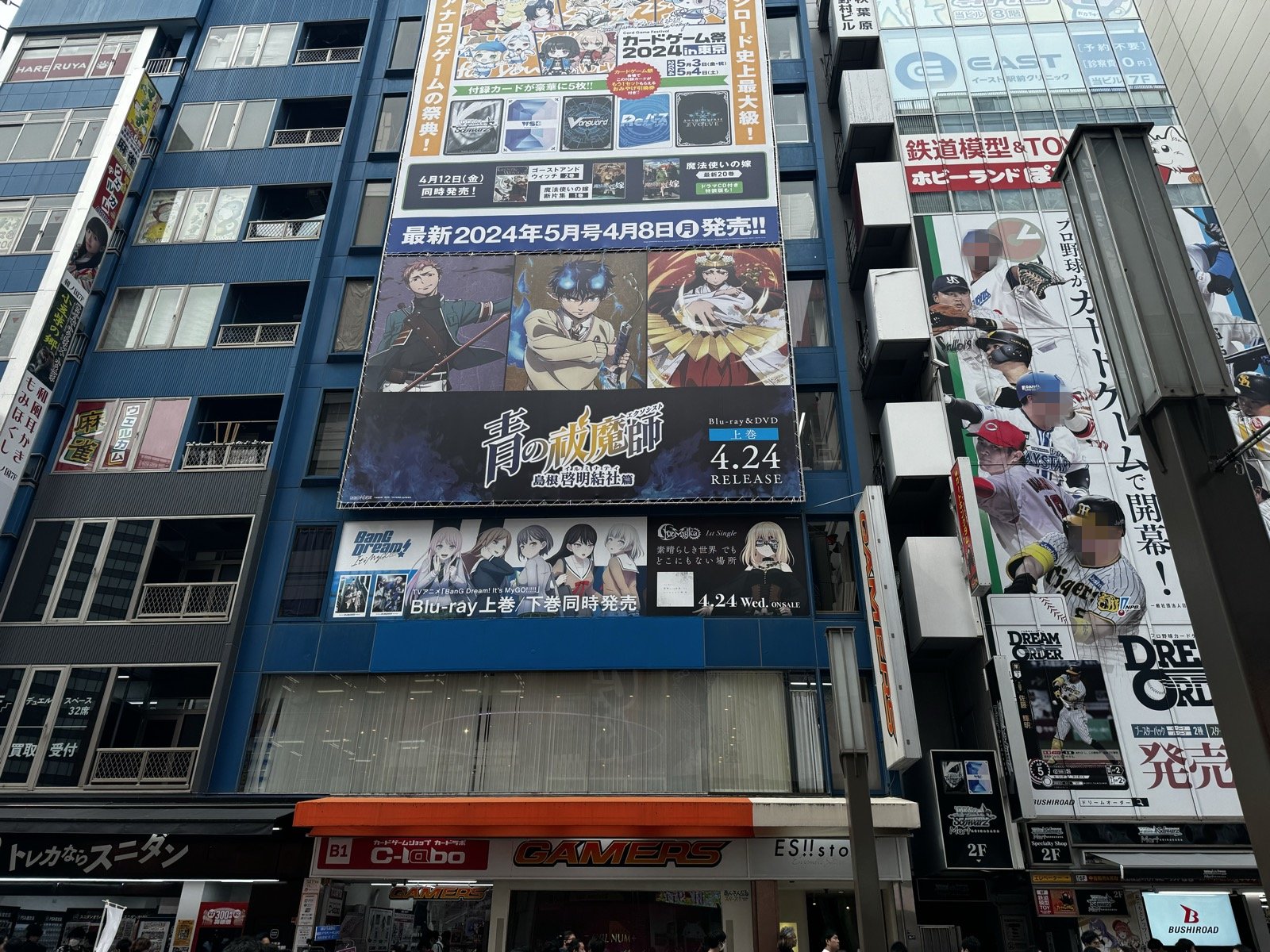
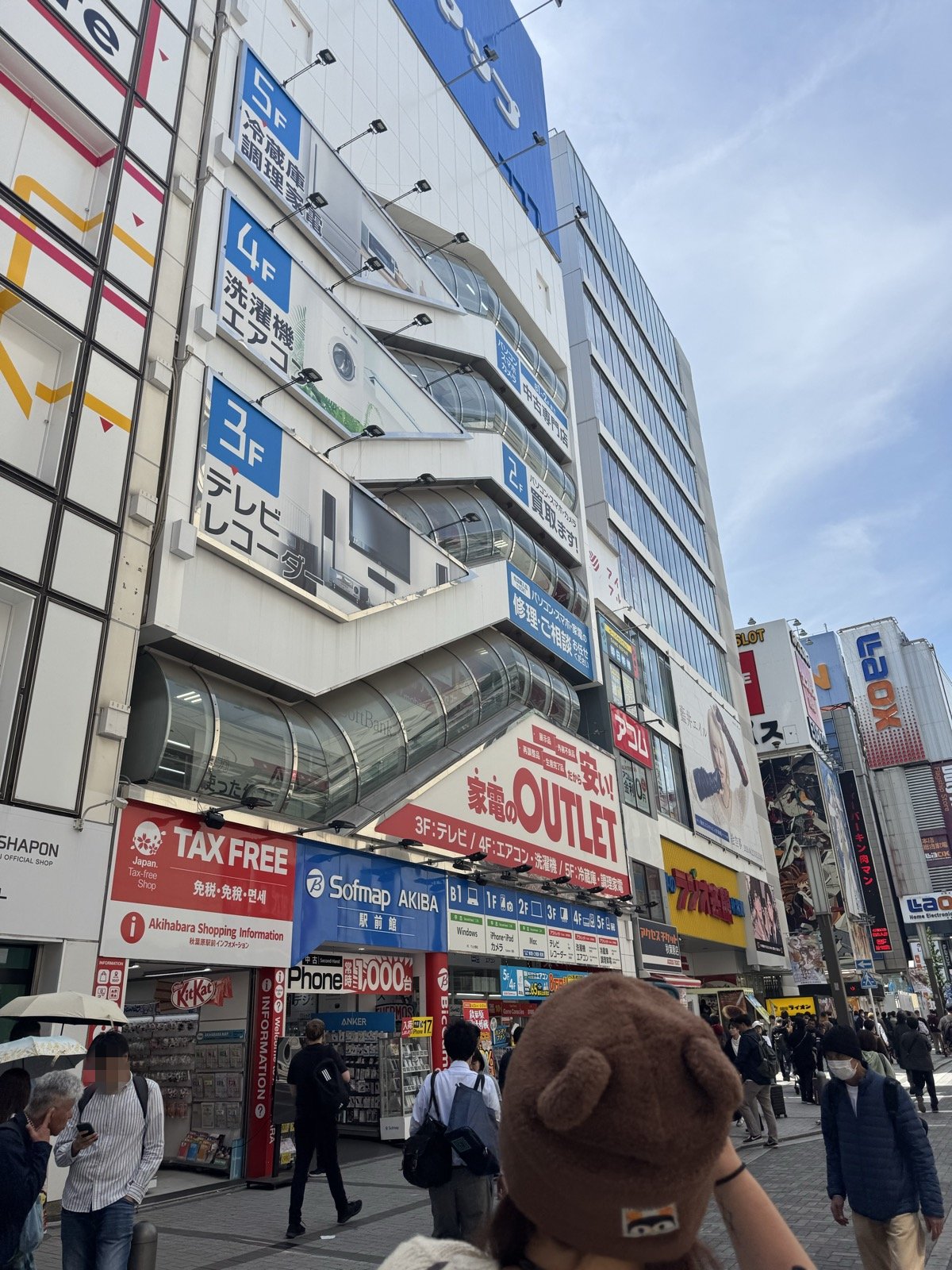
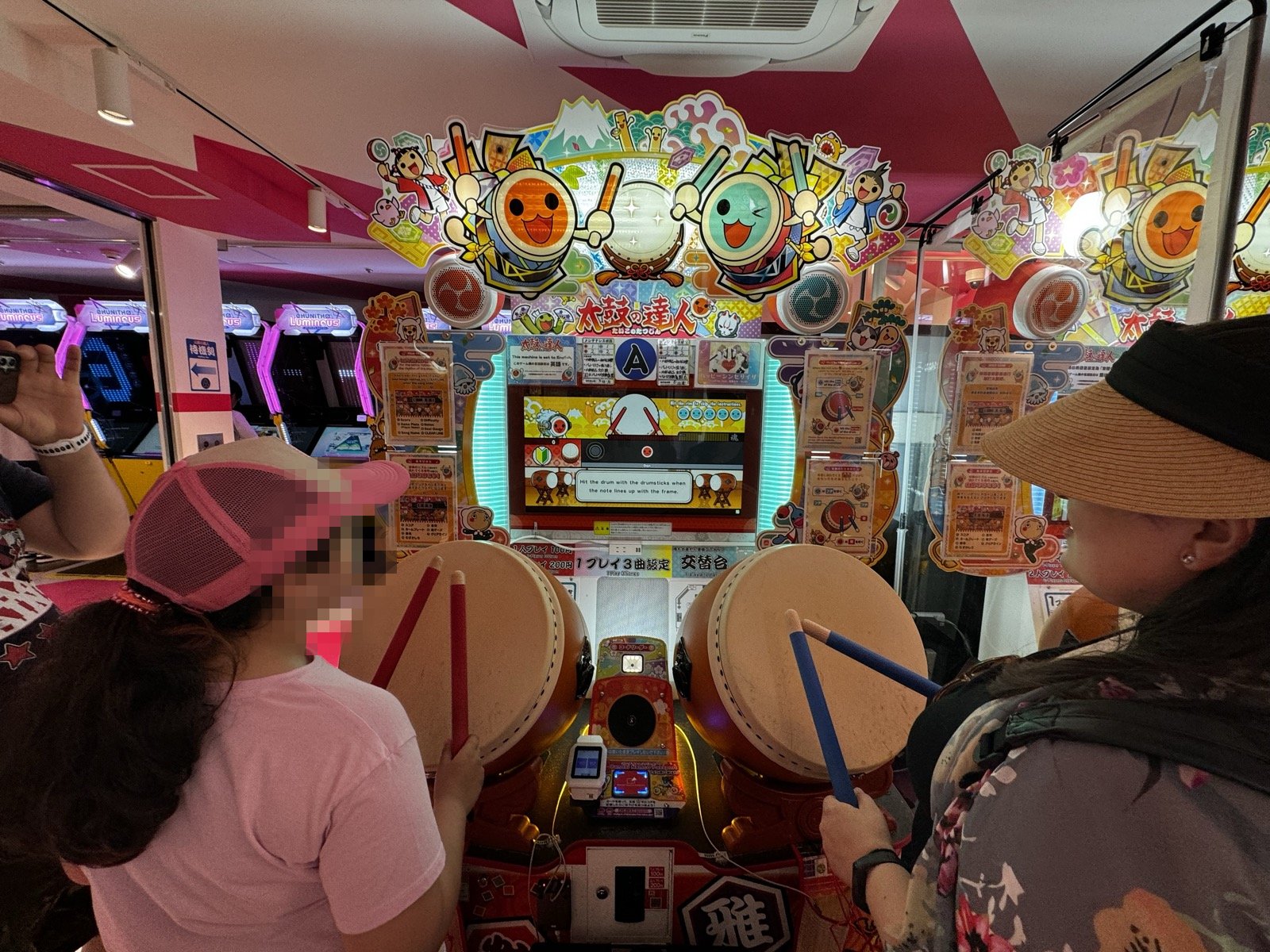
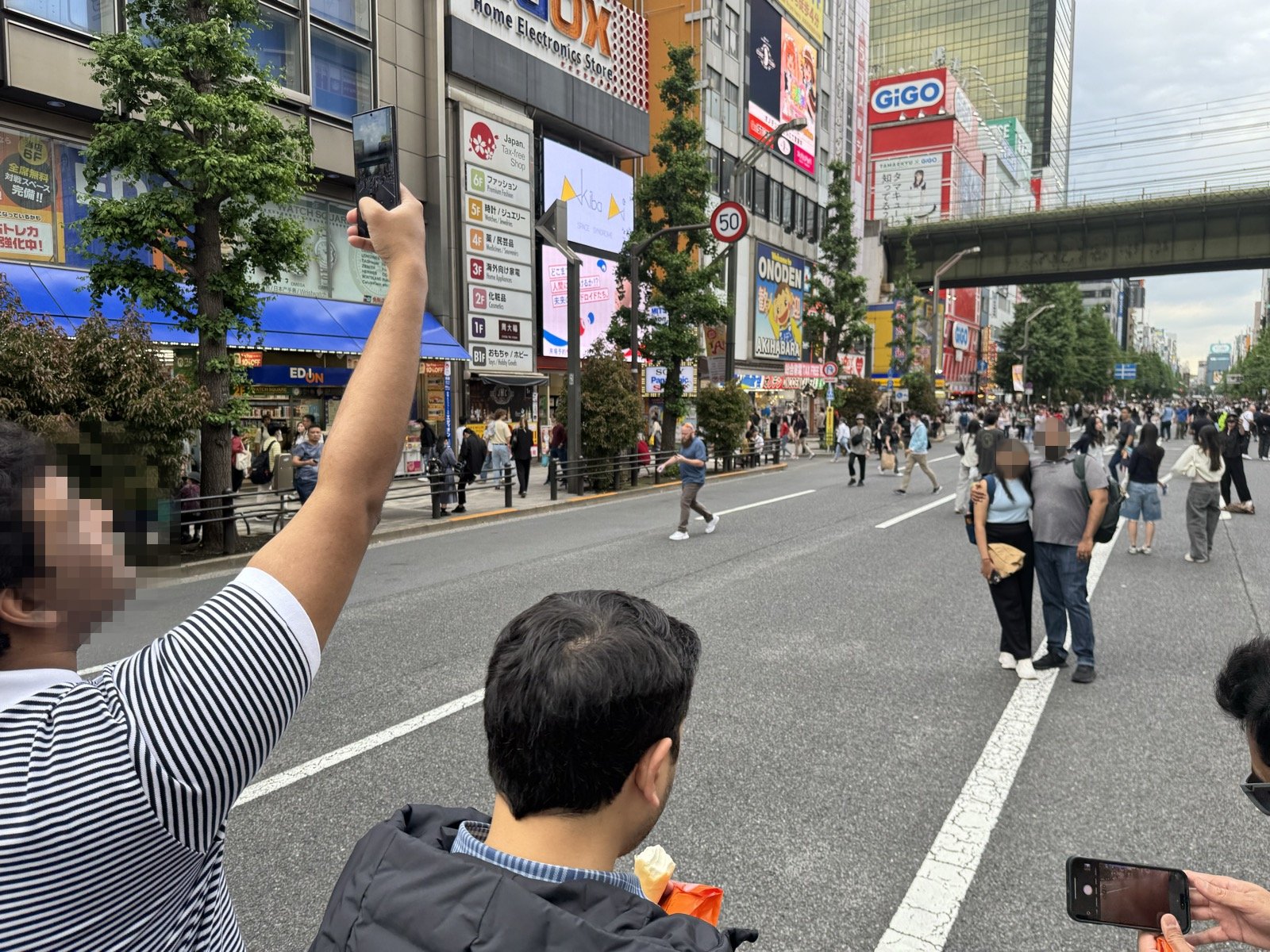
Anime posters covering the side of a building on Chuo-dori (Apr 2024)A multi-floor building with floor numbers on its outside stairs (Apr 2026)Visitors try a taiko drum rhythm game in an arcade (Jul 2024)Chuo-dori with the road closed to traffic (Jun 2025)
Photos: Yuuki (Anime Sensei)
What are the best things to do in Akihabara for anime fans?
Four kinds of floors: new figures, secondhand figures, doujin (fan-made comics), and retro games. Pick one of each rather than every shop. New-figure floors show you what is current; secondhand floors are where the price and the rare finds are; doujin floors are the part of the hobby you cannot see online; retro floors are for the games you grew up on.
Two rules that save an afternoon. First, decide your series before you arrive. Every floor is sorted by title, so a guest who says "I like anime" wanders, and a guest who says "Jujutsu Kaisen and Frieren" is done in twenty minutes and happy. Second, check secondhand before new. The same figure is often on both floors of the same building at two prices.
Where the figure floors are and how to check a secondhand box is in where to buy anime figures in Akihabara. If you read no Japanese, the Book Off guide explains how the shelves are filed by the sound of the author's name, which is why you cannot find anything by scanning for Latin letters.
On my Akihabara anime tour this sorting is done for you: you name your series when you book, and I take you to the one floor of each kind that carries it.
What can you do in Akihabara at night?
The street lit up, one or two shops before they close, and the arcades, which stay open later than the shops. Arrive by 17:00 if you want any shopping at all; after that Akihabara becomes an arcade-and-dinner district. It is a good evening, but it is not the same place as the afternoon.
The signs are the reason people come at night, and they are worth it: Chuo-dori after dark is the Akihabara from the photos. What you lose is the floors. Secondhand hunting, doujin shelves and tax-free counters are daytime things. On Sundays the pedestrian zone on Chuo-dori ends at 18:00 (April to September) or 17:00 (October to March), so the street goes back to traffic just as the lights come on.
Plan for: the walk down Chuo-dori, an arcade (crane games on the ground floor, rhythm and fighting games upstairs), and dinner. Juke Steak is a lunch-only steak counter that becomes an izakaya at night under a different name, which confuses everyone the first time. The full evening plan — what is open, what time to arrive if you still want to shop, and what is not worth doing after dark — is in Akihabara at night.
Is Akihabara good for kids and families?
Yes, with one adjustment. Arcades, crane games, capsule-toy walls and retro game floors work for almost any age. What you manage is the floors: several shops have adult sections, always marked, always on their own floor. Stay on the marked all-ages floors and the district is a very easy day with children.
The rhythm that works for families is short blocks. One shop, one arcade, one snack, repeat. Multi-floor shops are tiring for small legs, so pick the one building that matches what your child watches and skip the rest. If you are travelling with a stroller, the station has lifts on the Electric Town side, and most of the big shops have lifts, but the small side-street shops do not.
I run the tour privately, so families are common. The pace and the stops change; the route does not need to. The family version in full — how to read a floor guide, where the lifts are, and a half day built around short blocks — is in Akihabara with kids.
What should a first-timer do in Akihabara in half a day?
This is the half day I would give a friend. Arrive around 10:30 to 11:00, when the shops are opening, and leave the street when the arcades are the only thing still open.
Block
What
Why it is in this order
Arrive
JR Akihabara, Electric Town Exit (電気街口)
Every other exit puts you on the wrong side of the tracks
Three places I send guests to, all within a few minutes of the Electric Town Exit and all priced for locals. None of them is a themed café. If you want a themed café, go, but eat a real meal first.
Juke Steak — an aged-beef steak set for about ¥1,100–¥2,300, lunch only, in a basement.
Go!Go!Curry — Kanazawa-style curry with a pork cutlet for under ¥1,200, counter seats, fast.
Shōwa Shokudō — a set-meal diner that stays open until 23:00 (check the opening time on the day if you want breakfast)
If you are unsure how ordering works at a counter, Japanese dining etiquette covers the ticket machines and the water. For everyday manners beyond this, see Japanese etiquette.
What is not worth your time in Akihabara?
Walking the whole of Chuo-dori at street level, hunting for electronics bargains, and any café where you pay to be performed at when you did not want that. Akihabara is an anime and games district now; the electronics reputation is thirty years old.
The honest list, from someone who is here every week:
Street-level browsing. The ground floors are the least interesting floor of every building. Go up.
Electronics deals. The big chains are fine, but they are the same chains you can find in Shinjuku. Nobody should plan a trip around them.
The wrong exit. Half of the "Akihabara was disappointing" stories I hear start with someone leaving by the Central Gate and walking away from the district.
Maid cafés, if you are not into the idea. They are a real part of the culture and some guests love them. If you already know you would find it awkward, you will.
What's Akihabara most popular for, which activities are must-do, and what is there for adults?
The most popular activities, in the order visitors actually do them, are: walking Chuo-dori for the signs, one multi-floor anime shop, capsule toy machines, an arcade, and secondhand figure hunting. For an adult who is not an anime fan, the three that reliably land are the retro game floors, the arcades, and the electronics buildings under the railway tracks — none of which require caring about a single series.
The "must do" framing is misleading in Akihabara, because there is no single landmark. The district is a stack of specialist floors, not a sight, so what is popular is a behaviour — going up a building and back down it — rather than a place to tick off.
Who you are
What lands
What to skip
Anime fan, first visit
One big anime shop top to bottom, gacha corner, one figure floor
Electronics megastores
Adult, not an anime fan
Retro game floors, arcades, under-the-tracks electronics stalls
Doujinshi floors, maid cafés
Travelling with kids
Arcades, capsule toys, the ground floors
Upper floors of secondhand shops
Short on time
Chuo-dori, one shop, one arcade
Anything requiring a second building
The adult-without-the-hobby version is the one people underestimate. The under-the-tracks stalls are components, cables and parts sold by people who have done it for decades, and they are a genuinely unusual piece of Tokyo regardless of what you watch. Two hours there is a real visit; eight hours is not, unless the hobby arrives.
Should you take a guided tour or go alone?
Go alone if you have a shopping list and can read the floor guides. Take a guide if you want the floors matched to your series and would rather not lose the first two hours working out which building is which. A guide does not find rare items for you; a guide stops you spending an afternoon on the wrong floors.
Anime, manga, video games, figures and idol culture, stacked in multi-floor shops along Chuo-dori. It was famous for electronics first, and a few big electronics stores remain, but the district you are coming for is the anime one. The longer answer, including the three layers the district has been through, is in what Akihabara is famous for.
Q
Is one day too much for Akihabara?
For most visitors, yes. Half a day covers a first visit. A full day only pays off if you are hunting specific items or splitting the day with Ueno or Asakusa, which are a few minutes away by train.
Q
Is Akihabara worth visiting if I am not into anime?
For an hour or two, as a piece of Tokyo you will not see anywhere else. The retro game floors and the arcades land with almost everyone. After that it is a shopping district for a hobby you do not have. The longer answer is in is Akihabara worth visiting?.
Q
Do the shops take cards?
Most of the big ones do; small secondhand and doujin shops sometimes do not. Carry some cash. Do you need cash in Japan? covers how much.
Q
Is there a self-guided walking route?
The half-day table above is one. If you want it as a full timed plan with Ueno and Asakusa options, use the Akihabara one-day itinerary.
Do the floors, not the street
If you would rather have the floors chosen for you, Adventure in Akihabara with Anime is my private half-day walk, three to four hours, planned around the anime you name when you book. The per-person price for your party size is on the tour page. Bigger groups, email [email protected].
About the author. I am Yuuki, a Japanese teacher and Akihabara anime tour guide based in Tokyo. I run private tours here most weeks, rated 4.96★ on Airbnb across 171 reviews. I have watched over 1,500 anime series, which is why I usually know which floor a guest is going to disappear on.
A private half-day in Akihabara with a local otaku guide. Three to four hours in English, never mixed with other travelers, rated 4.96 by 171 Airbnb guests. Booking here goes straight into my calendar.