Do I need to know kanji before reading manga?
NOLearn hiragana and katakana first, then start with a furigana title. Manga is where you meet kanji, not a reward for knowing it.
Part of: Can You Learn Japanese from Anime?
Browse more: Learn Japanese
Yes, manga is among the best reading tools a beginner can pick up, because most shōnen and shōjo titles print furigana over every kanji. But manga alone will not teach you to speak, and its casual written Japanese has traps. I am a native Japanese teacher in Tokyo with 2,112 lessons behind me, and I guide Akihabara anime tours weekly.
This is the sister article to Can you learn Japanese from anime?. Manga covers what anime leaves out, which is reading.
Yes, for reading and vocabulary. Manga gives you real Japanese sentences with pictures that explain the context, furigana that unlocks kanji you have not learned yet, and a reason to turn the page. It does not give you listening, pronunciation, or correction, so treat it as one input source and pair it with speaking practice.
The Japan Foundation's worldwide survey of Japanese learners lists interest in anime, manga and pop culture as the top reason people study the language at all. Many self-learners quit early, and a stack of manga you want to finish is the cheapest way I know past that point.
What manga does well:
The shelves of secondhand manga on my Akihabara anime tour are where I point students toward a volume they already know in translation, which makes the furigana much easier to lean on.
Start with titles that have full furigana, everyday settings, and short chapters: slice-of-life, school, family and food stories, such as Yotsuba&! or Chi's Sweet Home. Avoid fantasy, historical and sci-fi series until you can read a page of ordinary conversation. Check the first page of any volume for furigana before you buy it, because it varies by edition and magazine.
Rule of thumb: anything serialised in a weekly shōnen or shōjo magazine carries furigana on essentially every kanji, because the target readers are children. Seinen and josei titles (for adults) often have none, however simple the story looks. There are exceptions, and the first two titles below are among them. First reads I recommend, as a teacher's opinion:
| Title | Why it teaches well | Watch out for |
|---|---|---|
| Yotsuba&! (よつばと!) | Everyday family speech, short scenes, full furigana | A five-year-old's speech is not a model for adults |
| Chi's Sweet Home (チーズスイートホーム) | Very short chapters, simple sentences, full furigana | Cat baby-talk |
| Doraemon (ドラえもん) | Clear school and home Japanese, huge used supply | Some old-fashioned expressions |
| Shirokuma Cafe (しろくまカフェ) | Polite café conversation, puns that teach vocabulary | Puns need a dictionary |
| Any weekly Shōnen Jump series | Furigana throughout, huge used supply | Battle vocabulary you will rarely use in real life |
Read the furigana, not the kanji, and do not stop to look up everything. Read a chapter once for the story using pictures and the words you know, then a second time with a dictionary for only the words that repeat. Learn hiragana and katakana first; without them, manga is closed to you.
Steps that work for my students:
Close, but not the same. Manga is written casual speech with no audio, so you never hear pitch, speed or intonation, and the sound effects (擬音, giongo) are drawn as text. Anime gives you the voice but takes away the furigana. The two together cover each other's gaps, which is why I tell students to use both.
Four things that are different on the page:
Pick one chapter, read it twice, pull five lines you would actually say, rewrite each as a sentence about your own life, then say them out loud to a native speaker within 48 hours. That is roughly what happens in my lessons, and it is the step that turns reading into speaking.
My standard 60-minute lesson, the real flow, not a secret:
Self-studying? One chapter, five lines, five rewrites, then say them to an exchange partner or a teacher. Input without output does not stick, and manga is pure input.
Book Off, the nationwide used-book chain, is the cheapest reliable source, and its Akihabara branch (BOOKOFF Akihabara Ekimae) is one minute on foot from the JR Central gate. Volumes are filed by magazine category, then author, then volume number. Most branches have a separate bargain shelf; if one looks suspiciously cheap next to the rest, that is it.
Three things guests get stuck on:
I am not printing prices because they vary by title, condition and store, and I have no commercial relationship with Book Off. Browsing with tour guests every week, the volume-one shelf is where most of them start.
Yes at N5 to N3, less at N2 and N1. The official JLPT level descriptions for N5 and N4 are about reading "typical expressions" and "passages on familiar daily topics" in basic kanji, which is exactly what everyday manga provides. N2 and N1 test newspaper articles, editorials and critiques, and no manga reads like an editorial.
Where manga helps: kanji recognition speed, daily-life vocabulary, and the stamina to read Japanese for twenty minutes without stopping. Where it does not: long formal passages, abstract vocabulary and "what did the author mean" questions. Furigana is also a crutch the test removes; from about N3, cover it with a strip of paper and check yourself.
Honestly: manga will not pass the JLPT for you and will not fix your grammar. It keeps you reading Japanese every day, which is the thing most people fail at.
NOLearn hiragana and katakana first, then start with a furigana title. Manga is where you meet kanji, not a reward for knowing it.
It is situational, not rude. Friends, families, rivals and villains all speak the way they would in real life. Beginners cannot yet tell those registers apart, so stick to です/ます in real conversations until a teacher tells you where to relax.
English first if you like, then the same volume in Japanese. Knowing the plot lets you spend your attention on the language.
Several publishers' official apps offer free first chapters in Japanese with the same furigana as print. I do not name one because catalogues and free tiers change often.
Not by itself. Manga gives you the lines. Speaking comes from saying them to a person who can correct you.
Yuuki teaches Japanese one-on-one online at animesenseijp.com, italki Top 1% teacher, 5.0★ across 358 reviews, 2,112 lessons with 443 students, and 1,500+ anime watched. He also guides a private Akihabara anime tour, three to four hours, rated 4.96★ across 171 Airbnb reviews. New here? Book a 30-minute trial lesson and bring the manga you are reading.
Sources
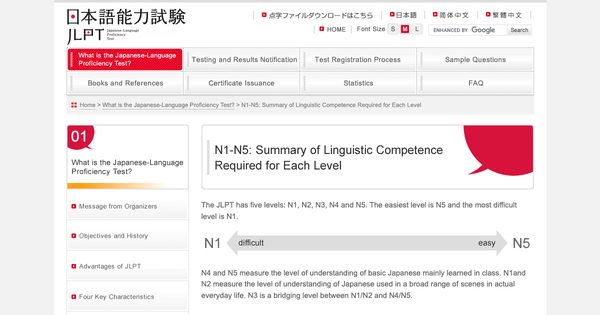 N1-N5: Summary of Linguistic Competence Required for Each Level | JLPT Japanese-Language Proficiency Testwww.jlpt.jp
 The Japan Foundation - Survey on Japanese-Language Education Abroadwww.jpf.go.jp
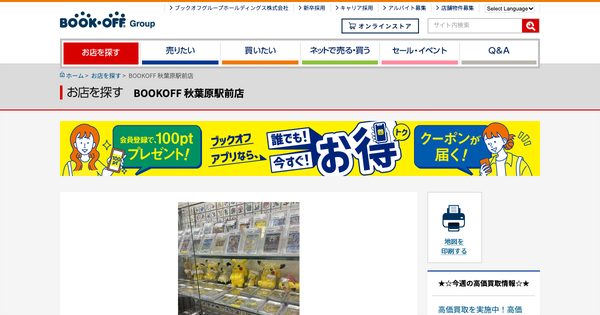 BOOKOFF 秋葉原駅前店|本を売るならBOOKOFF(ブックオフ)www.bookoff.co.jp
A private half-day with a local otaku guide, planned around your fandom. Three to four hours in English, never mixed with other travelers, rated 4.96 by 171 Airbnb guests. Booking here goes straight into my calendar.
Book the private Akihabara anime tour direct See Yuuki's Japan Kit