と言えば and そういえば: how to say "speaking of" in Japanese「と言えば」と「そういえば」: 話題をつなぐことば
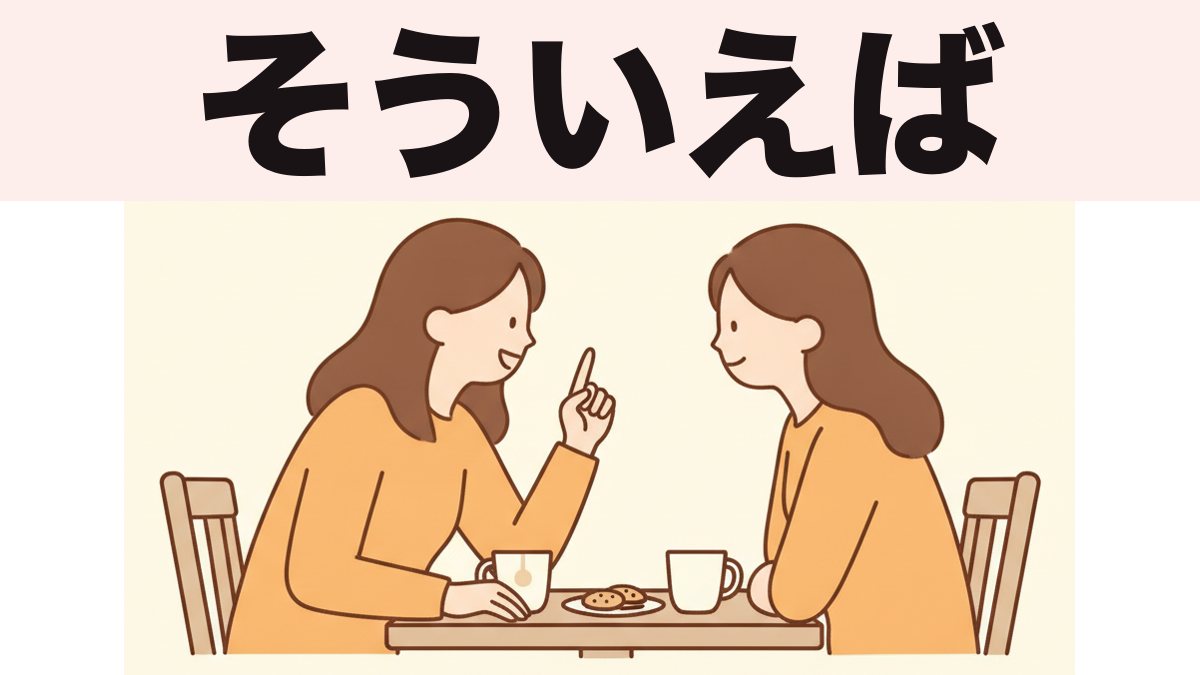
〜と言えば (to ieba) is "speaking of 〜": you pick up a word someone just said and use it as a bridge to your own topic. そういえば (sou ieba) is "oh, that reminds me": a softer turn to something new. Both are the tools Japanese uses to move a conversation along without an abrupt jump.
「〜と言えば」は、相手が言ったことばを拾って、自分の話につなぐ言い方です(speaking of 〜)。「そういえば」は「あ、思い出した」という、やわらかい話題の変え方です。どちらも、会話を急に変えないための道具です。
They are small phrases, but they do a lot of social work. A conversation in Japanese rarely changes topic cold; one of these usually sits at the hinge.
The basics
What does と言えば mean?
Noun + と言えば is "speaking of [noun]" or "when it comes to [noun]." It picks up a word that is already in the air and uses it as the topic for what you say next.
A: 来週、京都に行くんだ。 B: 京都と言えば、紅葉がきれいな時期だね。 — A: I'm going to Kyoto next week. B: Speaking of Kyoto, it's the season for autumn leaves. (picking up the word) 夏と言えば、花火だよね。 — When you think of summer, it's fireworks, right? (the classic association) 仕事の相談と言えば、面白いサービスがあるよ。 — Speaking of asking for advice about work, there's an interesting service. (bridge to a new point)
It is written と言えば or といえば; both are common. The ば is the conditional — literally "if you say [noun]…" — covered in たら, ば, と and なら.
What is the "X と言えば Y" pattern?
A very common use is naming the thing everyone associates with X. 日本と言えば寿司 — "when you say Japan, (people think of) sushi." It is how Japanese talks about symbols, specialities and clichés.
| Pattern | Meaning |
|---|---|
| 夏と言えば、花火 | Summer means fireworks |
| 大阪と言えば、たこ焼き | Osaka is famous for takoyaki |
| 秋葉原と言えば、アニメ | Akihabara is all about anime |
| 冬と言えば、こたつ | Winter means the kotatsu |
This is also a common quiz-show and advertising format: 〜と言えば? ("What comes to mind when I say ~?").
What does そういえば mean?
そういえば is "that reminds me," "come to think of it" or "by the way." It does not need a word from the other person — it signals that you have just remembered something, which may or may not be connected.
そういえば、昨日田中さんに会ったよ。 — Oh, that reminds me, I ran into Tanaka yesterday. (a new topic) そういえば、最近あの店行ってないね。 — Come to think of it, we haven't been to that place lately. (a sudden thought) そういえば、宿題あったっけ? — Wait, did we have homework? (remembering something)
そう ("like that") + 言えば ("if one says") — "now that it's been said…" In writing you will see both そういえば and そう言えば.
Side by side
| と言えば | そういえば | |
|---|---|---|
| Needs a word first? | Yes — noun + と言えば | No |
| Link to what was said | Direct: picks up that word | Loose, or none |
| English | Speaking of…, When it comes to… | That reminds me…, By the way… |
| Register | Neutral | Casual to neutral |
Beyond the basics
What is と言ったら?
と言ったら is a near-synonym of と言えば, but it often adds emotion: "talk about…!" It is used when the thing is remarkable, good or bad.
あの店のラーメンと言ったら、最高だよ。 — Talk about that shop's ramen — it's the best. (enthusiasm) 昨日の暑さと言ったら…。 — The heat yesterday, honestly… (trailing off in exasperation)
A sentence can even stop after と言ったら, and the listener fills in "was unbelievable."
What about といえば in a formal setting?
In meetings or presentations, the smoother version is 〜について言えば ("regarding ~") or 〜に関しては ("as for ~"). と言えば is fine in business conversation, but a formal change of topic usually uses ところで ("by the way") or さて ("now then").
ところで、来月の予定ですが… — By the way, about next month's schedule… (polite topic change)
ところで is a clean switch; そういえば suggests you just remembered. At work, ところで is safer.
What does どちらかと言えば mean?
どちらかと言えば is "if anything" or "if I had to choose" — a soft way to state a preference without committing hard. It is the same と言えば, attached to どちらか ("one of the two").
どちらかと言えば、夏より冬が好き。 — If anything, I prefer winter to summer. (mild preference) どちらかと言えば、静かな店がいいです。 — If I had to choose, a quiet place would be good. (polite, soft)
It is extremely common in answers to "which do you prefer?", because a flat 冬が好き can sound too definite. Japanese conversation tends to leave that bit of room.
How does it sound in anime?
そういえば is one of the most common lines in dialogue, because characters constantly "just remember" plot points. In a mystery, そういえば… is often the line right before the key clue. と言えば shows up when characters explain things to a newcomer — 秋葉原と言えば、やっぱりメイドカフェ! — which is also how anime sneak in cultural explanations.
For what to do when someone says something you didn't catch before changing the subject, how to ask someone to repeat covers the phrases.
Common mistakes
- Using そういえば with a noun in front. 京都そういえば is wrong. With a noun, use 京都と言えば.
- Using と言えば without a link. と言えば needs a word already in the conversation. For a cold topic change, use そういえば or ところで.
- Using そういえば to formally change topics at work. It sounds like you just remembered. ところで is cleaner.
- Writing とゆえば. The spoken sound is "to yu-eba," but the spelling is 言えば / いえば.
- Forgetting the association meaning. 夏と言えば花火 is not "if you say summer" — it is "summer means fireworks."
- Overusing と言ったら. It carries emotion. For neutral links, と言えば is enough.
Practice
Answers are hidden — build yours first, then open. Questions 1 and 2 are a pair: picking up a word versus a new thought.
1. A friend mentions ramen. Say "Speaking of ramen, there's a new shop near the station."
Show answer
ラーメンと言えば、駅の近くに新しい店ができたよ — you pick up the friend's word, so と言えば.
2. Nothing to do with ramen, you suddenly remember: "Oh, that reminds me — the meeting moved to Friday."
Show answer
そういえば、会議が金曜日になったよ — a sudden memory with no link: そういえば.
3. Say "When you think of winter, it's the kotatsu."
Show answer
冬と言えば、こたつ — the association pattern.
4. Say "Speaking of Akihabara, have you been to a maid café?"
Show answer
秋葉原と言えば、メイドカフェに行ったことある? — と言えば bridges to your question.
5. In a meeting, change the topic politely to next month's plan.
Show answer
ところで、来月の予定ですが… — ところで is the clean, polite switch.
6. Say, with enthusiasm, "Talk about that café's cake — it's amazing."
Show answer
あのカフェのケーキと言ったら、すごいよ — と言ったら adds the emotion.
7. Fix: 旅行そういえば、パスポート持ってる?
Show answer
旅行と言えば、パスポート持ってる? — with a noun, と言えば.
8. Come to think of it, you haven't seen a friend lately. Say it casually.
Show answer
そういえば、最近会ってないね — "come to think of it" is そういえば.
9. A quiz host asks: "What comes to mind when I say Osaka?"
Show answer
大阪と言えば? — the quiz format ends with と言えば and a rising tone.
FAQ
Is と言えば the same as については? Not quite. については is "about," neutral and formal. と言えば links to something just mentioned or calls up an association.
Is そういえば rude? No. It is friendly and very common. It only sounds out of place when a formal switch is needed.
Can I say あ、そういえば? Yes, and it is very natural. The あ makes the "I just remembered" feeling stronger.
What does と言っても mean? "Even though I say…" — a correction: 旅行と言っても、一泊だけ, "It's a trip, but only one night." Different job.
Is といえば written in kanji? Both 言えば and いえば are common. Newspapers often use いえば in this function.
Can と言えば come after a verb? Yes, with a nominalized phrase or directly: 勉強と言えば or 勉強すると言えば. The noun version is far more common.
Vocabulary from this article
Tap the block to select all of it, then copy. In Anki: File → Import, note type Basic, separator Tab — the first column becomes the front, the second the back.
言う	いう — to say
紅葉	こうよう — autumn leaves
時期	じき — season, period
花火	はなび — fireworks
相談	そうだん — consultation, asking for advice
冬	ふゆ — winter
最近	さいきん — lately, recently
宿題	しゅくだい — homework
暑さ	あつさ — heat
最高	さいこう — the best
予定	よてい — plan, schedule
会議	かいぎ — meeting
金曜日	きんようび — Friday
旅行	りょこう — trip
一泊	いっぱく — one night's stay
勉強	べんきょう — study
I'm Yuuki, a Japanese teacher based in Tokyo. I've taught on italki as a Top 1% teacher and watched over 1,500 anime. と言えば is one I use myself in lessons to change the subject — a student mentions a topic, and 〜と言えば is how I bridge to the next point. It is also one of the easiest phrases to copy, because it starts from a word that is already on the table.
Sources: the author's own lessons and standard reference grammars.
小さなことばですが、会話の中で大きな仕事をします。日本語の会話は、話題を急に変えることが少なく、たいていこのどちらかが間に入ります。
基本
「と言えば」の意味
名詞+と言えば は、「〜の話が出たけど」「〜なら」です。もう会話に出ていることばを、次の話のテーマにします。
A: 来週、京都に行くんだ。 B: 京都と言えば、紅葉がきれいな時期だね。 — A: I'm going to Kyoto next week. B: Speaking of Kyoto, it's the season for autumn leaves. (picking up the word) 夏と言えば、花火だよね。 — When you think of summer, it's fireworks, right? (the classic association) 仕事の相談と言えば、面白いサービスがあるよ。 — Speaking of asking for advice about work, there's an interesting service. (bridge to a new point)
「と言えば」とも「といえば」とも書きます。「ば」は条件の形です。たら・ば・と・ならの記事にあります。
「XといえばY」
「Xと言えば、みんなが思いうかべるY」という使い方もよくします。「日本と言えば寿司」。
| 形 | 意味 |
|---|---|
| 夏と言えば、花火 | 夏は花火 |
| 大阪と言えば、たこ焼き | 大阪はたこ焼きが有名 |
| 秋葉原と言えば、アニメ | 秋葉原はアニメの町 |
| 冬と言えば、こたつ | 冬はこたつ |
クイズ番組や広告でもよく使います。「〜と言えば?」。
「そういえば」の意味
「そういえば」は「あ、思い出した」「ところで」です。相手のことばがなくても使えます。
そういえば、昨日田中さんに会ったよ。 — Oh, that reminds me, I ran into Tanaka yesterday. (a new topic) そういえば、最近あの店行ってないね。 — Come to think of it, we haven't been to that place lately. (a sudden thought) そういえば、宿題あったっけ? — Wait, did we have homework? (remembering something)
「そう」+「言えば」。「そう言われてみると」という感じです。
ならべてみる
| と言えば | そういえば | |
|---|---|---|
| 前にことばがいる? | いる(名詞+と言えば) | いらない |
| 前の話とのつながり | 強い | 弱い、またはない |
| 英語 | Speaking of… | That reminds me… |
| かたさ | ふつう | くだけた〜ふつう |
もう少し先へ
「と言ったら」
「と言ったら」は「と言えば」に近いですが、気持ちが強くなります。すごい時も、ひどい時も使います。
あの店のラーメンと言ったら、最高だよ。 — Talk about that shop's ramen — it's the best. (enthusiasm) 昨日の暑さと言ったら…。 — The heat yesterday, honestly… (trailing off in exasperation)
「と言ったら…」で止めても、聞く人は「すごかった」と分かります。
仕事では
会議では「〜について言えば」「〜に関しては」がなめらかです。話題を変える時は「ところで」「さて」を使います。
ところで、来月の予定ですが… — By the way, about next month's schedule… (polite topic change)
「そういえば」は「今思い出した」に聞こえます。仕事では「ところで」が安全です。
「どちらかと言えば」
「どちらかと言えば」は「どちらかというと」「強いて言えば」です。はっきり決めずに、好みを言う言い方です。
どちらかと言えば、夏より冬が好き。 — If anything, I prefer winter to summer. (mild preference) どちらかと言えば、静かな店がいいです。 — If I had to choose, a quiet place would be good. (polite, soft)
「どっちが好き?」の答えでとてもよく使います。
アニメでは
「そういえば」は会話でとても多いです。キャラクターがよく「思い出す」からです。推理ものでは「そういえば…」のあとに大事なヒントが来ます。「と言えば」は、新しく来た人に説明する場面で出ます。聞きのがした時の言い方はもう一度言ってもらうの記事にあります。
よくあるまちがい
- 名詞のあとに「そういえば」。 「京都そういえば」ではなく「京都と言えば」。
- つながりがないのに「と言えば」。 急に変える時は「そういえば」か「ところで」。
- 仕事で「そういえば」。 「ところで」がきれいです。
- 「とゆえば」と書く。 書く時は「言えば/いえば」。
- 連想の意味を忘れる。 「夏と言えば花火」は「夏は花火」です。
- 「と言ったら」を使いすぎる。 気持ちが入ります。ふつうは「と言えば」。
練習
答えはかくしてあります。先に自分で考えてから開けてください。1と2はペアです。
1. 友だちがラーメンの話をした。「ラーメンと言えば、駅の近くに新しい店ができた」と言う。
答えを見る
ラーメンと言えば、駅の近くに新しい店ができたよ — 友だちのことばを拾うので「と言えば」。
2. ラーメンとは関係なく、急に思い出した:「会議が金曜日になった」。
答えを見る
そういえば、会議が金曜日になったよ — つながりがないので「そういえば」。
3. 「冬はこたつ」と言う。
答えを見る
冬と言えば、こたつ — 連想の形です。
4. 「秋葉原と言えば、メイドカフェに行ったことある?」
答えを見る
秋葉原と言えば、メイドカフェに行ったことある? — 「と言えば」で質問につなぎます。
5. 会議で、ていねいに来月の予定に話を変える。
答えを見る
ところで、来月の予定ですが… — 「ところで」がていねいな切りかえです。
6. 気持ちをこめて「あのカフェのケーキはすごい」と言う。
答えを見る
あのカフェのケーキと言ったら、すごいよ — 「と言ったら」で気持ちが入ります。
7. 直してください: 旅行そういえば、パスポート持ってる?
答えを見る
旅行と言えば、パスポート持ってる? — 名詞には「と言えば」。
8. 「そういえば、最近会ってないね」と言う。
答えを見る
そういえば、最近会ってないね — 「今思えば」の「そういえば」。
9. クイズの司会:「大阪と言えば?」
答えを見る
大阪と言えば? — クイズの形。上がる声で言います。
よくある質問
「と言えば」と「については」は同じ? ちがいます。「については」は「〜のことは」で、かたいです。「と言えば」は今出たことばや連想につなぎます。
「そういえば」は失礼? 失礼ではありません。とてもよく使います。
「あ、そういえば」と言える? 言えます。「あ」で「今思い出した」感じが強くなります。
「と言っても」は? 「〜と言っても」は訂正です。「旅行と言っても、一泊だけ」。
「といえば」は漢字で書く? 「言えば」も「いえば」もよく使います。
動詞のあとにも「と言えば」を使える? 使えますが、名詞のあとがずっと多いです。「勉強と言えば」。
この記事に出た単語
ブロックをタップして全部を選び、コピーしてください。Anki では File → Import、ノートタイプは Basic、区切りは Tab です。左が表、右が裏になります。
言う	いう — to say
紅葉	こうよう — autumn leaves
時期	じき — season, period
花火	はなび — fireworks
相談	そうだん — consultation, asking for advice
冬	ふゆ — winter
最近	さいきん — lately, recently
宿題	しゅくだい — homework
暑さ	あつさ — heat
最高	さいこう — the best
予定	よてい — plan, schedule
会議	かいぎ — meeting
金曜日	きんようび — Friday
旅行	りょこう — trip
一泊	いっぱく — one night's stay
勉強	べんきょう — study
私はユウキです。東京で日本語を教えています。 italki の Top 1% の先生で、アニメは1,500本以上見ました。「と言えば」は、私自身がレッスンで話題を変える時に使うことばです。生徒が出した話題を「〜と言えば」で拾って、次の話につなげます。
出典: 著者自身のレッスンと、一般的な文法書。
More drills like the ones above, plus a timed JLPT-style mock test: Practice · N4上のような練習問題と、時間つきのJLPT形式のもぎ試験: 練習ページ · N4
Want to try this in a real conversation?
本当の会話で、ためしてみませんか?
30-minute trial lesson, $13. Times shown in your own timezone.
30分の体験レッスン、$13。時間はあなたのタイムゾーンで表示されます。
Book a trial lesson · $13