〜てください: polite, but not as polite as you think〜てください: ていねいですが、いちばんていねいではありません
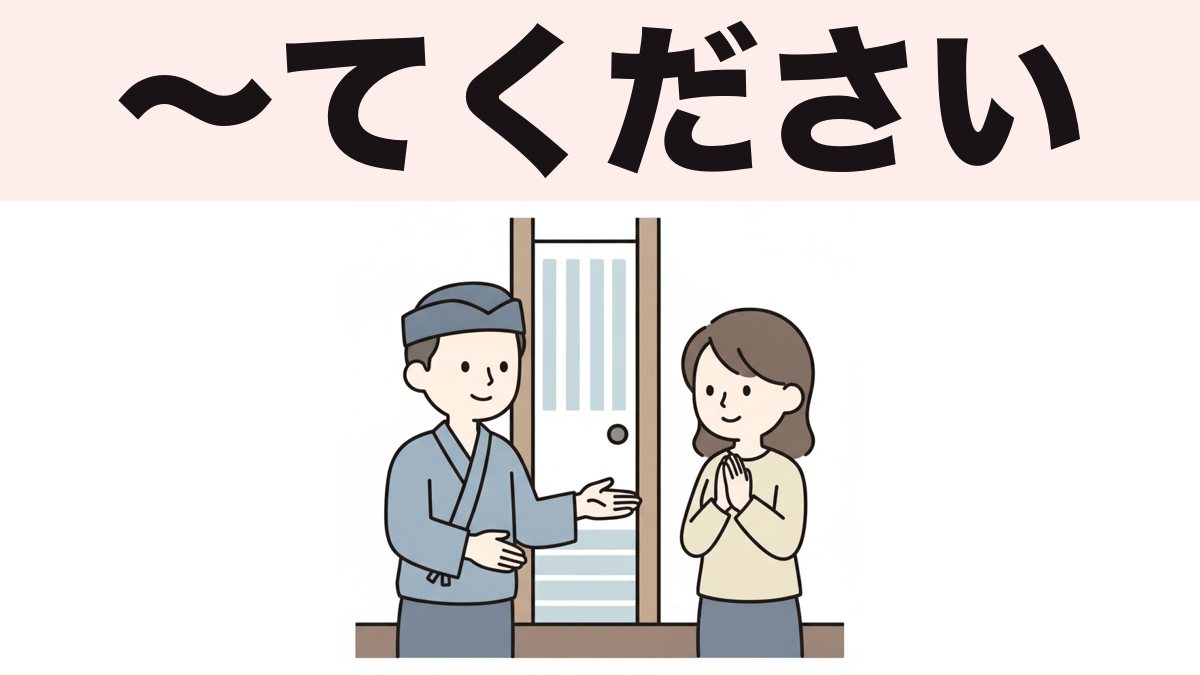
〜てください is taught as "please do X," which is accurate and incomplete. It is a polite *instruction* — the form a teacher uses with a class, a sign uses with the public, and a doctor uses with a patient. For asking a favour of someone senior, you need a rung above it.
「〜てください」は「please do X」と教わります。正しいですが、足りません。これはていねいな**指示**です。先生がクラスに、看板がみんなに、医者がかん者に使う形です。目上の人におねがいする時は、もう1だん上が必要です。
Nobody will be offended if you use it, and you will be understood everywhere. But learners who only have this one form spend years politely instructing their bosses, and the gap is invisible from the inside.
The basics
How to build it
Take the te-form and add ください. That is all.
| Verb | Te-form | Request |
|---|---|---|
| 待つ | 待って | 待ってください |
| 見る | 見て | 見てください |
| する | して | してください |
| 来る | 来て | 来てください |
| 書く | 書いて | 書いてください |
If your te-form is shaky, that is the real bottleneck — everything here is one word added to a form you already need.
ちょっと待ってください。 — Please wait a moment. もう一度言ってください。 — Please say that again. ここに名前を書いてください。 — Please write your name here.
Note there is no を: 待ってをください is wrong. ください attaches directly to the te-form.
The negative: 〜ないでください
For "please don't," use the ない form plus でください.
| Verb | Negative | "Please don't" |
|---|---|---|
| 触る | 触らない | 触らないでください |
| 心配する | 心配しない | 心配しないでください |
| 忘れる | 忘れない | 忘れないでください |
写真を撮らないでください。 — Please don't take photos. 心配しないでください。 — Please don't worry.
The trap is reaching for 〜なくてください, which does not exist. Negative requests use ないで, not なくて.
ください with a noun
ください on its own means "please give me," and takes を.
コーヒーをください。 — Coffee, please. これをください。 — I'll take this one. (in a shop) 水をもう一杯ください。 — Another glass of water, please.
This is the version you will use most as a visitor, and it is completely polite in shops and restaurants.
Beyond the basics
The ladder above it
〜てください is the middle of a range. When you are asking someone senior for a favour rather than giving a polite instruction, climb.
| Form | Register | Feel |
|---|---|---|
| 待って | Casual | To a friend |
| 待ってください | Polite | Instruction with a please |
| 待ってもらえますか | Polite | "Could you wait?" — actually asking |
| 待っていただけますか | Formal | Asking, humbly |
| 待っていただけないでしょうか | Very formal | Maximum deference |
| お待ちください | Honorific | Said to a customer |
The third and fourth rungs are built from もらう and いただく — they ask whether the other person could, which leaves them room to decline. 〜てください does not.
The practical rule: use 〜てください with peers, juniors, children and service situations where you are the customer. Use 〜ていただけますか with anyone above you.
お待ちください is not for you to receive
The bottom rung of that table is honorific, which means it describes the listener's action respectfully. Shop staff say it to you.
少々お待ちください。 — Please wait a moment. (staff to customer) こちらをご覧ください。 — Please look at this. (presenter to audience) ご確認ください。 — Please confirm. (business email)
The pattern is お + ます-stem + ください, or ご + a する-noun + ください. The common mistake is お待ちしてください, which mixes the honorific and humble patterns — it is either お待ちください (honorific) or お待ちします (humble, "I will wait"), never both.
You can absolutely use these forms yourself when speaking to a customer or an audience. Just do not use them to ask a superior for a personal favour — for that you want いただけますか.
お願いします does half the same job
Before you reach for a verb at all, check whether a noun will do. お願いします turns almost any noun into a polite request, and it is often shorter and more natural than a full 〜てください sentence.
お会計、お願いします。 — The bill, please. 確認をお願いします。 — Please check it. 日本語でお願いします。 — In Japanese, please.
Compare 確認してください ("please check it") with 確認をお願いします. Both are correct; the second is softer, because a noun plus お願いします asks for a thing rather than instructing an action. In business email it is the default.
よろしくお願いします is the same construction with nothing specified — "I ask for your goodwill" — which is why it works at the end of almost any first meeting, email or request.
The casual forms
Dropping ください leaves the bare te-form, which is the everyday casual request.
ちょっと待って。 — Wait a sec. 見て! — Look! 心配しないで。 — Don't worry. 手伝ってね。 — Help me out, okay? (ね softens it)
Adding よ pushes: 早くしてよ ("hurry up, will you"). And 〜てくれ is the blunt masculine command — 待ってくれ — which you will hear constantly in anime and should not produce in ordinary conversation. It belongs to the same register as 俺 and だろ.
Where you will see it written
Signs and instructions use 〜てください almost exclusively, because that is exactly its job:
靴を脱いでください。 — Please take off your shoes. お手洗いは二階をご利用ください。 — Please use the second-floor restroom. 並んでお待ちください。 — Please queue and wait.
Recognising these on sight is worth more than producing them. Japanese public signage is unusually polite and unusually consistent, so once you can read a few you can read most.
How does it sound in anime?
Short forms dominate, and the emotional weight sits on 〜ないで:
待って! — Wait! 行かないで。 — Don't go. やめて。 — Stop it. 信じてください。 — Please believe me. (the full form, used when it matters)
行かないで is worth noticing: the full 行かないでください would be too formal for the moment, and the bare 行かないで carries the whole request. Japanese often gets more urgent by getting shorter.
Common mistakes
- 待ってをください. No を. ください attaches straight to the te-form. を only appears with nouns: コーヒーをください.
- 〜なくてください. It does not exist. Negative requests are 〜ないでください.
- Using 〜てください to ask a boss for a favour. It is a polite instruction. 〜ていただけますか asks.
- お待ちしてください. Mixing honorific and humble. It is お待ちください (to them) or お待ちします (by me).
- Producing 〜てくれ. Blunt and masculine. Fine to recognise in anime, not for conversation.
- Thinking it's the most polite form. It is the middle of a six-rung ladder, and the rungs above it exist for good reasons.
Practice
Answers are hidden — build yours first, then open. Questions 4 and 5 are a pair: the same verb, and the register decides which one you need.
1. Make 待つ into a polite request.
Show answer
待ってください — te-form 待って plus ください. No を anywhere.
2. Something is wrong here: 待ってをください。
Show answer
待ってください — ください attaches straight to the te-form. を only appears when ください follows a noun: コーヒーをください.
3. Say "please don't take photos."
Show answer
写真を撮らないでください — negative requests use ない plus でください. 撮らなくてください does not exist.
4. You need a colleague your own age to wait. What do you say?
Show answer
ちょっと待ってください — a polite instruction is exactly right among peers.
5. You need your manager to wait. What do you say?
Show answer
少々お待ちいただけますか — asking whether they could, rather than instructing. This is the pair to question 4: same verb, and the rung changes with the person.
6. Something is wrong here: お待ちしてください。
Show answer
お待ちください — this mixes honorific and humble. It is お待ちください (asking them) or お待ちします (I will wait), never both.
7. Order a coffee.
Show answer
コーヒーをください — with a noun, ください means "please give me" and takes を. Completely polite in any shop.
8. Make 心配しないでください casual.
Show answer
心配しないで — dropping ください leaves the bare form, which is the everyday casual request. Adding ね softens it further.
9. Why should you not say 待ってくれ?
Show answer
It's a blunt masculine command — common in anime, out of place in ordinary conversation. Recognise it; say 待って or 待ってください.
10. What does ご確認ください mean, and who says it?
Show answer
"Please confirm" — written by a business to you — ご plus a する-noun plus ください is the honorific pattern. You can use it toward a customer, but not to ask a superior for a favour.
FAQ
Is 〜てください ever rude? Not rude, but it can be misplaced. Telling a client 送ってください ("please send it") is an instruction; 送っていただけますか asks. In an email to someone senior, the second is what you want.
What is 〜てくださいませんか? A politer form of the same verb, adding a negative question: "won't you please...?" It sits between 〜てください and 〜ていただけますか, and is somewhat old-fashioned in speech but common in writing.
How do I make a request really soft? Stack the softeners: すみませんが、〜ていただけないでしょうか. A preface, a humble verb, a negative, and a tentative ending. It is heavy, which is exactly the point when you are asking for something large.
Can I use お〜ください when speaking to a friend? It would be very odd — it is honorific, so it elevates the listener. With a friend it lands like addressing them as "sir." Save it for customers and audiences.
What about 〜てちょうだい? An informal, slightly old-fashioned request form, often heard from mothers and older women: 手伝ってちょうだい. Recognise it; it is not a neutral choice for a learner.
Do I need ください on a sign? Signs almost always include it, because Japanese public instruction is phrased politely by default. 立入禁止 ("no entry") is the exception — short, nominal signs drop the verb entirely.
Vocabulary from this article
Tap the block to select all of it, then copy. In Anki: File → Import, note type Basic, separator Tab — the first column becomes the front, the second the back.
待つ	まつ — to wait
見る	みる — to look, to watch
書く	かく — to write
名前	なまえ — name
触る	さわる — to touch
心配	しんぱい — worry
忘れる	わすれる — to forget
写真	しゃしん — photograph
撮る	とる — to take (a photo)
手伝う	てつだう — to help
靴	くつ — shoes
脱ぐ	ぬぐ — to take off
並ぶ	ならぶ — to line up, to queue
確認	かくにん — confirmation
利用	りよう — use
二階	にかい — second floor
少々	しょうしょう — a moment, a little (formal)
信じる	しんじる — to believe
送る	おくる — to send
やめる	やめる — to stop, to quit
I'm Yuuki, a Japanese teacher based in Tokyo. I've taught on italki as a Top 1% teacher and watched over 1,500 anime. This is the form learners get on day three and never upgrade, because nothing ever goes wrong — and the day they switch to いただけますか with someone senior is usually the day they notice the room got slightly warmer.
Sources: the author's own lessons and standard reference grammars.
使ってもだれもおこりませんし、どこでも通じます。でも、この1つしか持っていない人は、何年も上司にていねいな指示を出し続けます。そして、中からは見えません。
基本
作り方
「て形」に「ください」をつけます。それだけです。
| 動詞 | て形 | おねがい |
|---|---|---|
| 待つ | 待って | 待ってください |
| 見る | 見て | 見てください |
| する | して | してください |
| 来る | 来て | 来てください |
| 書く | 書いて | 書いてください |
「て形」があやしいなら、そこが本当の問題です。ここでは、知っている形に1語足すだけです。
ちょっと待ってください。 — Please wait a moment. もう一度言ってください。 — Please say that again. ここに名前を書いてください。 — Please write your name here.
「を」はつきません。「待ってをください」は間ちがいです。
否定: 〜ないでください
「しないでください」は、「ない」の形+「でください」です。
| 動詞 | 否定 | しないでください |
|---|---|---|
| 触る | 触らない | 触らないでください |
| 心配する | 心配しない | 心配しないでください |
| 忘れる | 忘れない | 忘れないでください |
写真を撮らないでください。 — Please don't take photos. 心配しないでください。 — Please don't worry.
落とし穴は「〜なくてください」です。そういう形はありません。否定のおねがいは「ないで」です。
名詞+ください
「ください」だけなら「私にください」という意味で、「を」がつきます。
コーヒーをください。 — Coffee, please. これをください。 — I'll take this one. 水をもう一杯ください。 — Another glass of water, please.
旅行する人がいちばん使う形で、お店やレストランではこれで完ぺきにていねいです。
もう少し先へ
上のはしご
「〜てください」は、まん中です。目上の人におねがいする時は、上へのぼります。
| 形 | ていねいさ | 感じ |
|---|---|---|
| 待って | くだけた | 友だちに |
| 待ってください | ていねい | ていねいな指示 |
| 待ってもらえますか | ていねい | 「待てますか」と聞いている |
| 待っていただけますか | かたい | へりくだって聞いている |
| 待っていただけないでしょうか | とてもかたい | いちばんていねい |
| お待ちください | そんけい | お客さんに言う形 |
3だん目と4だん目は「もらう」「いただく」からできています。「できますか」と聞くので、相手にことわる場所がのこります。「〜てください」にはそれがありません。
つかい分けのめやす: 同じ立場の人・年下・子ども・自分がお客の時は「〜てください」。目上の人には「〜ていただけますか」です。
「お待ちください」は自分が受ける形ではありません
表のいちばん下はそんけい語です。相手の動作を高めます。だからお店の人が、お客さんに言います。
少々お待ちください。 — Please wait a moment. (店員→お客) こちらをご覧ください。 — Please look at this. ご確認ください。 — Please confirm. (仕事のメール)
形は「お+ますの形+ください」か「ご+する名詞+ください」です。よくある間ちがいは「お待ちしてください」です。そんけいとけんじょうが混ざっています。「お待ちください」(そんけい)か「お待ちします」(けんじょう・私が待ちます)のどちらかです。
自分がお客さんや聞く人に話す時は、この形を使っていいです。でも、目上の人に自分のおねがいをする時は「いただけますか」です。
「お願いします」が半分やってくれます
動詞を出す前に、名詞でいけないか考えてください。「お願いします」は、ほとんどの名詞をていねいなおねがいにします。「〜てください」の文より短くて、自然なことが多いです。
お会計、お願いします。 — The bill, please. 確認をお願いします。 — Please check it. 日本語でお願いします。 — In Japanese, please.
「確認してください」と「確認をお願いします」をくらべてください。どちらも正しいですが、2つめの方がやわらかいです。動作に指示を出すのではなく、ものをおねがいしているからです。仕事のメールではこちらが標準です。
「よろしくお願いします」は、中みを言わない同じ形です。「よろしく(お気もちを)お願いします」なので、はじめての場面・メール・おねがいの最後に、どこでも使えます。
くだけた形
「ください」を落とすと、「て形」だけになります。毎日のおねがいの形です。
ちょっと待って。 — Wait a sec. 見て! — Look! 心配しないで。 — Don't worry. 手伝ってね。 — Help me out, okay?
「よ」をつけるとおします(早くしてよ)。「〜てくれ」は男の人のらんぼうな命令です(待ってくれ)。アニメではいつも聞きますが、ふつうの会話では使わないでください。
書いてあるところ
看板やせつめいは、ほとんど「〜てください」です。それがこの形の仕事だからです。
靴を脱いでください。 — Please take off your shoes. お手洗いは二階をご利用ください。 — Please use the second-floor restroom. 並んでお待ちください。 — Please queue and wait.
自分で書けるより、見て分かる方が大事です。日本の看板はとてもていねいで、形がそろっています。だから、いくつか読めれば、ほとんど読めます。
アニメではどう聞こえますか?
短い形が多くて、気もちは「〜ないで」にのります。
待って! — Wait! 行かないで。 — Don't go. やめて。 — Stop it. 信じてください。 — Please believe me.
「行かないで」に注目してください。「行かないでください」だと、その場面にはていねいすぎます。短い「行かないで」が、おねがいをぜんぶ運びます。日本語は、急ぐほど短くなります。
よくある間違い
- 待ってをください。 「を」はつきません。「を」は名詞の時だけです(コーヒーをください)。
- 〜なくてください。 そういう形はありません。「〜ないでください」です。
- 上司へのおねがいに「〜てください」。 ていねいな指示です。おねがいは「〜ていただけますか」です。
- お待ちしてください。 そんけいとけんじょうが混ざっています。
- 「〜てくれ」を使うこと。 らんぼうです。聞いて分かるだけにします。
- いちばんていねいな形だと思うこと。 6だんのはしごのまん中です。
練習
答えはかくれています。まず自分の答えを作ってから開いてください。4番と5番は対になっています。
1. 「待つ」をていねいなおねがいにしてください。
答えを見る
待ってください — て形「待って」+「ください」です。「を」はどこにもつきません。
2. 直してください: 待ってをください。
答えを見る
待ってください — 「ください」は「て形」に直接つきます。「を」は名詞の時だけです。
3. 「写真を撮らないでください」と言ってください。
答えを見る
写真を撮らないでください — 否定のおねがいは「ない」+「でください」です。「撮らなくてください」はありません。
4. 同じ年の同りょうに待ってほしいです。何と言いますか。
答えを見る
ちょっと待ってください — 同じ立場なら、ていねいな指示でちょうどいいです。
5. 上司に待ってほしいです。何と言いますか。
答えを見る
少々お待ちいただけますか — 指示ではなく「待てますか」と聞いています。4番と対で、同じ動詞でも相手ではしごが変わります。
6. 直してください: お待ちしてください。
答えを見る
お待ちください — そんけいとけんじょうが混ざっています。「お待ちください」(相手に)か「お待ちします」(私が)です。
7. コーヒーを注文してください。
答えを見る
コーヒーをください — 名詞といっしょなら「ください」は「私にください」で、「を」がつきます。お店では完ぺきにていねいです。
8. 「心配しないでください」をくだけた形にしてください。
答えを見る
心配しないで — 「ください」を落とすと、毎日のおねがいの形になります。「ね」をつけるともっとやわらかいです。
9. 「待ってくれ」を使わない方がいいのはなぜですか。
答えを見る
男の人のらんぼうな命令だからです — アニメには多いですが、ふつうの会話では合いません。「待って」「待ってください」にします。
10. 「ご確認ください」はどんな意味で、だれが書きますか。
答えを見る
「かくにんしてください」— 会社からお客さんへ — 「ご+する名詞+ください」はそんけいの形です。お客さんには使えますが、目上の人への自分のおねがいには使えません。
よくある質問
「〜てください」が失礼になることはありますか。 失礼ではありませんが、場所がちがうことがあります。お客さんへの「送ってください」は指示です。「送っていただけますか」がおねがいです。
「〜てくださいませんか」は何ですか。 同じ形を、否定の質問にしてもっとていねいにした形です。「〜てください」と「〜ていただけますか」の間です。話すと少し古い感じですが、書きことばではよく見ます。
とてもやわらかくしたい時は? やわらかくするものを重ねます。「すみませんが、〜ていただけないでしょうか」。前おき、けんじょう語、否定、あいまいな終わり。重いですが、大きなおねがいなら、それでちょうどいいです。
友だちに「お〜ください」を使えますか。 とても変です。そんけい語なので、友だちを高めてしまいます。お客さんや聞く人にだけ使ってください。
「〜てちょうだい」は何ですか。 少し古い、くだけたおねがいの形です。お母さんや年上の女の人がよく使います。聞いて分かるだけでいいです。
看板に「ください」は必要ですか。 ほとんどの看板についています。日本の公共の指示は、ていねいな形がふつうだからです。「立入禁止」のような短い名詞の看板だけ、動詞がありません。
この記事に出た単語
ブロックをタップすると全部選べます。そのままコピーしてください。Anki では ファイル → 読み込み、ノートタイプ 基本、区切り タブ。1列目が表、2列目が裏になります。
待つ	まつ — to wait
見る	みる — to look, to watch
書く	かく — to write
名前	なまえ — name
触る	さわる — to touch
心配	しんぱい — worry
忘れる	わすれる — to forget
写真	しゃしん — photograph
撮る	とる — to take (a photo)
手伝う	てつだう — to help
靴	くつ — shoes
脱ぐ	ぬぐ — to take off
並ぶ	ならぶ — to line up, to queue
確認	かくにん — confirmation
利用	りよう — use
二階	にかい — second floor
少々	しょうしょう — a moment, a little (formal)
信じる	しんじる — to believe
送る	おくる — to send
やめる	やめる — to stop, to quit
私はユウキです。東京で日本語を教えています。 italki の Top 1% の先生で、アニメは1,500本以上見ました。これは3日目に習って、そのまま上げない形です。何も悪いことが起きないからです。でも、目上の人に「いただけますか」に切りかえた日、たいてい部屋の空気が少しあたたかくなったことに気づきます。
More drills like the ones above, plus a timed JLPT-style mock test: Practice · N5上のような練習問題と、時間つきのJLPT形式のもぎ試験: 練習ページ · N5
Want to try this in a real conversation?
本当の会話で、ためしてみませんか?
30-minute trial lesson, $13. Times shown in your own timezone.
30分の体験レッスン、$13。時間はあなたのタイムゾーンで表示されます。
Book a trial lesson · $13