Anime pilgrimage (seichi junrei): how to actually plan it聖地巡礼 好きな作品の本当の場所へ行く
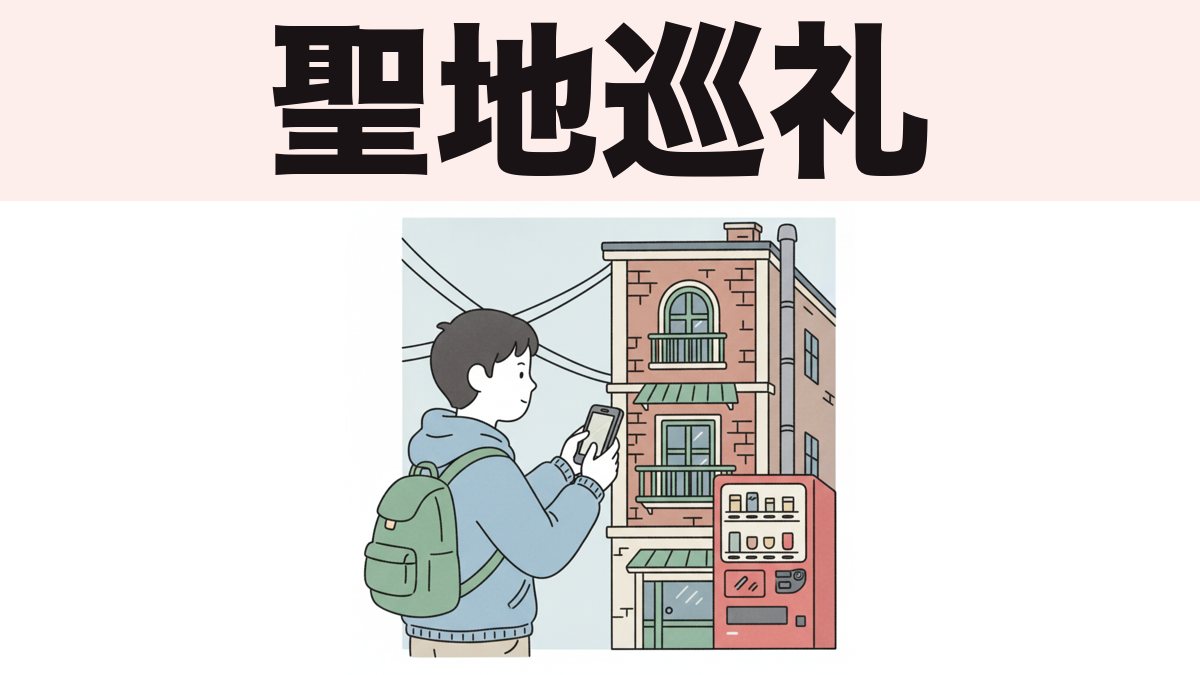
An anime pilgrimage, or 聖地巡礼 (seichi junrei), means visiting real places associated with an anime, manga, or other work you love. Choose a small group of locations, check current access, and learn a few Japanese questions before you go. The best plan leaves enough time to enjoy the town and respects the people who live there.
聖地巡礼(せいちじゅんれい)は、アニメや漫画の舞台になった、本当の場所へ行くことです。もとは宗教のことばでした。ファンにとっては、好きな場面が描かれた角に立つことです。お金はかかりません。そして、旅行でいちばん長く覚えているのは、たいていこの時間です。
Episode 48 of the NihonGO podcast introduced this way of exploring Japan. This expanded guide connects that travel idea with practical Japanese: explaining why you came, finding a location, asking permission, and adjusting your plans. You do not need advanced conversation skills to enjoy a visit, but a handful of clear sentences can make the experience easier.
The basics
What does seichi junrei mean?
聖地 means a sacred place, and 巡礼 means pilgrimage. In an anime conversation, 聖地巡礼 refers to visiting places connected with a fictional work. The religious meaning still exists; context tells you which kind of pilgrimage someone means. A fan might want to see a station, a street corner, or the landscape behind a memorable scene.
Real locations can provide recognizable settings for anime. For documented examples, the Japan National Tourism Organization introduces places connected with several series in its guide to visiting anime locations. A location connection does not mean that every building, distance, or viewing angle in the animation matches reality.
Learn the following distinctions before searching. They help you separate a story setting from a place where a camera crew actually worked.
| Japanese | Reading | Useful meaning in this context |
|---|---|---|
| 聖地巡礼 | seichi junrei | Visiting places associated with a favorite work |
| 舞台 | butai | The setting of a story; also a stage |
| モデル | moderu | A model or real-world reference |
| ロケ地 | rokechi | A filming location, especially for live-action works |
| 場所 | basho | A place or location; a useful general word |
You may see ロケ地 used loosely in fan writing about animation, but 舞台 or モデル can express the connection more precisely. If you do not know the relationship, simply ask about the 場所 in a picture instead of claiming that the production team used it.
好きなアニメの聖地巡礼をしたいです。 — I want to visit places associated with my favorite anime.
Here, したいです means “I want to do.” You can learn 聖地巡礼をしたいです as a complete phrase without analyzing every kanji. It describes your own wish politely; it does not ask another person to organize the trip for you.
この町はアニメの舞台です。 — This town is the setting of an anime.
This is a practice sentence, not a claim about an unnamed destination. Use it when you have confirmed the connection. The particle の links アニメ with 舞台: “the setting of an anime.”
Start with one series and one area
Write down the series you care about, then identify a few possible locations. Search using its Japanese title plus 聖地巡礼 or 舞台. A fan guide can help you discover candidates, while a local tourism office or venue website can help you check visitor information. These sources answer different questions: a scene comparison explains the connection, while a venue notice explains access.
For each candidate, save the Japanese place name, a map pin, the closest station, and the page where you found it. Record whether the connection is officially described or only suggested by fans. Similar-looking scenery alone is not proof of a production reference. If you cannot confirm a claim, keep that uncertainty in your notes.
Beyond the basics
Turn a location list into a realistic route
Group nearby places together before booking a special journey. Include travel from your accommodation, station exits, walking time, breaks, and the return trip. A photo stop may take only a few minutes, but reaching it can take much longer. For a distant destination, decide whether you would still enjoy the town if the exact view were unavailable.
A useful planning sheet has five columns: location, evidence of the anime connection, current access, travel time, and a backup activity. Add transport costs and any admission charges separately. A street view may have no admission fee; the journey, a museum visit, or a meal still costs money. Do not assume that the word “pilgrimage” describes a free attraction.
As a hypothetical plan, you might choose two nearby outdoor stops, allow a break between them, and leave the afternoon flexible. That is a planning example, not a recommended duration for every town. Check actual schedules before deciding how many places fit. If transport is infrequent, plan your return before adding another stop.
駅から歩いてどのくらいかかりますか。 — How long does it take to walk from the station?
から marks the starting point. 歩いて specifies walking, so the answer is less likely to describe a car journey. For more ways to ask about travel time, see how to ask how long it takes in Japanese.
この場所に行きたいです。 — I want to go to this place.
This works well when showing a map or saved picture. に marks the destination here. A picture without a name can be ambiguous, so show the Japanese place name too. For follow-up questions, use the patterns in asking directions in Japanese.
Prepare the scene, but expect a real town
Save the relevant scene reference and your route for personal use before leaving. Keep notes accessible offline when possible. Shops can change, construction can obscure a view, and an animated background can combine or alter real features. Finding a partial resemblance does not mean you have failed.
Choose a place to stand based on the actual street. If the desired angle would put you in a road, doorway, or restricted area, accept a different picture. A good memory does not depend on reproducing every detail. Leave room to notice things the anime does not show: ordinary shops, local food, or the sounds around a station.
Ask permission with a complete question
ここで写真を撮ってもいいですか。 — May I take photos here?
The pattern is the verb in its て-form plus もいいですか. 写真を撮る means “take a photo,” and 撮って is its て-form. The particle で marks where the action happens. Ask an appropriate staff member when permission is unclear, and follow posted restrictions even if other visitors are taking pictures. For more examples, read asking permission with te mo ii desu ka.
中に入ってもいいですか。 — May I go inside?
This asks about entry, not photography. Permission for one action does not automatically cover another. Use it at a visitor-facing place where asking is appropriate; the phrase does not turn a private home or school into an attraction. If there is no visitor access, continue your route.
すみません、もう一度お願いします。 — Excuse me, could you say that again, please?
A memorized question can produce an answer you do not understand. This request gives you a way to repair the conversation. Pointing to a map can also help, but uncertainty is not permission: if you do not understand whether entry or photography is allowed, wait for clarification.
Common mistakes
Treating every location as an official attraction
A fan map identifies a possible point of interest; it does not grant access. Separate three questions: Is this the correct place? Is it open to visitors? Is the activity I want to do allowed? A “yes” to the first question cannot answer the other two.
Two useful signs are 撮影禁止, meaning “photography prohibited,” and 立入禁止, meaning “no entry.” Learn them as whole expressions. They are signs to obey, not conversation starters for negotiating an exception. Even where photography is permitted, leave entrances clear and avoid making residents or students the subject of your pictures.
ここでは写真を撮らないでください。 — Please do not take photos here.
This is something staff might say. 撮らないでください is a negative request. It differs from 撮ってください, “Please take a photo.” Recognizing the negative form matters more than giving a long explanation of why you came.
Using anime dialogue with strangers
A dramatic command that sounds entertaining in a show may sound abrupt at a shop or information desk. Start with すみません, give one short question, and let the other person respond. You do not need to imitate a character to make the visit feel connected to the series.
ありがとうございます。別の場所に行きます。 — Thank you. I will go somewhere else.
This gives you a polite way to accept a restriction and move on. There is no need to persuade staff that your trip is special. Build a backup stop into the plan so that a refusal does not ruin the day.
Overloading the itinerary or trusting an old photo
Avoid planning from screenshots alone. Record when a guide was published and check current information from the relevant operator. An old picture may still establish a visual connection, but it cannot establish current opening hours or ticket arrangements. Recheck important details shortly before the visit.
Also avoid treating every optional pin as a required achievement. Choose a priority stop and decide what you can skip if you are tired or delayed. Enjoying one place without rushing can be more satisfying than collecting several hurried pictures.
To rehearse these questions before your trip, explore Japanese speaking practice or Book a trial lesson · $13.
Practice
Try answering aloud before opening each answer. The route questions use hypothetical situations, so no live transport information is needed.
1. What does 聖地巡礼 mean in a conversation about an anime trip?
Show answer
Visiting real places associated with the anime. The expression also has a religious meaning in other contexts.
2. Choose the better word for the setting of an animated story: 舞台 or ロケ地.
Show answer
舞台. ロケ地 most directly describes a filming location, especially for live-action works.
3. Complete the destination particle: この場所( )行きたいです。
Show answer
に: この場所に行きたいです。— I want to go to this place. The particle へ can also mark the direction of travel.
4. Complete the question: ここで写真を( )もいいですか。Use the correct form of 撮る.
Show answer
撮って: ここで写真を撮ってもいいですか。— May I take photos here? The permission pattern uses the て-form.
5. Which sign means “no entry”: 撮影禁止 or 立入禁止?
Show answer
立入禁止 means “no entry.” 撮影禁止 means “photography prohibited.” Neither should be ignored to reproduce a scene.
6. You want to ask about walking time from the station. Which phrase makes the travel method clear: 歩いて or 写真を?
Show answer
歩いて means “on foot” or “by walking” here. 写真を names a photo as the object of an action.
7. A staff member answers too quickly. Which expression from the article asks them to repeat?
Show answer
すみません、もう一度お願いします。— Excuse me, could you say that again, please? Clarify the answer before assuming permission.
8. A fan guide has a convincing scene comparison but was published several years ago. What should you verify separately?
Show answer
Check current visitor access, any opening hours or reservations, photography restrictions, and transport information with the relevant venue or operator.
9. Your planned camera angle blocks a shop entrance. What is a better choice?
Show answer
Move to a position that leaves access clear, choose another angle, or skip the photograph. A scene match does not justify obstructing the entrance.
FAQ
Do I need Japanese for an anime pilgrimage?
Can a beginner manage the visit?
Yes, you can prepare names, maps, and a few questions without advanced Japanese. Practice understanding likely replies as well as asking questions. Permission, directions, and requests for repetition are useful starting points. Your destination and transport arrangements will determine how much preparation you need.
Does seichi junrei always mean an anime trip?
Can the phrase describe a religious pilgrimage too?
Yes. The sacred-place and pilgrimage meanings are still part of the expression. Mentioning your favorite anime makes the fan context clear. Do not assume that every occurrence of 聖地巡礼 in Japanese refers to animation or popular culture.
Is visiting an anime location free?
Should I budget beyond admission?
Yes. Some outdoor views have no admission charge, but transport, meals, accommodation, and ticketed facilities can add costs. Check each stop individually. A shrine offering, where relevant, should not be confused with a universal admission fee or a payment for photography permission.
How can I tell whether a location connection is confirmed?
Is visual similarity enough evidence?
It can suggest a connection, but it does not prove that creators used the site as a reference. Look for a statement from the production, an official collaboration, or a tourism source explaining the relationship. Keep fan identification labeled as such when confirmation is unavailable.
What if the place has changed or is closed?
Can the visit still be worthwhile?
Yes, if you planned to enjoy the surrounding area too. Choose another accessible stop or spend time in the town. A closure means changing your plan, even if an older guide shows people entering. The trip can still help you connect a story with a real place and practice a little Japanese.
Vocabulary from this article
These words appear in the explanations, examples, or exercises above. Learn the reading together with the travel situation where you would use the word.
| Word | Reading | Meaning |
|---|---|---|
| 聖地巡礼 | せいちじゅんれい | pilgrimage; visiting places associated with a favorite work |
| 舞台 | ぶたい | stage; story setting |
| モデル | モデル | model; reference |
| ロケ地 | ロケち | filming location |
| 場所 | ばしょ | place |
| 駅 | えき | station |
| 写真 | しゃしん | photograph |
| 撮影禁止 | さつえいきんし | photography prohibited |
| 立入禁止 | たちいりきんし | no entry |
| もう一度 | もういちど | once more |
The same vocabulary is provided below as tab-separated text for flashcard import.
聖地巡礼	せいちじゅんれい	pilgrimage; visiting places associated with a favorite work
舞台	ぶたい	stage; story setting
モデル	モデル	model; reference
ロケ地	ロケち	filming location
場所	ばしょ	place
駅	えき	station
写真	しゃしん	photograph
撮影禁止	さつえいきんし	photography prohibited
立入禁止	たちいりきんし	no entry
もう一度	もういちど	once more
Sources
- NihonGO podcast, episode 48: the original topic of this article, anime pilgrimage. The planning exercises and Japanese practice sentences above are teaching examples created for this rewrite, not quotations from the recording.
- Japan National Tourism Organization, Visit Three of Japan's Famous Anime Locations: examples of real places associated with anime. Check individual operators for current access information.
- Mipon: the anime resource referenced in the original article; a starting point for discovering fan travel material, not an authority on current entry permission.
- Seiichi Makino and Michio Tsutsui, A Dictionary of Basic Japanese Grammar, The Japan Times: reference for patterns including permission with てもいい and requests with ください.
これは、僕の Podcast「NihonGO」の第48回です。2021年8月に録音しました。今でもゲストに話していることなので、書き直します。買いものも楽しいです。でも、5年後に話しているのは、買いものではありません。
聖地巡礼とは何か
答え — ことばの意味は「聖地へ行く旅」です。もとは、宗教で大切な意味を持つ場所へ、信者が行くことでした。ユダヤ教やイスラム教の信者がエルサレムへ行くのが有名です。ファンはそのことばをかりて、好きな作品の場所へ行くことを言うようになりました。今の日本では、ファンの意味のほうをよく聞きます。
かりてきただけ、というわけでもありません。していることは、にています。ほかの人には何の意味もない場所へ、遠くから行って、そこに立つ。写真で見るのとは、たしかにちがいます。
| ことば | 読み方 | 意味 |
|---|---|---|
| 聖地 | せいち | 聖なる場所。ファンには、作品の場所 |
| 巡礼 | じゅんれい | 聖地をめぐる旅 |
| 聖地巡礼 | せいちじゅんれい | アニメ・漫画の本当の場所へ行くこと |
| ロケ地 | ろけち | さつえいの場所(実写で使います) |
どうして本当の場所があるのか
アニメの背景の多くが、写真から描かれているからです。背景の絵を描く人が本当の町に行って、写真をとります。そして、できた絵は、電線も自動販売機もそのままの、本当の道です。だからファンは、階段のどちら側に立っていたかまで、言いあてられます。
そして、その場所はたいてい、まったくふつうの場所です。多くの聖地は、有名な場所ではありません。ふみきり、バス停、神社の階段、コンビニの駐車場です。そこにいる人は、なぜあなたが写真をとっているのか知りません。それも、おもしろいところです。
秋葉原ではどこでできるのか
答え — いちばんわかりやすいのは、駅の電気街口の前にある「ラジオ会館」です。アニメ『シュタインズ・ゲート』に出てきます。前に立って、アニメと同じ形で写真をとると、同じ雰囲気になります。
秋葉原は、聖地巡礼の町ではありません。買いものの町です。アニメで大事なのは、1つの作品ではなく、町そのものです。それでも、いくつか場面はあります。文化がある場所なので、たくさんの作品に描かれています。はじめて秋葉原に来るなら、僕の秋葉原アニメツアー は、予約のときに言ってくれた作品に合わせて作ります。その作品の場面が秋葉原にあれば、そこも入ります。
秋葉原の外は、もとの回で紹介したサイトが、今でもいちばんです。mipon.org は、作品ごと・都道府県ごとにまとまった聖地のデータベースです。旅の道順を決める前に、自分の作品を調べてください。決めたあとではなく、前に。
旅の予定をこわさないやり方
失敗は、ぜんぶの場所を「目的地」にすることです。多くの聖地は、行くつもりのなかった場所での 5分です。1日に 3つ入れると、その日が消えます。
うまくいく形です。
- 先に自分の作品を調べる。 それから、場所がどこにあるか見ます。東京の中にあるものもあれば、岐阜まで 4時間のものもあります。
- もう行くつもりだった道の上のものを取る。 京都へ行く道の上なら、追加のお金はゼロです。それだけのために泊まるなら、それは決断です。
- 行く前に、その場面の画像を保存する。 角度は、記憶では見つかりません。田舎の駅の駐車場で、電波をあてにしないでください。
- 変わっていると思っておく。 店は閉まり、建物は色が変わり、木は育ちます。ファンが記録してくれていることが多いです。
- 3時間ではなく 1時間で見る。 残りは町そのものに使ってください。そこがおどろくところです。
マナーの話 ここが大事です
ほとんどの聖地は、だれかの家の近所、職場、学校、神社です。ファンがセットのようにあつかったせいで、実際に行けなくなった場所もあります。
短く言います。人の家や敷地に入らない。住んでいる人や学生を写さない。住宅の道で大きな声を出さない。写真のために道や入口をふさがない。「ファンの方は入らないでください」と書いてある場所は、だれかがもう無視したから、その紙があります。
はじめて日本に来るなら、ふつうのマナーも 10分だけ見ておく価値があります。ツアーのサイトに 日本のマナーガイド と 日本での写真のマナー があります。ファンが問題になるのは、後ろのほうです。
よくある質問
日本語が話せないとできませんか。 できます。ほとんどは、歩いて見るだけです。建物が合っているか店の人に聞くときは、「ここは〇〇のロケ地ですか」で足ります。
お金はかかりますか。 ほとんどかかりません。ふつうの道です。神社では少しのおさい銭、作品の美術館はふつうの入館料です。
地元の人はいやがりませんか。 たいていは、いやがりません。歓迎している町もあります。スタンプラリーやコラボ商品がある場所もあります。いやがるのは、来た人の行いが悪かった場所です。まわりを見て、書いてあるものを読んでください。
自分の作品がデータベースに無いときは。 作品名と「聖地」か「ロケ地」で、日本語のブログを探してください。日本語のファンの記録は、英語よりずっとくわしいです。
飛行機を取る前に、作品を調べる
もう行く道の上にある聖地は、ほとんど手間になりません。ホテルを取ったあとで知った聖地は、1日分になります。
僕はユウキです。東京でオンラインの日本語教師と、秋葉原のアニメツアーガイドをしています。アニメは 1,500作品以上見ました。だから、作品名を聞き終わる前に、秋葉原に場面があるかどうか、だいたいわかります。
More drills like the ones above, plus a timed JLPT-style mock test: Practice · N4上のような練習問題と、時間つきのJLPT形式のもぎ試験: 練習ページ · N4
Want to try this in a real conversation?
本当の会話で、ためしてみませんか?
30-minute trial lesson, $13. Times shown in your own timezone.
30分の体験レッスン、$13。時間はあなたのタイムゾーンで表示されます。
Book a trial lesson · $13