Jikka, jimoto, kisei: how Japanese talks about "going home実家・地元・帰省: 日本語の「家に帰る」
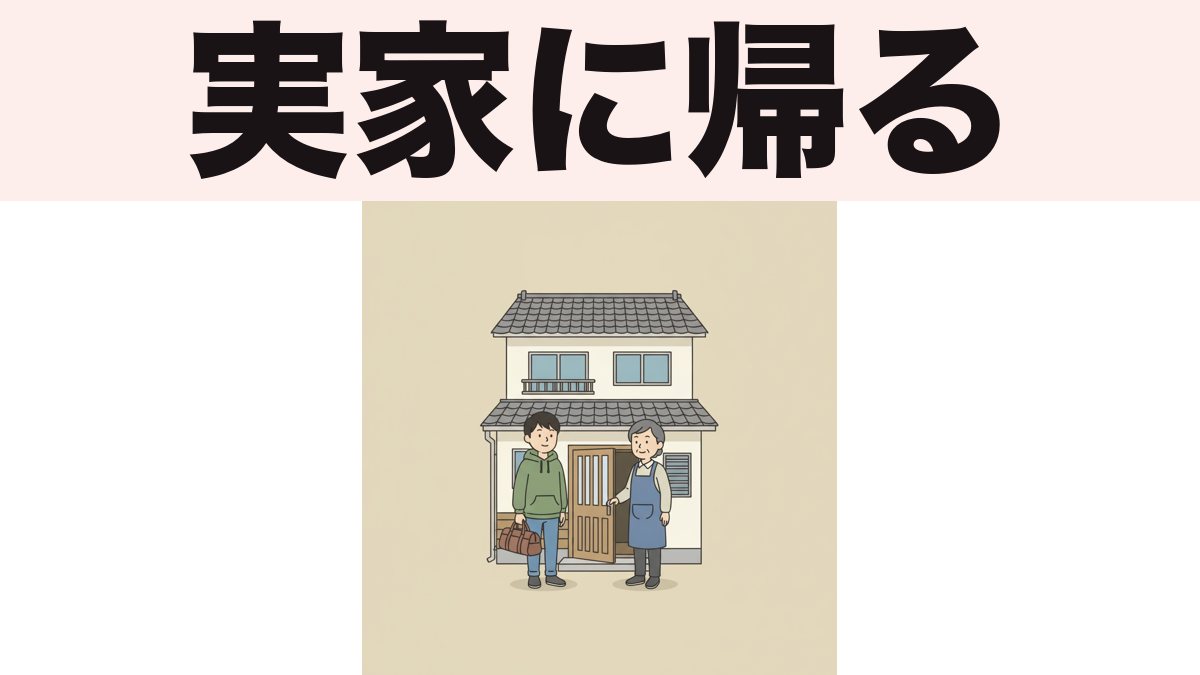
Japanese has separate words for the pieces English packs into "home": 実家 (じっか) is the house your parents live in, 地元 (じもと) is the area you grew up in, and 帰省 (きせい) is the trip back. "I went back to my parents' place for the holidays" is 休みに実家に帰った — one short sentence where English needs a phrase.
英語は「home」1つで言いますが、日本語は分けます。実家(じっか)は親が住んでいる家。地元(じもと)は育ったあたり。帰省(きせい)はそこへ帰る旅です。「休みに実家に帰った」は短い1文ですが、英語だと長くなります。
The reason learners stumble here is that English "home" means wherever you live now. In Japanese, 家 (いえ) is where you live now, and 実家 is where you come from. Using one for the other changes the story.
The basics
What does 実家 mean?
実家 is your parents' home — the house (or apartment) your family lives in, as opposed to the place you live now. Adults use it constantly, because once you move out, you need a word for "my parents' place" that is not your own home.
週末、実家に帰ります。 — I'm going back to my parents' place this weekend. (polite, very common) 実家は大阪です。 — My family home is in Osaka. / My family is from Osaka. (where you come from) 実家暮らしです。 — I live with my parents. (literally "family-home living")
Note the verb: you 帰る (return) to 実家, even if you have not lived there for ten years. 実家に行く sounds like you are visiting someone else's house.
What does 地元 mean?
地元 is your local area, and in particular the town or neighbourhood where you grew up. It is wider than 実家: 実家 is a building, 地元 is the streets, the friends, the local shops.
地元の友だちと飲みに行った。 — I went drinking with friends from back home. (your hometown crowd) 地元はどこですか? — Where are you from? / Where's your hometown? (casual-polite) 地元の人しか知らない店。 — A place only locals know. (地元 as "local")
The last example shows the second meaning: 地元 can also mean "local" for wherever you are standing, which is why travel guides use 地元の人 for "locals."
What does 帰省 mean?
帰省 is the trip back to your 実家, usually for a long holiday. It is the word news reports use for the huge travel rush at New Year, in the summer Obon holidays, and in Golden Week.
お盆に帰省する予定です。 — I'm planning to go back home for Obon. (polite) 帰省ラッシュで新幹線が満席だ。 — The bullet trains are full because of the homecoming rush. (news-style)
In conversation, most people say 実家に帰る instead. 帰省 is slightly formal, and very common in writing and the news.
Side by side
| Word | Reading | What it is | English |
|---|---|---|---|
| 家 | いえ / うち | Where you live now | home, my place |
| 実家 | じっか | Your parents' home | my parents' place |
| 地元 | じもと | The area you grew up in; local | hometown, back home, local |
| 故郷 / ふるさと | こきょう / ふるさと | Your birthplace, with feeling | homeland, where I'm from |
| 帰省 | きせい | The trip back home | going home for the holidays |
Beyond the basics
Why does "I went to my town" sound strange?
Because Japanese marks the relationship with a specific word. 私の町に行きました is grammatically fine but sounds like you visited a town you own. What a Japanese speaker says is 地元に帰りました (back to my hometown) or 実家に帰りました (back to my parents' place). And when family comes to see you, the natural version adds a favour:
母が会いに来てくれた。 — My mum came to see me. (the てくれる adds "for me")
Just 母が来ました is correct but flat. 来てくれた carries the gratitude that the English "came all the way to see me" has. More on that shape is in あげる, くれる, もらう.
What is the difference between 地元 and 故郷?
故郷 (こきょう), also written ふるさと, is the emotional word — the place you are from, seen with some nostalgia. It is common in songs, speeches and writing. 地元 is the everyday word, and it has no special feeling attached.
故郷の景色が懐かしい。 — I miss the scenery of my hometown. (emotional, a little literary) 地元に新しいカフェができた。 — A new café opened back home. (just information)
In daily conversation, a person who says 故郷 about a trip home sounds like a poem. 地元 is what you want.
How do you say "a day trip home"?
日帰り (ひがえり) is "going and coming back the same day." It pairs naturally with 実家.
実家に日帰りで行ってきた。 — I made a day trip to my parents' place. (no overnight stay) 日帰り旅行 — a day trip (any destination)
Here 行ってきた is fine instead of 帰った, because the focus is the round trip. For the phrase you say when you arrive, ただいま and おかえり is exactly what gets used at the door of the 実家.
How does it sound in anime and dramas?
実家 appears in almost every slice-of-life series with an adult character, often in the line 実家に帰らせていただきます — "I'm going back to my parents'!" — the classic, slightly comic threat of a spouse walking out. The excessive politeness is the joke. 地元 shows up with friends: 地元の先輩 (an older kid from the neighbourhood) and 地元愛 (hometown pride).
Common mistakes
- Saying 家に帰る for your parents' place. 家 is where you live now. If you have moved out, your parents' house is 実家.
- Saying 実家に行く. You 帰る to your 実家, even decades later. 行く sounds like someone else's house.
- Saying 私の町 for hometown. Say 地元. 私の町 sounds like you run the place.
- Using 故郷 in everyday chat. It is emotional and a little literary. For information, use 地元.
- Using 帰省 for a quick visit. 帰省 implies the long-holiday trip back. For a quick visit, say 実家に帰った or 実家に寄った.
- Forgetting てくれる when family visits you. 母が来た is flat; 母が会いに来てくれた sounds grateful and natural.
Practice
Answers are hidden — build yours first, then open. Questions 1 and 2 are a pair: 帰る versus 行く.
1. Say "I'm going back to my parents' place this weekend," politely.
Show answer
週末、実家に帰ります — 実家 with 帰る, because it is where you come from.
2. Say "I'm going to my friend's parents' place this weekend."
Show answer
週末、友だちの実家に行きます — someone else's 実家, so 行く. 帰る only works for your own.
3. Ask a new acquaintance where their hometown is, casually but politely.
Show answer
地元はどこですか? — 地元 is the everyday hometown word. 故郷 would sound too emotional.
4. Say "I live with my parents."
Show answer
実家暮らしです — the set phrase. 両親と住んでいます is also correct.
5. Say "My dad came all the way to see me."
Show answer
父が会いに来てくれた — てくれる adds the gratitude. 父が来た is correct but flat.
6. Say you're planning to go home for New Year, in a slightly formal way.
Show answer
お正月に帰省する予定です — 帰省 fits a long-holiday trip home, and works well in polite speech.
7. Say you made a day trip to your parents' place.
Show answer
実家に日帰りで行ってきた — 日帰り for no overnight stay. 行ってきた focuses on the round trip.
8. Fix: 休みに私の町に帰りました。
Show answer
休みに地元に帰りました — 地元 is "my hometown." 私の町 sounds like you own it.
9. Recommend "a restaurant only locals know."
Show answer
地元の人しか知らないレストラン — here 地元 means "local," for wherever you are.
FAQ
Is 実家 only for your parents' house? Mostly yes. It can also be the house of the family you grew up in more broadly, such as grandparents who raised you. Married people often say 妻の実家 or 夫の実家 for their in-laws' home.
Can I say うちに帰る for my parents' house? If you live there, yes. Once you have moved out, うち is your own place, and 実家 is where your parents live.
Is 帰省 used for going home from abroad? Yes. 日本に帰省する works for someone living overseas going back to Japan for the holidays.
Is 地元 the same as 出身? Close. 出身 is where you are "from" on paper (出身は北海道です), while 地元 is the area you feel is your home turf.
What does 地元愛 mean? Hometown pride — love for your local area. It shows up in ads for local products.
Is 実家に帰らせていただきます rude? It is excessively polite on purpose, which is why it sounds like an angry threat. Use 実家に帰ります in normal life.
Vocabulary from this article
Tap the block to select all of it, then copy. In Anki: File → Import, note type Basic, separator Tab — the first column becomes the front, the second the back.
実家	じっか — parents' home, family home
地元	じもと — hometown area; local
帰省	きせい — going back home for the holidays
故郷	こきょう — hometown, birthplace (emotional)
日帰り	ひがえり — day trip, same-day return
実家暮らし	じっかぐらし — living with your parents
週末	しゅうまつ — weekend
予定	よてい — plan
満席	まんせき — fully booked, all seats taken
新幹線	しんかんせん — bullet train
景色	けしき — scenery
懐かしい	なつかしい — nostalgic, missed
お盆	おぼん — Obon, the summer holidays
お正月	おしょうがつ — New Year
出身	しゅっしん — where you are from
地元愛	じもとあい — hometown pride
両親	りょうしん — parents
I'm Yuuki, a Japanese teacher based in Tokyo. I've taught on italki as a Top 1% teacher and watched over 1,500 anime. 実家 comes up in lessons whenever a student tells me about a family visit and reaches for "my town" — one word fixes the whole sentence.
Sources: the author's own lessons and standard reference grammars.
英語の home は「今住んでいるところ」です。日本語の「家(いえ)」も今住んでいるところで、「実家」は自分が来たところです。まちがえると話が変わります。
基本
実家の意味
実家は、親の家です。今自分が住んでいる家とは別です。家を出た大人は、「親の家」を言うことばが必要なので、とてもよく使います。
週末、実家に帰ります。 — I'm going back to my parents' place this weekend. (polite, very common) 実家は大阪です。 — My family home is in Osaka. / My family is from Osaka. (where you come from) 実家暮らしです。 — I live with my parents. (literally "family-home living")
動詞に注意してください。10年住んでいなくても、実家には「帰る」です。「実家に行く」は、ほかの人の家に行くように聞こえます。
地元の意味
地元は、育った町やそのあたりです。実家より広いです。実家は建物、地元は道や友だちや近くの店です。
地元の友だちと飲みに行った。 — I went drinking with friends from back home. (your hometown crowd) 地元はどこですか? — Where are you from? / Where's your hometown? (casual-polite) 地元の人しか知らない店。 — A place only locals know. (地元 as "local")
最後の例は2つ目の意味です。「地元」は、今いる場所の「その土地の」という意味にもなります。
帰省の意味
帰省は、実家に帰る旅です。たいてい長い休みの時です。お正月、お盆、ゴールデンウィークの大きな移動を、ニュースは「帰省」と言います。
お盆に帰省する予定です。 — I'm planning to go back home for Obon. (polite) 帰省ラッシュで新幹線が満席だ。 — The bullet trains are full because of the homecoming rush. (news-style)
会話では「実家に帰る」の方が多いです。「帰省」は少しかたく、書きことばやニュースでよく使います。
ならべてみる
| ことば | 読み | 何か | 英語 |
|---|---|---|---|
| 家 | いえ/うち | 今住んでいるところ | home, my place |
| 実家 | じっか | 親の家 | my parents' place |
| 地元 | じもと | 育ったあたり/その土地の | hometown, local |
| 故郷/ふるさと | こきょう/ふるさと | 生まれたところ(気持ちが入る) | homeland |
| 帰省 | きせい | 家に帰る旅 | going home for the holidays |
もう少し先へ
「私の町に行きました」が変に聞こえるのはなぜ?
日本語は、関係を決まったことばで言うからです。「私の町に行きました」は文法は正しいですが、自分の持っている町に行ったように聞こえます。「地元に帰りました」か「実家に帰りました」が自然です。家族が会いに来た時は、ありがたい気持ちを入れます。
母が会いに来てくれた。 — My mum came to see me. (the てくれる adds "for me")
「母が来ました」は正しいけれど、気持ちがありません。「来てくれた」は、英語の came all the way to see me の感じです。あげる・くれる・もらうの記事も見てください。
地元と故郷のちがい
故郷(こきょう、ふるさと)は、気持ちの入ったことばです。なつかしい気持ちで見る、生まれたところ。歌やスピーチ、文章でよく使います。地元はふだんのことばで、特別な気持ちはありません。
故郷の景色が懐かしい。 — I miss the scenery of my hometown. (emotional, a little literary) 地元に新しいカフェができた。 — A new café opened back home. (just information)
ふだんの会話で「故郷」と言うと、詩のように聞こえます。ふつうは「地元」です。
「日帰りで実家へ」
日帰り(ひがえり)は、その日のうちに帰ることです。
実家に日帰りで行ってきた。 — I made a day trip to my parents' place. (no overnight stay) 日帰り旅行 — a day trip (any destination)
ここは「行ってきた」でも大丈夫です。行って帰ってきたことが大事だからです。家に着いた時のあいさつはただいま・おかえりの記事にあります。
アニメやドラマでは
大人が出てくる日常の話には、よく「実家」が出ます。有名なのは「実家に帰らせていただきます」。夫婦げんかで家を出ていく時の、少しおかしい決まり文句です。ていねいすぎるところが笑いになります。「地元」は友だちの話で出ます。「地元の先輩」「地元愛」。
よくあるまちがい
- 親の家に「家に帰る」を使う。 家を出た人には、親の家は「実家」です。
- 「実家に行く」と言う。 自分の実家には「帰る」です。
- 地元を「私の町」と言う。 「地元」と言ってください。
- ふだんの会話で「故郷」を使う。 気持ちが入りすぎます。
- ちょっと寄っただけで「帰省」と言う。 帰省は長い休みの帰り。短い時は「実家に寄った」。
- 家族が来た時に「てくれる」を忘れる。 「母が会いに来てくれた」が自然です。
練習
答えはかくしてあります。先に自分で考えてから開けてください。1と2はペアです。「帰る」と「行く」。
1. ていねいに「週末、親の家に帰る」と言う。
答えを見る
週末、実家に帰ります — 自分の実家なので「帰る」。
2. 「週末、友だちの親の家に行く」と言う。
答えを見る
週末、友だちの実家に行きます — ほかの人の実家なので「行く」。
3. 知り合ったばかりの人に、出身のあたりを聞く。
答えを見る
地元はどこですか? — ふだんのことばは「地元」。「故郷」は気持ちが入りすぎます。
4. 「親と住んでいる」と言う。
答えを見る
実家暮らしです — 決まった言い方。「両親と住んでいます」も正しいです。
5. 「父がわざわざ会いに来た」と言う。
答えを見る
父が会いに来てくれた — 「てくれる」でありがたい気持ちが入ります。
6. 少しかたく、「お正月に家に帰る予定」と言う。
答えを見る
お正月に帰省する予定です — 長い休みの帰りなので「帰省」。
7. 「日帰りで実家に行った」と言う。
答えを見る
実家に日帰りで行ってきた — とまらないので「日帰り」。
8. 直してください: 休みに私の町に帰りました。
答えを見る
休みに地元に帰りました — 「私の町」ではなく「地元」です。
9. 「その土地の人しか知らないレストラン」をすすめる。
答えを見る
地元の人しか知らないレストラン — ここの「地元」は「その土地の」です。
よくある質問
実家は親の家だけ? ほとんどそうです。育ててくれた祖父母の家のこともあります。結婚した人は「妻の実家」「夫の実家」とも言います。
親の家に「うちに帰る」と言える? そこに住んでいるなら言えます。家を出たら、「うち」は自分の家で、親の家は「実家」です。
外国から日本に帰る時も「帰省」? はい。「日本に帰省する」と言えます。
地元と出身は同じ? 近いです。「出身」は書類の上の「どこから来たか」(出身は北海道です)。「地元」は自分の場所だと感じるあたりです。
地元愛は? 自分の地元が好きな気持ちです。地元の商品の広告でよく見ます。
「実家に帰らせていただきます」は失礼? わざとていねいすぎる言い方なので、おこっているように聞こえます。ふだんは「実家に帰ります」です。
この記事に出た単語
ブロックをタップして全部を選び、コピーしてください。Anki では File → Import、ノートタイプは Basic、区切りは Tab です。左が表、右が裏になります。
実家	じっか — parents' home, family home
地元	じもと — hometown area; local
帰省	きせい — going back home for the holidays
故郷	こきょう — hometown, birthplace (emotional)
日帰り	ひがえり — day trip, same-day return
実家暮らし	じっかぐらし — living with your parents
週末	しゅうまつ — weekend
予定	よてい — plan
満席	まんせき — fully booked, all seats taken
新幹線	しんかんせん — bullet train
景色	けしき — scenery
懐かしい	なつかしい — nostalgic, missed
お盆	おぼん — Obon, the summer holidays
お正月	おしょうがつ — New Year
出身	しゅっしん — where you are from
地元愛	じもとあい — hometown pride
両親	りょうしん — parents
私はユウキです。東京で日本語を教えています。 italki の Top 1% の先生で、アニメは1,500本以上見ました。レッスンでは、生徒が家族に会った話をする時に「私の町」と言ってしまう場面でよく出ます。ことば1つで文全体が直ります。
出典: 著者自身のレッスンと、一般的な文法書。
More drills like the ones above, plus a timed JLPT-style mock test: Practice · N4上のような練習問題と、時間つきのJLPT形式のもぎ試験: 練習ページ · N4
Want to try this in a real conversation?
本当の会話で、ためしてみませんか?
30-minute trial lesson, $13. Times shown in your own timezone.
30分の体験レッスン、$13。時間はあなたのタイムゾーンで表示されます。
Book a trial lesson · $13