Courage in Japanese: 勇気 (yuuki) and the verbs that go with it勇気: いっしょに使う動詞
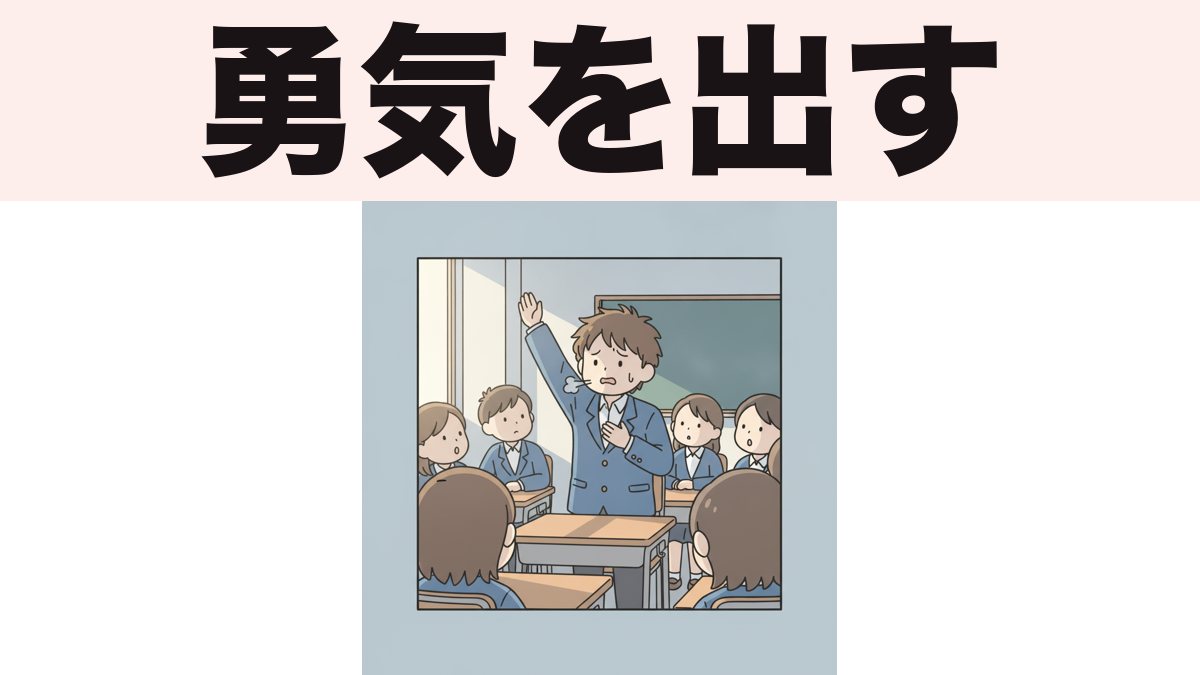
Courage in Japanese is 勇気 (yuuki). To "work up the courage" is 勇気を出す, to "have courage" is 勇気がある, and when something "takes courage," it is 勇気が要る — a verb learners very often swap for かかる.
勇気は英語の courage です。「勇気を出す」「勇気がある」、そして「〜は勇気が要る」。この最後の形を、学習者はよく「かかる」とまちがえます。
The word itself is easy. What trips people up is the verb next to it. English says "it takes courage" and "it takes time" with the same verb, so learners reach for the Japanese verb they already use for time — かかる — and say 勇気がかかる. Every Japanese listener understands it, and every one of them notices it. This article is about the handful of verbs that 勇気 actually goes with.
The basics
What does 勇気 mean?
勇気 is a noun: courage, bravery, the nerve to do something difficult. The kanji are 勇 "brave" and 気 "spirit" — the same 気 you find in 元気 and 気になる.
勇気がある人だね。 — You're a brave person. (casual, a compliment) その一言に勇気をもらいました。 — Those words gave me courage. (polite, very common after encouragement)
How do you say "work up the courage"?
勇気を出す, literally "put out courage." It is the verb you want for the moment before you do something scary.
勇気を出して、話しかけてみた。 — I worked up the courage and tried talking to them. (casual) 勇気を出して、先生に質問しました。 — I found the courage to ask the teacher a question. (polite)
Note the pattern: 勇気を出して + the action. The て form links "finding courage" to what you then did.
How do you say "it takes courage"?
勇気が要る — "courage is needed." 要る (iru) means "to need," and it is the right verb here.
仕事を辞めるのは勇気が要る。 — Quitting your job takes courage. (casual) 一人で海外に住むのは、かなり勇気が要ります。 — Living abroad alone takes a lot of courage. (polite)
You will also see 勇気がいる in hiragana; it is the same verb.
Beyond the basics
Why not 勇気がかかる?
Because かかる is for costs you pay out over time: 時間がかかる "it takes time," お金がかかる "it costs money," 手間がかかる "it takes effort." Courage is not spent like that; you either have it or you need it. So:
時間がかかる。 — It takes time. (correct) 勇気が要る。 — It takes courage. (correct)
勇気がかかる sounds a little like "courage is being charged to you." If you want a quick rule: if you could put a number on it — minutes, yen, steps — use かかる. If it is something you need to have inside you, use 要る.
What other words mean "courage" or "guts"?
Japanese has several, and each one leans a different way.
- 度胸 (dokyou) — nerve, the ability to stay calm under pressure. 度胸がある = "has nerve."
- 根性 (konjou) — grit, the will to keep going. Sports anime are built on it.
- 勇敢 (yuukan) — brave, as a な-adjective. It sounds like a news report or a story: 勇敢な行動 "a brave act."
- 覚悟 (kakugo) — resolve, being ready for the consequences. 覚悟を決める = "make up your mind, whatever happens."
人前で歌うなんて、度胸があるね。 — Singing in front of people? You've got nerve. (casual) 最後まで走り切るには根性が要る。 — Running all the way to the end takes grit. (neutral)
What is 思い切って?
思い切って means "taking the plunge," "boldly." It is often the more natural choice in conversation than 勇気を出して, because it describes the decision rather than naming the feeling.
思い切って髪を短くしました。 — I took the plunge and cut my hair short. (polite)
If you want to say you did something brave but a little impulsive, 思い切って is the word.
Where do you hear 勇気 in anime and games?
Two places. First, in speeches: a character who is scared gets told 勇気を出して! ("Be brave!"), or thanks someone with 勇気をもらった. Second, and more often, in fantasy: 勇者 (yuusha), the "brave one," is the standard word for the hero of an RPG-style world. When a fantasy anime title has 勇者 in it, that is the hero the story is about — and the 勇 is the same kanji as in 勇気.
勇者よ、目を覚ませ。 — Wake up, O hero. (dramatic, fantasy-style)
勇気 is also a common given name, so you will meet characters called Yuuki. The name can be written with several different kanji, though, so do not assume it always means "courage."
How do you encourage someone?
勇気づける means "to encourage, to give courage to." Its passive, 勇気づけられる, is how people say they felt encouraged by something.
あなたの言葉に勇気づけられました。 — I was encouraged by your words. (polite)
For a lighter "hang in there," most people say 頑張って instead.
Common mistakes
- 勇気がかかる. It takes courage = 勇気が要る. かかる is for time, money and effort.
- 勇気をする. 勇気 is not a する-verb. Use 勇気を出す.
- 勇気な人. 勇気 is a noun, not an adjective. Say 勇気がある人 or 勇敢な人.
- Mixing up 要る and 居る. Both are いる, but 要る (to need) is a regular godan verb: 要らない, 要ります. 居る (to exist) is ichidan. Write 要る when you mean "need."
- Using 根性 for a single brave moment. 根性 is stamina over time. For one scary step, 勇気 or 度胸 fits better.
Which verb goes with 勇気?
| Pattern | Meaning | Example |
|---|---|---|
| 勇気を出す | work up courage | 勇気を出して告白した |
| 勇気がある | have courage, be brave | 彼は勇気がある |
| 勇気が要る | it takes courage | 転職は勇気が要る |
| 勇気をもらう | get courage from someone | その歌に勇気をもらった |
| 勇気づける | encourage someone | 友達を勇気づける |
| ✗ 勇気がかかる | (sounds wrong) | → 勇気が要る |
| ✗ 勇気をする | (not a する-verb) | → 勇気を出す |
Practice
Answers are hidden — try your own sentence first, then open. Questions 1 and 2 are a pair: English uses "takes" for both, Japanese does not.
1. "Changing careers takes time."
Show answer
転職は時間がかかる。 — time is something you pay out, so かかる.
2. "Changing careers takes courage."
Show answer
転職は勇気が要る。 — courage is something you need to have, so 要る. 勇気がかかる is the mistake to avoid.
3. "I worked up the courage and asked a question."
Show answer
勇気を出して質問した。 — 勇気を出す, then the て form links it to the action.
4. Compliment a friend: "You're brave."
Show answer
勇気があるね。 — 勇気 is a noun, so it needs がある. 勇気な is not a word.
5. Fix it: 勇気をして告白した。
Show answer
勇気を出して告白した。 — 勇気 does not take する. The verb is 出す.
6. "Your words gave me courage." (polite)
Show answer
あなたの言葉に勇気をもらいました。 — 勇気をもらう is the everyday way to say you were encouraged. 勇気づけられました also works.
7. Someone sings alone on stage with no practice. React: "You've got nerve!"
Show answer
度胸があるね! — 度胸 is nerve under pressure, which fits this moment better than 勇気.
8. "I took the plunge and cut my hair short."
Show answer
思い切って髪を短くした。 — 思い切って is the natural word for a bold, slightly impulsive decision.
9. In a fantasy anime, what is the 勇者?
Show answer
The hero. — 勇者 literally means "brave person," and it is the standard title for the RPG-style hero. Same 勇 as in 勇気.
FAQ
How do you pronounce 勇気? ゆうき, yuu-ki, with a long う. If you shorten it to ゆき, it becomes a different word — 雪, "snow." Long vowels matter; see ningyo vs ningyou for more pairs like this.
Is Yuuki a name? Yes, it is a common given name for both boys and girls. It can be written 勇気, but also with many other kanji, so the name does not always mean courage.
What is the difference between 勇気 and 勇敢? 勇気 is the noun "courage." 勇敢 is the adjective "brave," and it sounds more formal — news reports, stories, award speeches. In conversation, 勇気がある is more natural.
How do I say "be brave" to someone? 勇気を出して! works. For a lighter "you can do it," 頑張って or 大丈夫だよ is more common.
Does 勇気 go with 要る or 必要? Both work. 勇気が要る is conversational; 勇気が必要だ sounds a bit more written.
Vocabulary from this article
Tap the block to select all of it, then copy. In Anki: File → Import, note type Basic, separator Tab — the first column becomes the front, the second the back.
勇気	ゆうき — courage
勇気を出す	ゆうきをだす — to work up courage
勇気が要る	ゆうきがいる — to take courage
勇気づける	ゆうきづける — to encourage
勇敢	ゆうかん — brave (formal)
勇者	ゆうしゃ — hero (fantasy); brave person
度胸	どきょう — nerve
根性	こんじょう — grit, guts
覚悟	かくご — resolve, readiness
思い切って	おもいきって — boldly, taking the plunge
転職	てんしょく — changing jobs
告白	こくはく — confessing (love)
要る	いる — to need
手間	てま — effort, trouble
I'm Yuuki, a Japanese teacher based in Tokyo. I've taught on italki as a Top 1% teacher and watched over 1,500 anime. 勇気がかかる comes up with advanced learners who are otherwise very fluent — the fix is the time-versus-courage pair above, and it tends to stick after one lesson. For another set of verbs that change with the noun, see ki ni naru.
Sources: the author's own lessons and standard reference grammars.
言葉そのものはかんたんです。むずかしいのは、となりに来る動詞です。英語では "it takes courage" も "it takes time" も同じ動詞です。だから学習者は、時間に使う「かかる」を使って「勇気がかかる」と言います。意味は伝わりますが、日本人はみんな気づきます。この記事は、勇気といっしょに使う動詞の話です。
基本の形
勇気 の意味は?
勇気は名詞です。こわいことや、むずかしいことをする力です。「勇」は「強くて、こわがらない」、「気」は「気持ち」。元気や気になるの「気」と同じです。
勇気がある人だね。 — You're a brave person. (カジュアル・ほめ言葉) その一言に勇気をもらいました。 — Those words gave me courage. (ていねい・はげまされた後によく言う)
「こわいけど、やる」は何と言う?
「勇気を出す」です。こわいことをする前の瞬間に使います。
勇気を出して、話しかけてみた。 — I worked up the courage and tried talking to them. (カジュアル) 勇気を出して、先生に質問しました。 — I found the courage to ask the teacher a question. (ていねい)
「勇気を出して+すること」の形です。て形で、勇気を出したことと、その後にしたことをつなぎます。
「勇気が必要だ」は何と言う?
「勇気が要る」です。要る(いる)は「必要だ」という意味で、ここではこの動詞が正しいです。
仕事を辞めるのは勇気が要る。 — Quitting your job takes courage. (カジュアル) 一人で海外に住むのは、かなり勇気が要ります。 — Living abroad alone takes a lot of courage. (ていねい)
ひらがなで「勇気がいる」と書くこともあります。同じ動詞です。
もっと深く
どうして「勇気がかかる」はだめ?
「かかる」は、時間やお金のように、少しずつ使っていくものに使うからです。「時間がかかる」「お金がかかる」「手間がかかる」。勇気は使っていくものではありません。持っているか、必要か、です。
時間がかかる。 — It takes time. (正しい) 勇気が要る。 — It takes courage. (正しい)
かんたんなルール: 数字で言えるもの(分・円・回)は「かかる」。自分の中に持っていないといけないものは「要る」。
勇気のほかに、どんな言葉がある?
いくつかあって、それぞれ少しちがいます。
- 度胸(どきょう) — プレッシャーの中でも落ち着いていられる力。「度胸がある」。
- 根性(こんじょう) — あきらめないで続ける力。スポーツアニメによく出ます。
- 勇敢(ゆうかん) — な形容詞で「勇気がある」。ニュースや物語のように聞こえます。「勇敢な行動」。
- 覚悟(かくご) — 何が起きても受け止める気持ち。「覚悟を決める」。
人前で歌うなんて、度胸があるね。 — Singing in front of people? You've got nerve. (カジュアル) 最後まで走り切るには根性が要る。 — Running all the way to the end takes grit. (ふつう)
思い切って とは?
「思い切って」は、迷っていたことを決めてやる、という意味です。会話では「勇気を出して」より自然なことが多いです。気持ちの名前ではなく、決めたことを言うからです。
思い切って髪を短くしました。 — I took the plunge and cut my hair short. (ていねい)
少し急に決めた、でも勇気のあることをしたときは「思い切って」です。
アニメやゲームでは?
2つあります。1つは、はげますセリフです。こわがっているキャラに「勇気を出して!」と言ったり、「勇気をもらった」とお礼を言ったりします。もう1つはファンタジーです。勇者(ゆうしゃ)は、RPGのような世界の主人公の呼び方です。アニメのタイトルに「勇者」があれば、その話の主人公です。勇気の「勇」と同じ漢字です。
勇者よ、目を覚ませ。 — Wake up, O hero. (ドラマチック・ファンタジー風)
「ゆうき」はよくある名前でもあります。でも、名前の漢字はいろいろあるので、いつも「勇気」の意味とはかぎりません。
人をはげますときは?
「勇気づける」は「勇気をあげる」という意味です。「勇気づけられる」の形で、自分がはげまされたことを言います。
あなたの言葉に勇気づけられました。 — I was encouraged by your words. (ていねい)
軽く「がんばって」と言うときは、ふつう「頑張って」を使います。
よくあるまちがい
- 勇気がかかる。 正しくは「勇気が要る」。かかる は時間・お金・手間です。
- 勇気をする。 勇気は「する」をつけられません。「勇気を出す」です。
- 勇気な人。 勇気は名詞です。「勇気がある人」か「勇敢な人」です。
- 要る と 居る をまちがえる。 どちらも「いる」ですが、要る(必要)は五段動詞で「要らない・要ります」。居る(存在)は一段動詞です。「必要」の意味なら 要る と書きます。
- 1回のこわいことに根性を使う。 根性は長く続ける力です。1回のこわいことなら、勇気か度胸です。
勇気といっしょに使う動詞
| 形 | 意味 | 例 |
|---|---|---|
| 勇気を出す | こわいけど、やる | 勇気を出して告白した |
| 勇気がある | 勇気を持っている | 彼は勇気がある |
| 勇気が要る | 勇気が必要 | 転職は勇気が要る |
| 勇気をもらう | 人から勇気を受け取る | その歌に勇気をもらった |
| 勇気づける | 人をはげます | 友達を勇気づける |
| ✗ 勇気がかかる | (まちがい) | → 勇気が要る |
| ✗ 勇気をする | (「する」はつかない) | → 勇気を出す |
練習
答えはかくしてあります。先に自分で文を作ってから開けてください。1と2はペアです。英語ではどちらも "takes" ですが、日本語はちがいます。
1. 「転職は時間が必要だ」を自然に言う。
答えを見る
転職は時間がかかる。 — 時間は使っていくものなので「かかる」。
2. 「転職は勇気が必要だ」を自然に言う。
答えを見る
転職は勇気が要る。 — 勇気は持っていないといけないものなので「要る」。「勇気がかかる」はまちがいです。
3. 「こわかったけど、質問した」。
答えを見る
勇気を出して質問した。 — 勇気を出す、そして て形で次の動作につなぎます。
4. 友だちをほめる: 「強い気持ちがあるね」。
答えを見る
勇気があるね。 — 勇気は名詞なので「がある」が必要です。「勇気な」という言葉はありません。
5. 直す: 勇気をして告白した。
答えを見る
勇気を出して告白した。 — 勇気は「する」をとりません。動詞は「出す」です。
6. ていねいに「あなたの言葉ではげまされました」。
答えを見る
あなたの言葉に勇気をもらいました。 — 「勇気をもらう」はふだんよく使う言い方です。「勇気づけられました」でもいいです。
7. 練習なしで、一人でステージで歌った人に「すごい、落ち着いてるね!」。
答えを見る
度胸があるね! — プレッシャーの中で落ち着いている力は度胸。この場面には勇気より合います。
8. 「迷ったけど、髪を短くした」。
答えを見る
思い切って髪を短くした。 — 少し急に決めたことには「思い切って」が自然です。
9. ファンタジーアニメの「勇者」はだれ?
答えを見る
主人公(ヒーロー)です。 — 勇者は「勇気のある人」で、RPGのような世界の主人公の呼び方です。勇気と同じ「勇」です。
FAQ
勇気 の発音は? ゆうき。「う」をのばします。短く「ゆき」と言うと、「雪」になります。のばす音は大事です。人形 と 人魚 の記事にも同じようなペアがあります。
ゆうき は名前? はい。男の子にも女の子にもよくある名前です。「勇気」と書くこともありますが、ほかの漢字もたくさんあるので、名前がいつも「勇気」の意味とはかぎりません。
勇気 と 勇敢 のちがいは? 勇気は名詞です。勇敢は形容詞で、少しかたく聞こえます。ニュース、物語、表彰などで使います。会話では「勇気がある」が自然です。
人に「こわがらないで」と言うときは? 「勇気を出して!」が使えます。軽く「できるよ」と言うなら、「頑張って」や「大丈夫だよ」のほうがよく使います。
勇気 は「要る」と「必要」どちらと使う? どちらも使えます。「勇気が要る」は会話、「勇気が必要だ」は少し書き言葉です。
この記事に出た単語
ブロックをタップすると全部選べます。そのままコピーしてください。Anki では ファイル → 読み込む、ノートタイプは 基本、区切りは タブ です。1列目が表、2列目が裏になります。
勇気	ゆうき — courage
勇気を出す	ゆうきをだす — to work up courage
勇気が要る	ゆうきがいる — to take courage
勇気づける	ゆうきづける — to encourage
勇敢	ゆうかん — brave (formal)
勇者	ゆうしゃ — hero (fantasy); brave person
度胸	どきょう — nerve
根性	こんじょう — grit, guts
覚悟	かくご — resolve, readiness
思い切って	おもいきって — boldly, taking the plunge
転職	てんしょく — changing jobs
告白	こくはく — confessing (love)
要る	いる — to need
手間	てま — effort, trouble
More drills like the ones above, plus a timed JLPT-style mock test: Practice · N3上のような練習問題と、時間つきのJLPT形式のもぎ試験: 練習ページ · N3
Want to try this in a real conversation?
本当の会話で、ためしてみませんか?
30-minute trial lesson, $13. Times shown in your own timezone.
30分の体験レッスン、$13。時間はあなたのタイムゾーンで表示されます。
Book a trial lesson · $13