ちょっと: "a little", "excuse me", and the polite no that never says noちょっと: 「少し」でもあり、「すみません」でもあり、「いいえ」でもある
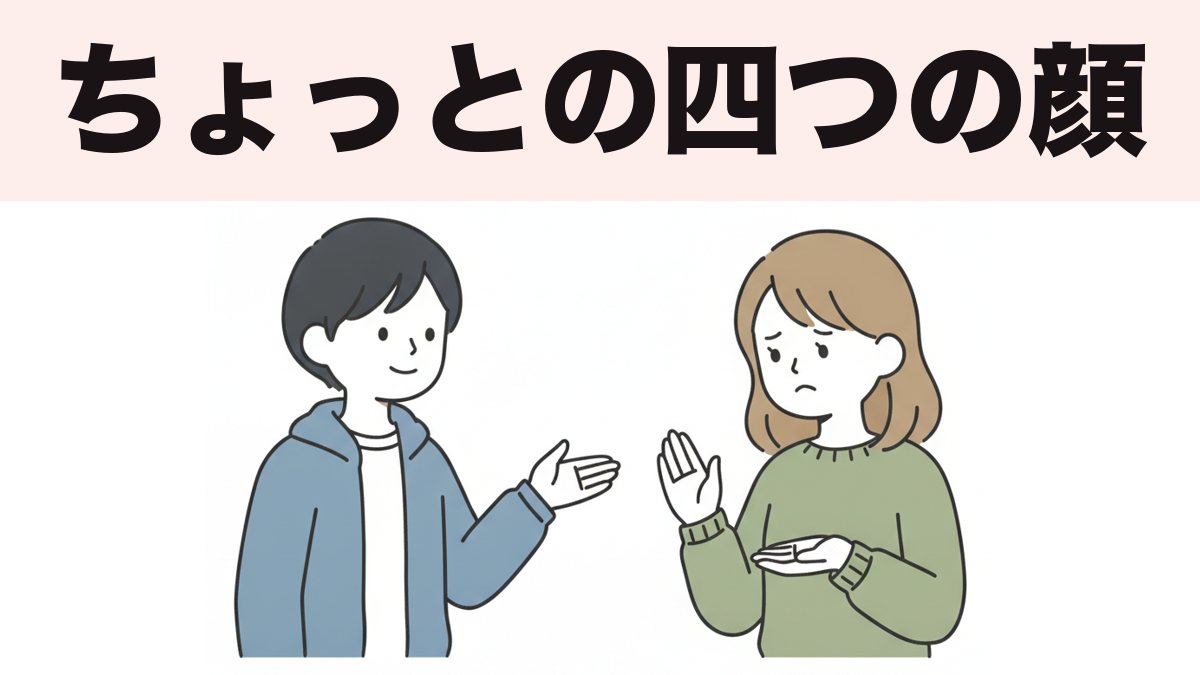
ちょっと literally means "a little," but most of the time it is not about quantity: it softens requests, calls for attention, and — trailing off after a topic — refuses an invitation without ever saying no.
「ちょっと」は「少し」という意味です。でも、たいていは量の話ではありません。お願いをやわらかくして、人を呼び止めて、そして最後まで言わずに、さそいを断ります。
It is the most frequently used word most beginners never quite learn, because dictionaries stop at "a little." If you can hear the four jobs it does, an enormous amount of ordinary conversation stops being ambiguous.
The basics
What is the literal meaning?
A small amount, a short time, a slight degree.
ちょっと待ってください。 — Please wait a moment. (polite) ちょっと寒いです。 — It's a little cold. (polite) 砂糖をちょっと入れました。 — I put in a little sugar. (polite)
The polite, written equivalent is 少し, and the two are interchangeable in this literal sense. 少し sounds more careful; ちょっと sounds like a person talking. In speech, ちょっと wins by a wide margin.
How does it soften a request?
By pretending the request is small. This is its most common job and the reason it appears at the start of so many sentences.
ちょっと聞いてもいいですか。 — Can I ask you something? (polite, softened) ちょっとお願いがあるんですが。 — I have a small favour to ask. (polite) ちょっと手伝ってくれる? — Can you give me a hand? (casual)
Nothing here is actually small; ちょっと is the verbal equivalent of a light touch on the sleeve. Removing it makes the same sentence blunt: 聞いてもいいですか is fine but bare, and 手伝ってくれる? without ちょっと sounds like an order.
How is it used to get attention?
On its own, with rising intonation, it means "excuse me" — or, with the wrong tone, "hey!"
ちょっとすみません。 — Excuse me a moment. (polite, stopping a stranger) ちょっと、いいですか。 — Do you have a second? (polite, at the office) ちょっと! — Hey! (casual, can be sharp — stopping someone doing something)
The last one is worth recognising before you use it. A sharp ちょっと! is what you shout at someone cutting in front of you in a queue. The polite version needs すみません attached.
Why is 今日はちょっと… a "no"?
Because Japanese declines by trailing off. The listener completes the sentence, so nobody has to say the refusal out loud.
今日はちょっと… — Today is a bit… (polite refusal, complete as it stands) それはちょっと難しいですね。 — That would be a little difficult. (polite, means no) ちょっと分かりません。 — I'm afraid I don't know. (polite; the ちょっと softens, it does not mean "slightly")
None of these are hedges waiting for you to push. 今日はちょっと is a finished answer, and asking "a bit what?" is the classic learner mistake. The same architecture runs through how to say no in Japanese — the refusal lives in what is not said.
Beyond the basics
The four jobs, in one table
| Job | Example | What it really means |
|---|---|---|
| Quantity | ちょっと寒い | A little cold |
| Softener | ちょっと聞いてもいい? | Can I ask — no pressure |
| Attention | ちょっとすみません | Excuse me |
| Refusal | 今日はちょっと… | No, and please don't ask again |
| (casual) Intensifier | ちょっといい店 | Quite a good place |
That last row surprises people. In casual speech ちょっと can mean "rather" or "quite," pointing upward rather than down: ちょっとすごい, ちょっと高い — where the tone makes clear you mean "seriously expensive," not "slightly."
How do you tell which one you are hearing?
Position and what follows it.
- Before a quantity or adjective → literal. ちょっと高い.
- Before a request verb → softener. ちょっと見せて.
- Alone, at the start, rising → attention. ちょっと、すみません.
- After a topic, trailing off → refusal. 明日はちょっと…
- Before a positive adjective, with emphasis → intensifier. ちょっといい感じ.
The refusal is the only one that is unmistakable, because of the silence after it. A Japanese speaker who stops mid-sentence is not searching for a word — they are handing you the ending to fill in yourself.
What is 少し, and when should you use it?
少し is the same meaning in a more formal register. Use it in writing, in presentations, and when you want to sound careful.
少しお時間をいただけますか。 — Could I have a little of your time? (formal) 少々お待ちください。 — One moment please. (service register)
少々 is the shop-and-restaurant version, and it is what staff will say to you constantly. It is not a word you need to produce often, but you will hear it every day in Japan.
What are the casual variants?
ちょい待って。 — Hang on. (casual, clipped) ちょっとだけ。 — Just a little. (casual or polite, adds "only") ちょっぴり。 — A tiny bit. (cute, soft — advertising and children's speech) ちょこっと。 — A little bit. (casual, warm)
ちょい is common in speech and text among friends and sounds too casual at work. ちょっぴり is the one to recognise rather than use; it is deliberately sweet, and it lands oddly from an adult in a normal conversation.
Is ちょっと ever rude?
Only in the sharp attention-getting use, and in one more case: using ちょっと to refuse someone who has already been refused. The first ちょっと is polite. Repeating it after they push can read as irritated, which is usually the intended message.
ちょっと… — I'd rather not. (polite, first time) いや、ちょっと。 — No, really. (firmer, second time)
If you are on the receiving end, treat the first trailing ちょっと as final. Pushing past it is the behaviour that makes people describe a foreign colleague as pushy when they thought they were being persistent — the same territory as disagreeing politely.
Common mistakes
- Reading 今日はちょっと as "maybe." It is a no. Offer another day instead of asking them to finish the sentence.
- Dropping ちょっと from requests. 手伝って without it is an instruction; with it, a request.
- Using ちょっと! to get a stranger's attention. Add すみません. Alone it is sharp.
- Assuming ちょっと分かりません means "I partly know." It means "I don't know," politely.
- Using 少々 in casual speech. It is service-register and sounds like you are role-playing a waiter.
- Missing the intensifier. ちょっと高い with emphasis can mean "seriously expensive," and taking it literally loses the complaint.
Practice
Answers are hidden — build yours first, then open. Questions 4 and 5 are a pair: the same word, refusal and quantity.
1. Ask someone politely to wait a moment.
Show answer
ちょっと待ってください — the literal use. 少々お待ちください is the service-register version.
2. Soften this request: 手伝ってくれる?
Show answer
ちょっと手伝ってくれる? — without ちょっと it sounds like an instruction rather than a request.
3. Stop a stranger on the street politely.
Show answer
ちょっとすみません — ちょっと alone would be sharp. The すみません is what makes it polite.
4. A colleague invites you out tonight and you do not want to go. Decline without saying no.
Show answer
今日はちょっと… — trailing off is a complete refusal. Adding すみません in front makes it warmer.
5. Say "it's a little cold today."
Show answer
今日はちょっと寒いです — same opening words as question 4, completely different job, and the difference is whether the sentence finishes.
6. Your colleague says 明日はちょっと…. What do you do next?
Show answer
Suggest another day — it is a no. Asking them to finish the sentence puts them in the position they were avoiding.
7. Say "I'm afraid I don't know" politely, using ちょっと.
Show answer
ちょっと分かりません — the ちょっと softens the whole statement. It does not mean you partly know.
8. You are a shop assistant asking a customer to wait.
Show answer
少々お待ちください — service register. ちょっと待ってください to a customer would be too plain.
9. Tell a friend a restaurant was "pretty good."
Show answer
ちょっといい店だった — the intensifier use. Here ちょっと points up, not down.
10. Someone shouts ちょっと! behind you. What is happening?
Show answer
They are stopping you, sharply — you dropped something, or you did something they object to. This is not the polite attention-getter.
FAQ
Is ちょっと casual? It is neutral-casual and completely acceptable in polite speech. 少し and 少々 are its formal counterparts, and you will use ちょっと far more often than either.
Why do Japanese people use ちょっと so much? Because it lowers the pressure of whatever comes next. Japanese conversation prefers to make requests, refusals and opinions look small, and ちょっと is the cheapest way to do that.
Is trailing off really polite? Yes — it is the standard way to decline. Leaving the negative unsaid spares both people from it, which is why ちょっと… with silence is more courteous than a clear いいえ.
What is the difference between ちょっと and 少し? Register only, in the literal sense. But 少し does not do the refusal job: 今日は少し… is not a natural way to decline.
Can ちょっと mean "very"? In casual speech, effectively yes — ちょっとすごい with the right emphasis means "pretty amazing." Tone decides, and this use is spoken, not written.
How do I know if someone is refusing or genuinely hesitating? Whether the sentence ends. A real hesitation continues into a reason; a refusal stops and waits. If it stopped, it was a no.
Vocabulary from this article
Tap the block to select all of it, then copy. In Anki: File → Import, note type Basic, separator Tab — the first column becomes the front, the second the back.
ちょっと	ちょっと — a little; excuse me; softener; polite refusal
ちょっと待って	ちょっとまって — wait a moment (casual)
ちょっとだけ	ちょっとだけ — just a little
ちょい	ちょい — a bit (very casual)
ちょっぴり	ちょっぴり — a tiny bit (sweet, soft)
ちょこっと	ちょこっと — a little bit (casual, warm)
少し	すこし — a little (polite, written)
少々	しょうしょう — a moment, a little (service register)
少々お待ちください	しょうしょうおまちください — one moment please
お願いがあるんですが	おねがいがあるんですが — I have a favour to ask
手伝う	てつだう — to help out
砂糖	さとう — sugar
難しい	むずかしい — difficult
時間をいただく	じかんをいただく — to take up someone's time
I'm Yuuki, a Japanese teacher based in Tokyo. I've taught on italki as a Top 1% teacher and watched over 1,500 anime. The trailing ちょっと… is the one I wish every learner met in week one, because misreading it as hesitation is how a polite refusal turns into an awkward second invitation.
Sources: the author's own lessons and standard reference grammars.
学習者がいちばんよく聞くのに、いちばん習わない言葉です。辞書は「a little」で止まるからです。この4つの働きが聞き分けられると、ふつうの会話がぐっと分かりやすくなります。
基本
もとの意味は?
少しの量、短い時間、小さい程度です。
ちょっと待ってください。 — Please wait a moment. (ていねい) ちょっと寒いです。 — It's a little cold. (ていねい) 砂糖をちょっと入れました。 — I put in a little sugar. (ていねい)
書く時・かたい時は「少し」です。この意味では、どちらを使ってもかまいません。「少し」はきちんとした感じ、「ちょっと」は人が話している感じです。会話では「ちょっと」の方がずっと多いです。
どうやってお願いをやわらかくする?
「小さいお願いです」というふりをします。いちばんよくある働きで、文の最初に出てくる理由です。
ちょっと聞いてもいいですか。 — Can I ask you something? (ていねい。やわらかい) ちょっとお願いがあるんですが。 — I have a small favour to ask. (ていねい) ちょっと手伝ってくれる? — Can you give me a hand? (カジュアル)
本当に小さいわけではありません。「ちょっと」は、そでを軽く引くような言葉です。取ると同じ文がきつくなります。「手伝ってくれる?」だけだと、命令のように聞こえます。
呼びかけにも使う?
1語で、上がる言い方なら「すみません」の意味です。言い方によっては「おい!」になります。
ちょっとすみません。 — Excuse me a moment. (ていねい。知らない人を止める) ちょっと、いいですか。 — Do you have a second? (ていねい。会社で) ちょっと! — Hey! (カジュアル。強い。何かをやめさせる時)
最後のは、使う前に知っておく言葉です。列に割りこまれた時に出す「ちょっと!」です。ていねいにするには「すみません」を付けます。
どうして「今日はちょっと…」が「いいえ」なの?
日本語は、最後まで言わずに断るからです。聞いた人が文を完成させるので、だれも断りの言葉を口に出しません。
今日はちょっと… — Today is a bit… (ていねいな断り。これで完成) それはちょっと難しいですね。 — That would be a little difficult. (ていねい。「いいえ」の意味) ちょっと分かりません。 — I'm afraid I don't know. (ていねい。「少し」ではない)
これは「もう一度おせば変わる」言い方ではありません。「今日はちょっと」で答えは終わっています。「ちょっと、何ですか?」と聞くのが、学習者の定番の失敗です。同じ形は 「いいえ」の言い方 にもあります。断りは、言わない所にあります。
もう少し先へ
4つの働きの表
| 働き | 例 | 本当の意味 |
|---|---|---|
| 量 | ちょっと寒い | 少し寒い |
| やわらげる | ちょっと聞いてもいい? | 聞いてもいい?(軽く) |
| 呼びかけ | ちょっとすみません | すみません |
| 断り | 今日はちょっと… | いいえ(もう聞かないで) |
| (カジュアル) 強める | ちょっといい店 | かなりいい店 |
最後の行はおどろかれます。カジュアルな話し方では、「ちょっと」が「かなり」の意味になります。「ちょっとすごい」「ちょっと高い」は、言い方しだいで「本当に高い」です。
どれか、どう見分ける?
場所と、後ろに来るものを見ます。
- 量や形容詞の前 → そのままの意味。「ちょっと高い」。
- お願いの動詞の前 → やわらげる。「ちょっと見せて」。
- 1語で、最初で、上がる → 呼びかけ。「ちょっと、すみません」。
- 話題の後で、そこで止まる → 断り。「明日はちょっと…」。
- いい意味の形容詞の前で、力を入れる → 強める。「ちょっといい感じ」。
はっきり分かるのは断りだけです。後ろに「しずかさ」があるからです。日本の人が文の途中で止まったら、言葉をさがしているのではありません。終わりをあなたにわたしています。
「少し」はいつ使う?
同じ意味の、かたい形です。書く時、発表、きちんとしたい時に使います。
少しお時間をいただけますか。 — Could I have a little of your time? (かたい) 少々お待ちください。 — One moment please. (店の言葉)
「少々」は店や飲食店の形です。日本にいると毎日聞きます。自分から言う機会は多くありませんが、聞いて分かるようにしておく言葉です。
カジュアルな形は?
ちょい待って。 — Hang on. (カジュアル。短い) ちょっとだけ。 — Just a little. (「だけ」で「〜だけ」が入る) ちょっぴり。 — A tiny bit. (かわいい感じ。広告・子どもの言葉) ちょこっと。 — A little bit. (カジュアル。やさしい感じ)
「ちょい」は友だちとの会話やメッセージでよく使い、仕事では軽すぎます。「ちょっぴり」は、使うより分かる方の言葉です。わざと甘くした形なので、大人がふつうの会話で言うと変です。
「ちょっと」が失礼になることは?
強い呼びかけの時と、もう1つあります。すでに断った相手に、もう一度「ちょっと」を使う時です。1回目の「ちょっと」はていねいです。おされた後の2回目は、いらいらして聞こえます。たいてい、それが伝えたいことです。
ちょっと… — I'd rather not. (ていねい。1回目) いや、ちょっと。 — No, really. (強い。2回目)
聞く側なら、最初の「ちょっと…」で終わりだと考えてください。そこをおすと「強引な人」になります。この線は やわらかい断り方 と同じ話です。
よくある間違い
- 「今日はちょっと」を「たぶん」と読む。 断りです。文の続きを聞かずに、別の日を出します。
- お願いから「ちょっと」を取る。 「手伝って」だけだと指示です。付けるとお願いになります。
- 知らない人に「ちょっと!」。 「すみません」を付けます。1語だと強いです。
- 「ちょっと分かりません」を「少し分かる」と読む。 「分かりません」です。ていねいにしているだけです。
- カジュアルな場で「少々」。 店の言葉なので、店員のまねに聞こえます。
- 強める用法を見落とす。 力を入れた「ちょっと高い」は「本当に高い」です。そのまま読むと、文句が伝わりません。
練習
答えはかくしてあります。先に自分で作ってから開いてください。4と5は同じ言葉で、断りと量です。
1. ていねいに「少し待ってください」。
答えを見る
ちょっと待ってください — そのままの意味です。店の言葉なら「少々お待ちください」。
2. やわらかくしてください: 手伝ってくれる?
答えを見る
ちょっと手伝ってくれる? — 付けないと、お願いではなく指示に聞こえます。
3. 道で知らない人をていねいに止めます。
答えを見る
ちょっとすみません — 「ちょっと」だけだと強いです。「すみません」でていねいになります。
4. 同僚に今夜さそわれました。行きたくありません。「いいえ」と言わずに断ってください。
答えを見る
今日はちょっと… — 止めるだけで完成した断りです。前に「すみません」を付けるとやわらかくなります。
5. 「今日は少し寒いです」と言ってください。
答えを見る
今日はちょっと寒いです — 4と出だしは同じです。ちがうのは、文が終わるかどうかだけです。
6. 同僚が「明日はちょっと…」と言いました。次に何をしますか。
答えを見る
別の日を出す — 断りです。続きを聞くと、相手がさけていた所に立たせることになります。
7. 「ちょっと」を使って、ていねいに「分かりません」。
答えを見る
ちょっと分かりません — 「ちょっと」は全体をやわらげています。「少し分かる」ではありません。
8. あなたは店員です。お客様に待ってもらいます。
答えを見る
少々お待ちください — 店の言葉です。お客様に「ちょっと待ってください」だと、ぞんざいに聞こえます。
9. 友だちに「けっこういい店だった」と言ってください。
答えを見る
ちょっといい店だった — 強める用法です。ここでは上を向いています。
10. うしろで「ちょっと!」と言われました。何が起きていますか。
答えを見る
強く呼び止められています — 何か落としたか、何かをやめてほしいのです。ていねいな呼びかけではありません。
よくある質問
「ちょっと」はカジュアルですか。 中くらいで、ていねいな場面でも使えます。かたい形が「少し」「少々」です。実際には「ちょっと」の方がずっと多く使います。
どうして日本の人はよく使うのですか。 次に来る言葉の力を下げるからです。日本語の会話は、お願いも断りも意見も「小さく」見せたがります。いちばん安い方法が「ちょっと」です。
最後まで言わないのは、ていねいですか。 ていねいです。断りの標準の形です。否定を言わずにおくと、両方が楽になります。だから、だまる「ちょっと…」の方が、はっきりした「いいえ」より丁寧です。
「ちょっと」と「少し」のちがいは。 そのままの意味では、かたさだけです。ただし「少し」は断りには使えません。「今日は少し…」は自然な断りになりません。
「とても」の意味になりますか。 カジュアルな会話では、実際なります。力を入れた「ちょっとすごい」は「かなりすごい」です。言い方で決まります。話し言葉だけです。
断りか、本当に迷っているかは、どう見分けますか。 文が終わるかどうかです。本当の迷いは、理由に続きます。断りは、そこで止まって待ちます。止まったら「いいえ」です。
この記事に出た単語
ブロックをタップすると全部選べます。そのままコピーしてください。Anki では ファイル → 読み込み、ノートタイプ 基本、区切り タブ。1列目が表、2列目が裏になります。
ちょっと	ちょっと — a little; excuse me; softener; polite refusal
ちょっと待って	ちょっとまって — wait a moment (casual)
ちょっとだけ	ちょっとだけ — just a little
ちょい	ちょい — a bit (very casual)
ちょっぴり	ちょっぴり — a tiny bit (sweet, soft)
ちょこっと	ちょこっと — a little bit (casual, warm)
少し	すこし — a little (polite, written)
少々	しょうしょう — a moment, a little (service register)
少々お待ちください	しょうしょうおまちください — one moment please
お願いがあるんですが	おねがいがあるんですが — I have a favour to ask
手伝う	てつだう — to help out
砂糖	さとう — sugar
難しい	むずかしい — difficult
時間をいただく	じかんをいただく — to take up someone's time
More drills like the ones above, plus a timed JLPT-style mock test: Practice · N5上のような練習問題と、時間つきのJLPT形式のもぎ試験: 練習ページ · N5
Want to try this in a real conversation?
本当の会話で、ためしてみませんか?
30-minute trial lesson, $13. Times shown in your own timezone.
30分の体験レッスン、$13。時間はあなたのタイムゾーンで表示されます。
Book a trial lesson · $13