Anison bon-odori is going global — and Akihabara is the reasonアニソン盆踊りが世界に広がる理由は秋葉原
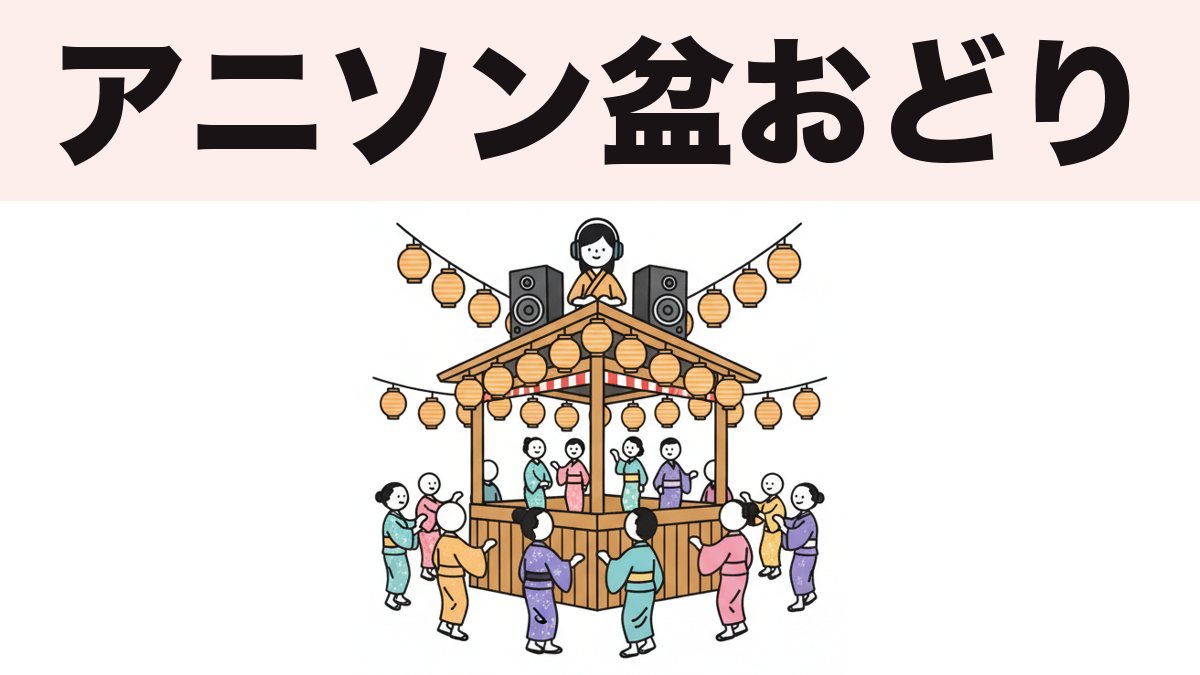
Anison bon-odori brings Japanese festival dancing together with anime music, giving overseas fans a way to participate in the culture they enjoy. Akihabara is an important connection in the Singapore story discussed on Akiba Now, although it is not the sole origin of bon-odori or its international reach. Learn the cultural background and a few practical Japanese phrases, and you can move from watching the dance to asking how to join.
簡単に言うと、好きなアニメの夏祭り回に出てくる盆踊りが、今ではアジア各地のアニメイベントでメインステージの出し物になっています。そのステージを作っている人たちは、秋葉原から来ています。
The basics
From a summer festival to an anime convention
盆踊り(ぼんおどり), or bon-odori, is dancing associated with Obon, a period of remembrance for ancestors. 夏祭り(なつまつり)means a summer festival: it is a broader term, so a summer festival and a bon-odori event are not automatically the same thing. The Japan National Tourism Organization describes bon-odori as a participatory part of summer celebrations in its guide to joining local festivals.
アニソン is short for アニメソング, meaning an anime song. Combine it with 盆踊り and you get アニソン盆踊り: bon-odori performed to anime songs. The name tells you about the music and dance format; it does not identify one fixed routine that everyone everywhere follows.
At some events, dancers move in a 輪(わ), a circle, around a 櫓(やぐら), a raised festival platform or tower. A circle, visible leaders, and repeated movements can make it easier to learn by watching. However, the stage arrangement and choreography depend on the event. Do not expect every venue to reproduce the exact scene from a summer festival episode of an anime.
The following examples are original practice sentences, not quotations from the podcast or event announcements. Each Japanese sentence is followed immediately by its English translation.
これは盆踊りです。 — This is bon-odori.
アニソンに合わせて踊ります。 — We dance to anime songs.
In the second example, に合わせて means “in time with” or “to match.” Here, it connects the movement to the music. 踊ります comes from 踊る(おどる), “to dance.” You can understand the sentence without knowing every word of the song: the important relationship is between the music and what people are doing.
The Singapore example
This article grew out of a conversation on the Japanese podcast I co-host, Akiba Now. In episode 15, published on December 6, 2025, my co-host Sasakichi talks about taking part in Anime Festival Asia in Singapore. He describes working with Dwango and a stage arrangement that allowed people to move around it. This is a specific participant account, rather than a survey of every overseas bon-odori event.
There is also an organizer source: the AFA Singapore 2025 NEXT STAGE page lists Cho-Bon Dance Japan Powered by Dwango. Its description explicitly connects bon dancing with anime songs and Vocaloid music. That provides a concrete example of the format appearing at an overseas anime convention; it does not establish that every convention now includes it.
Why emphasize Akihabara? In this story, the connection runs through people active in its anime community, including Sasakichi, and their work with event organizers. The title describes that connection. It should not be read as a claim that Akihabara invented bon-odori or caused every international version of the dance.
Words that separate the activities
| Japanese | Reading | Meaning in this article | Useful distinction |
|---|---|---|---|
| 盆踊り | ぼんおどり | Bon festival dancing | A dance tradition, not a synonym for every festival |
| 夏祭り | なつまつり | Summer festival | A wider event category |
| アニソン | アニソン | Anime song | Describes the music |
| 踊る | おどる | To dance | Describes the action |
| 参加する | さんかする | To participate | Means taking part in an activity |
| 見る | みる | To watch or see | Does not itself mean joining in |
Beyond the basics
Why the format can travel
My interpretation is that familiar music can give newcomers a starting point. A fan may recognize a melody before understanding the Japanese announcement. Watching a leader then supplies another clue: where to put your hands, when to turn, and how the sequence repeats. This helps explain the appeal, but it is an interpretation of the format, not a measured claim about participation rates.
There is a useful language-learning parallel. You rarely need a complete command of Japanese before making one successful exchange. At a dance event, asking a short question and understanding a gesture may be enough to find your place. The aim is to communicate one immediate need, then build from there.
Anime music also creates a conversation topic after the dancing stops. You can mention a song, ask whether someone knows it, or explain that this is your first time. These exchanges stay connected to something both people have just experienced, which makes them easier to sustain than a memorized introduction with no shared context.
この曲を知っていますか。 — Do you know this song?
曲(きょく)means a song or piece of music. 知っています asks about a state of knowing. Here, “Do you know this song?” usually means recognizing it, not being able to recite all the lyrics or name everyone involved in its production.
このアニソンが好きです。 — I like this anime song.
This is enough to open a conversation. You do not need to start with a detailed review of the anime. If the other person responds enthusiastically, you can add the title or ask about their favorite song.
Asking to participate
参加する means “to participate.” For an event, mark the activity with に: 盆踊りに参加する means “to participate in bon-odori.” To ask permission politely, use the te-form followed by もいいですか.
盆踊りに参加してもいいですか。 — May I join the bon-odori?
This question is useful when you are unsure whether the current section is open to visitors. It leaves room for an organizer to show you the entrance, explain a demonstration, or ask you to wait. For more examples of the same pattern, see asking permission with てもいいですか.
初めてなんです。 — It is my first time.
初めて(はじめて)means “for the first time.” The ending なんです adds explanatory context: you are giving the listener a reason you might need help. It is a friendly way to explain your situation without making a long apology.
踊り方を教えてください。 — Please show me how to dance.
踊り方(おどりかた)means “how to dance” or “the way of dancing.” 教えてください can mean “please tell me” or “please teach me”; “please show me” fits this physical activity naturally. Ask someone who is helping participants, or wait until a dancer has a suitable pause.
Listening for simple movement instructions
Even a short instruction can be difficult over loud music. Start by recognizing direction words rather than trying to translate every syllable. 右(みぎ)is right, 左(ひだり)is left, and 手(て)means a hand or hands. Watch which direction the leader faces, because copying a person facing you may involve a mirror image.
右に動いてください。 — Please move to the right.
手を上げてください。 — Please raise your hands.
These are practice examples of instructions, not a universal bon-odori sequence. Different songs can have different choreography. If you miss a movement, observe the next repetition instead of assuming that every routine uses the same steps.
Bringing the conversation back to Akihabara
The overseas event gives you a reason to talk about 秋葉原(あきはばら), Akihabara, without turning the conversation into a history lecture. You might explain where you heard a song or ask whether someone has visited. Keep claims personal and specific: enjoying an anime event does not tell you how much Japanese someone speaks or whether they have been to Japan.
秋葉原でこの曲を聞きました。 — I heard this song in Akihabara.
Here, で marks the place where the action happened. If your own next conversation happens while browsing anime merchandise, the Akihabara shop phrases guide offers related language for that setting.
Common mistakes
Treating every festival as the same experience
A local Obon gathering and an anime convention can share a dance format while having different purposes. Remembering ancestors, meeting neighbors, and celebrating anime fandom are different contexts. The presence of anime music at one event does not erase the cultural background of 盆踊り, and a traditional event does not necessarily include anime tracks.
Likewise, a 浴衣(ゆかた), a light summer kimono, is associated with summer festival scenes, but the word does not tell you an event has a particular dress requirement. Read the event information instead of treating anime costumes as instructions for real attendance.
Confusing watching with participating
見る means “to watch” or “to see.” 参加する means “to participate.” If you ask where you can watch, the answer might lead you to a viewing area rather than into the dance circle. Decide which action you want before choosing your sentence.
ここで見てもいいですか。 — May I watch from here?
This asks permission to watch at this location. It does not ask to join the routine, enter a restricted stage area, or photograph other people. A short sentence works best when its intended action is clear.
Using the wrong particle with 参加する
For “participate in the festival,” use 祭りに参加する. Learners sometimes select を because the festival follows an English verb in their mental translation. Japanese organizes this expression differently: に marks the event you join. By contrast, in 手を上げる, を marks what you raise.
Do not turn that observation into a rule that に always means “in” and を always follows an English object. Learn the complete combinations, say them aloud, and reuse them with another event or action when you understand the pattern.
Assuming that enthusiasm equals permission
A welcoming atmosphere is a good reason to ask about joining, but it is not a guarantee that every area is open. There may be a demonstration, a transition between songs, or a designated entrance. Watch the staff, ask one clear question, and follow the answer.
The same principle applies to language. A shouted anime catchphrase can be fun among friends who share the reference, but it may not communicate your needs to an organizer. A plain 参加してもいいですか is more useful when your actual question is whether you may participate.
Practice
Try these nine questions before opening the answers. The goal is to connect the article's cultural distinctions with language you could use at a dance event.
1. What does アニソン abbreviate, and what does it mean?
Show answer
アニメソング: an anime song. The word describes the music, rather than a specific dance routine.
2. Which is the broader term: 夏祭り or 盆踊り?
Show answer
夏祭り, a summer festival, is broader. 盆踊り refers to Bon festival dancing; the two words are not interchangeable.
3. Fill the gap: 盆踊り( )参加してもいいですか。
Show answer
に. The expression is 盆踊りに参加してもいいですか, meaning “May I join the bon-odori?”
4. How would you explain politely that this is your first time?
Show answer
初めてなんです。 This means “It is my first time,” with an explanatory tone that gives context for needing help.
5. What action is requested by 手を上げてください?
Show answer
Raise your hands. 手 means a hand or hands, and 上げてください asks someone to raise something.
6. Ask someone to show you how to dance, using 踊り方.
Show answer
踊り方を教えてください。 This means “Please show me how to dance.”
7. Choose the sentence that asks to watch: ここで見てもいいですか or 盆踊りに参加してもいいですか.
Show answer
ここで見てもいいですか asks “May I watch from here?” The other sentence asks permission to participate.
8. Does the documented Singapore performance prove that every anime convention offers bon-odori?
Show answer
No. It establishes a specific overseas example. A broader claim would need evidence about other events.
9. Put these parts in order to mean “Do you know this song?”: 知っていますか / この曲を.
Show answer
この曲を知っていますか。 Use it to ask whether another person recognizes the music.
To rehearse these festival exchanges in a lesson, Book a trial lesson · $13, or start with the Japanese practice page.
FAQ
What is anison bon-odori?
What does the name mean?
It combines アニソン, anime songs, with 盆踊り, Bon festival dancing. The music creates a connection with anime fandom, while participants learn or follow dance movements. The exact choreography and venue arrangement vary, so the term does not promise one identical experience everywhere.
Do I need fluent Japanese to join?
Can beginners take part?
At an event that welcomes newcomers, observation and a short permission question can help you get started. Fluency is different from understanding the immediate instructions. Ask staff about participation, and use 初めてなんです to explain that you may need a demonstration.
Is the overseas example only a podcast story?
Is there an organizer source?
Yes. AFA Singapore 2025 listed Cho-Bon Dance Japan Powered by Dwango on its NEXT STAGE page. The Akiba Now episode adds a participant perspective. These sources serve different purposes: one documents the program, while the other describes an individual experience of taking part.
Did Akihabara invent bon-odori?
Is Akihabara the origin of the tradition?
No. Bon-odori belongs to the wider cultural context of Obon. Akihabara matters to this article through the people and anime community connecting the dance with an overseas convention. That contemporary connection is different from the historical origin of the tradition.
Which phrase should I remember first?
What is the most useful starting question?
盆踊りに参加してもいいですか asks permission to join and gives the listener a clear way to help. After that, 初めてなんです explains your situation. Remember those two expressions as a small exchange rather than trying to memorize every festival word before attending.
Vocabulary from this article
Every item below appears earlier in the article. Start with the words that match what you want to do: recognize the music, ask to participate, or understand a direction.
| Japanese | Reading | English |
|---|---|---|
| 盆踊り | ぼんおどり | Bon festival dancing |
| 夏祭り | なつまつり | Summer festival |
| アニソン | アニソン | Anime song |
| 輪 | わ | Circle; ring |
| 櫓 | やぐら | Raised festival platform; tower |
| 踊る | おどる | To dance |
| 参加する | さんかする | To participate |
| 見る | みる | To watch; to see |
| 曲 | きょく | Song; piece of music |
| 初めて | はじめて | For the first time |
| 踊り方 | おどりかた | How to dance |
| 右 | みぎ | Right |
| 左 | ひだり | Left |
| 手 | て | Hand; hands |
| 浴衣 | ゆかた | Light summer kimono |
| 秋葉原 | あきはばら | Akihabara |
The following tab-separated version contains the same vocabulary for flashcard import.
盆踊り	ぼんおどり	Bon festival dancing
夏祭り	なつまつり	Summer festival
アニソン	アニソン	Anime song
輪	わ	Circle; ring
櫓	やぐら	Raised festival platform; tower
踊る	おどる	To dance
参加する	さんかする	To participate
見る	みる	To watch; to see
曲	きょく	Song; piece of music
初めて	はじめて	For the first time
踊り方	おどりかた	How to dance
右	みぎ	Right
左	ひだり	Left
手	て	Hand; hands
浴衣	ゆかた	Light summer kimono
秋葉原	あきはばら	Akihabara
Sources
- Anime Festival Asia Singapore 2025: AFA NEXT STAGE. Organizer listing for Cho-Bon Dance Japan Powered by Dwango, including its anime-song and Vocaloid music format.
- Akiba Now, episode 15: anison bon-odori at Anime Festival Asia in Singapore. Published December 6, 2025; the podcast discussion behind this article, with a participant account from Sasakichi.
- Japan National Tourism Organization: Get Involved in Local Japanese Festivals. Background on Obon and joining bon-odori celebrations in Japan.
- The Japan Foundation, Irodori: Japanese for Life in Japan, Elementary 2, Lesson 7, “Local Events.” Supplementary learning reference for discussing community events and festival culture.
Akiba Nowというポッドキャストで、いっしょに番組をしている相方が、あるアニメイベントから帰ってきました。東アジアでも大きなアニメイベントの1つで、そこでアニソン盆踊りをやってほしいとよばれていました。アニソン盆踊りとは、日本の伝統的な盆踊りを、アニメソングに合わせておどるもので、当日は現場でやぐらも組み立てました。
5日間。移動に2日、イベントに3日。真夏のように気温が高い時期でした。
盆踊りって、そもそも何?
盆踊り は、夏祭りでおどるダンスです。みんなで やぐら という高い台のまわりに輪になって、同じかんたんな動きを何時間もくり返します。ペアは要りません。うまさも要りません。前の人のまねをするだけです。
夏祭りの回があるアニメを見たことがあれば、きっと見たことがあります。浴衣、屋台、やぐらの上の太鼓、輪になって動く人たち。
アニソン盆踊り は、この形をそのままに、音楽だけをアニメソングに変えたものです。輪も、やぐらも、動きも同じ。でも流れる曲は、昔からの民謡ではなく、今のアニメソングです。
世界に広がる理由
ふつう、アニメイベントは「見る」ためのものです。並んで、ステージを見て、家に帰ります。
盆踊りはその反対です。見ている人自身が、主役になります。 うまい下手はだれも気にせず、練習していなくても、来て30秒後にはもう輪に入れます。日本の文化が好きでも、日本に行ったことがない人たちにとって、これは「見るだけ」ではなく、いちばん早く「実際にやってみる」ことができるものなのです。
だから世界に広がっています。相方のチームは、日本国内のイベントのほか、外国のイベントでもこのアニソン盆踊りを行ってきました。
覚えておきたいことば
| 日本語 | 読み方 | 意味 |
|---|---|---|
| 盆踊り | ぼんおどり | bon dance |
| 夏祭り | なつまつり | summer festival |
| 櫓 | やぐら | the tower the drummers stand on |
| 浴衣 | ゆかた | light summer kimono |
| アニソン | — | anime song (short for アニメソング) |
| 聖地巡礼 | せいちじゅんれい | visiting real places from anime |
日本に来るなら
夏祭りはだいたい7月から8月にかけて行われます。有名なお祭りでなくても、どの地域にも自分たちのお祭りがあります。夕方に行って、輪を見つけて、その中に入ってみてください。ステップを知らなくても、だれも気にしません。それが、このダンスのいちばんいいところです。
こうしたことが、どこで行われているか見てみたいなら、それは秋葉原です。わたしはそこでガイドツアーをしています。オンラインでも、直接会っても大丈夫です。
この記事は、わたしが日本語で共演しているAkiba Nowというポッドキャストをもとに書きました。全部のエピソードはSpotifyで聞けます。
More drills like the ones above, plus a timed JLPT-style mock test: Practice · N4上のような練習問題と、時間つきのJLPT形式のもぎ試験: 練習ページ · N4
Want to try this in a real conversation?
本当の会話で、ためしてみませんか?
30-minute trial lesson, $13. Times shown in your own timezone.
30分の体験レッスン、$13。時間はあなたのタイムゾーンで表示されます。
Book a trial lesson · $13